Advertisement

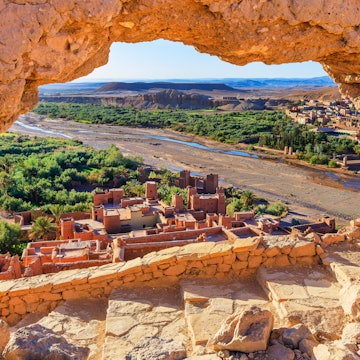
Tassili n’Ajjer National Park, Algeria. HAMDI OUSSAMA/Shutterstock
Epic Algeria is an adventurous traveler’s dream. Africa’s largest country by area has a 1600km coastline fringed with long sandy beaches and dotted with history-rich cities which include some of the best Roman ruins in the world. Inland, a fantastic desert hinterland promises authentic oasis towns, vast sand seas and ancient volcanic mountains covered in rare prehistoric petroglyphs and paintings. Tourist visas are getting easier to obtain (still, don't leave your application to the last minute), and there is an increasing number of flights from Europe, the Middle East and Africa.
Start planning your trip with our pick of the best places to visit in Algeria, a travel destination that will soon get the attention from tourists that it deserves.
1. Timgad
Best for Roman ruins
Advertisement
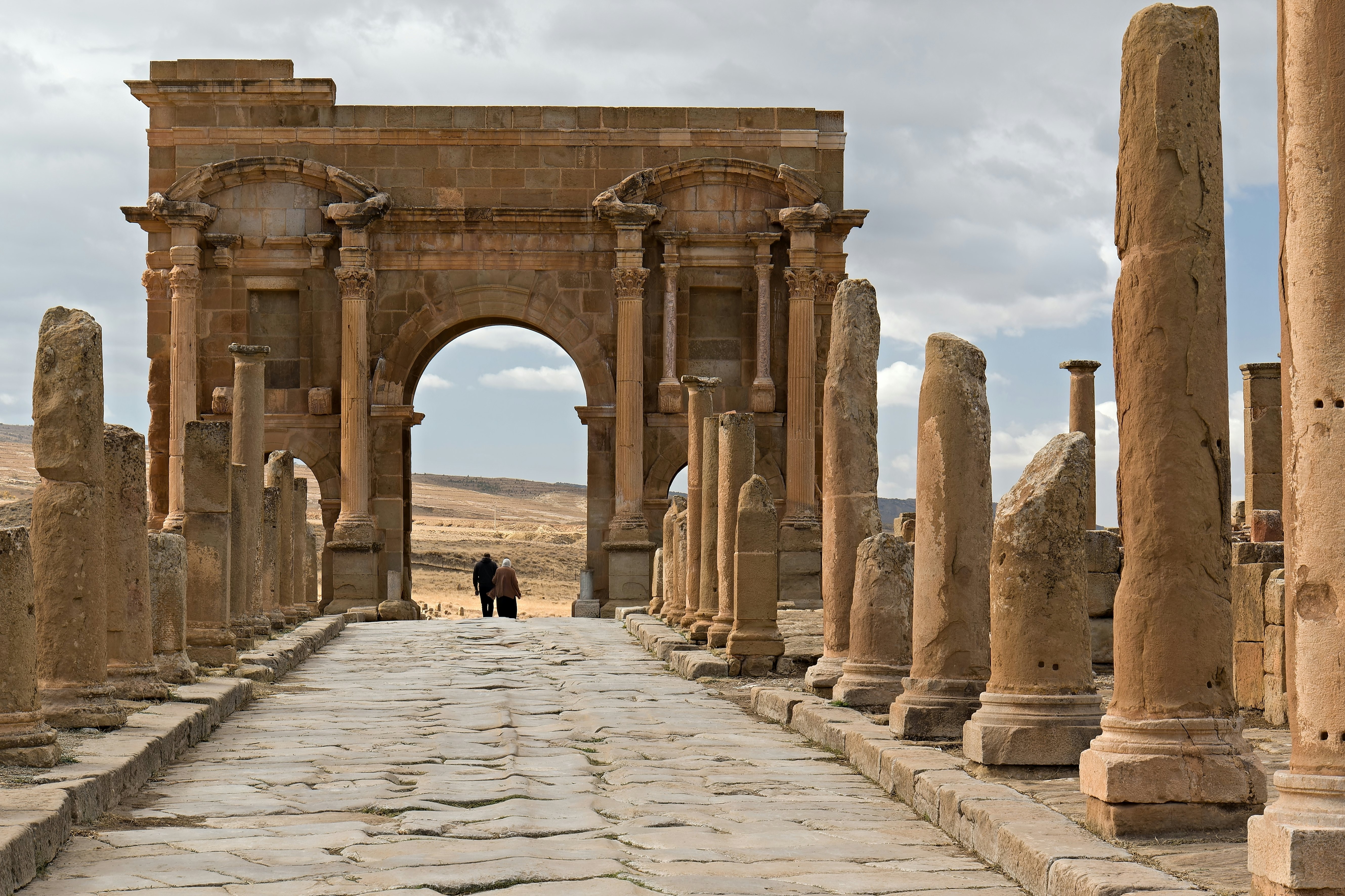
The UNESCO-listed Roman ruins at Timgad were built by the emperor Trajan in 100 CE. The site sits at a crucial pass through the Aurès Mountains, a strategic point that gave Rome control of access to the Sahara. Often called North Africa’s Pompeii, Timgad is an exemplar of Roman urban planning, the city laid out like a chessboard over 50 hectares. You’ll need a full day to explore all the forums, temples, markets, bath houses, theaters, law courts and villas here, as well as a rare public library. Look out for the inscription in the forum which reads “venari lavari ludere ridere occ est vivere” (“to hunt, to go to the bath, to play, to laugh: this is to live”). The on-site museum has 200 stunningly well-preserved floor mosaics.
Planning tip: Timgad is a very exposed site. You’ll need a hat, sunscreen and plenty of water in summer, and a jacket in winter or spring as it can be cold and windy.

2. Constantine
Best hilltop city
Since the 4th century BCE, Constantine has occupied a rocky pinnacle above the river Rhumel, encircled by 200m-deep ravines. It’s a pleasure to admire the ingenuity behind this improbably located city – and to snap pictures from the Sidi M’Cid Bridge and the Monument aux Morts, a WWI memorial that offers a bird’s-eye view. Once you hit the streets, visit the finely decorated Ottoman Palace of Ahmed Bey, the National Museum and the beautifully contemporary Emir Abdelkader Mosque, one of the largest on the continent.
Planning tip: Non-Muslims can enter mosques in Algeria outside of prayer times, so plan your touring accordingly.

3. Annaba
Best site for Catholic pilgrims
Charming Annaba is where Amazigh theologian St Augustine – a figure crucial to and “Father” of the Catholic Church – taught and wrote works that remain cornerstones of modern Christian theology. Augustine was bishop of Roman Hippo Regius, now a flower-filled ruin in the town suburbs. On a hill above is the Basilica de Saint Augustine, built by the French in the late 19th century and overlooking the Basilica of Peace, where Augustine taught and beneath which he was buried. It is still tended by Annaba’s Augustinian community and a site of Catholic pilgrimage.
Planning tip: Underrated Annaba has an atmospheric old town, and a beautiful seaside setting with some lovely sandy beaches.

4. Tassili n’Ajjer National Park
Best for prehistoric petroglyphs and rock paintings
Advertisement
Tassili N’Ajjer National Park encompasses 72,000 sq km of extraordinary desertscape, characterized by a surreal sandstone rock forest covered with 15,000 prehistoric petroglyphs and carmine-colored rock paintings depicting herds of elephant, giraffe and buffalo. These images provide a reminder of the Saharan steppeland, where Neolithic pastoralists roamed alongside wild megafauna some 10–15,000 years ago.
Planning tip: To see all of Tassili’s treasures, you’ll need a full 10 days, though tours of 5 or 6 days are also possible. Remote Djanet (served by Air Algérie) is the gateway to Tassili n’Ajjer National Park. Officially, travelers touring the desert require an agency escort/guide for security.
5. Algiers
Best city for museums, monuments and gardens
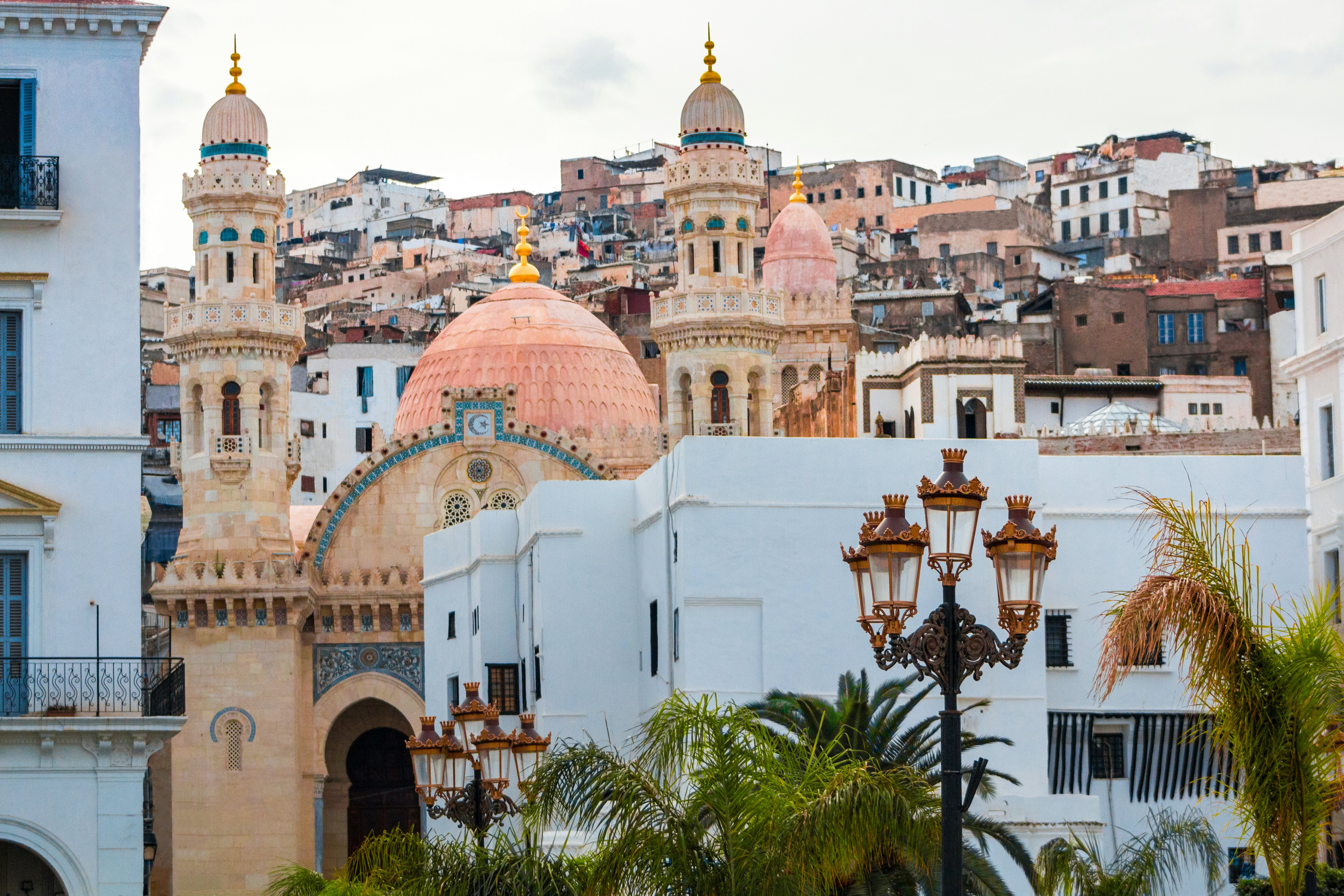
Overlooking a beautiful crescent bay, Algeria’s capital city brims with atmosphere, interesting Ottoman and art deco architecture and cafes playing chaabi music – the Muslim-Jewish fusion style forged in the city’s ancient alleys. Algiers’ historic heart, the Casbah, is a snakes-and-ladders labyrinth of staircases, antique palaces and mosques. After occupying the city in 1830, French colonists encircled Algiers with Parisian-style boulevards; added a botanical garden, the Jardin d’Essai; inaugurated the Bardo National Museum; and built the basilica of Notre-Dame d’Afrique. The Martyrs Monument, Maqam Echahid, bookends the south end of the city, commemorating those who died during the long fight for independence, finally achieved in 1962.
Planning tip: Explore the Casbah with a guide from Fancyellow. If you have time, take a day trip to the extraordinary Roman ruins of Tipasa and Cherchell.

6. Tlemcen
Best for medieval architecture
Tlemcen is an architectural jewel of medieval mosques and palaces set in a green pine forest. In the 12th and 13th centuries, the city was a hub of learning and trade that rivaled Fez, Tunis and Granada, trading gold from Timbuktu and salt from Taghaza with Europe. This explains the hybrid Hispano-Moorish architecture of the Great Mosque (1082), an Almoravid masterpiece, and the El Mechouar citadel, which echoes Spain’s Alhambra. On the western edge of town you’ll find the ruins of the military camp El Mansourah (1299), with a 40m-high minaret that is near-twin to the Giralda in Seville.
Detour: Tlemcen remains spiritually significant due to the tomb of Sidi Boumediene, located 1.6km southeast of the city. From here, it’s a 10-minute drive to the El Ourit waterfalls and a 30-minute drive to the stalactite-encrusted Grottes des Beni Add.

7. Ahaggar National Park
Best place for desert and ancient river valleys
Older than Tassili, the Hoggar Mountains of Ahaggar National Park are volcanic basalt buttes that rise vertiginously from the desert floor. Ancient river valleys sweeping through them on their way to Lake Chad are lined with more petroglyphs and paintings of wild animals and charioteers, thought to be the Garamantian ancestors of the Tuareg tribespeople. Week-long camel treks and 4WD tours depart from Tamanrasset to the high plateau of Assekrem (2728m) – which translates to “the end of the world.” Stay at the hostel to see a truly spectacular dawn over the Atakor massif.
Planning tip: Expect to tip guides and drivers the equivalent of an extra day’s payment for each week worked.

8. Ghardaïa and the M’Zab Valley
Best for desert citadels
A collection of five ksours (citadels) built between 1012 and 1350 (collectively referred to today as Ghardaïa after the principal one), the Pentapolis in the M’Zab Valley is one of the most fascinating places in Algeria. The fortified cities are today inhabited by Mozabites, members of an Amazigh tribe who adhere to the conservative Ibadite sect, observing distinct social codes and clothing, and permitting entry to outsiders only with a chaperone. Engage a guide to explore these closed communities to see, for example, the Sidi Brahim mosque in El-Atteuf, which inspired the architect Le Corbusier. Don’t forget to check out the carpets in Ghardaïa’s market: weaving is a traditional craft here.
Planning tip: To visit Ghardaïa, the government requires tourists be on a group tour with required permits; try Algeria Tours. Within the ksours, respect community rules, which include modest dress, no smoking and no pictures of people.
9. Sétif and Djemila
Best for ancient mosaics
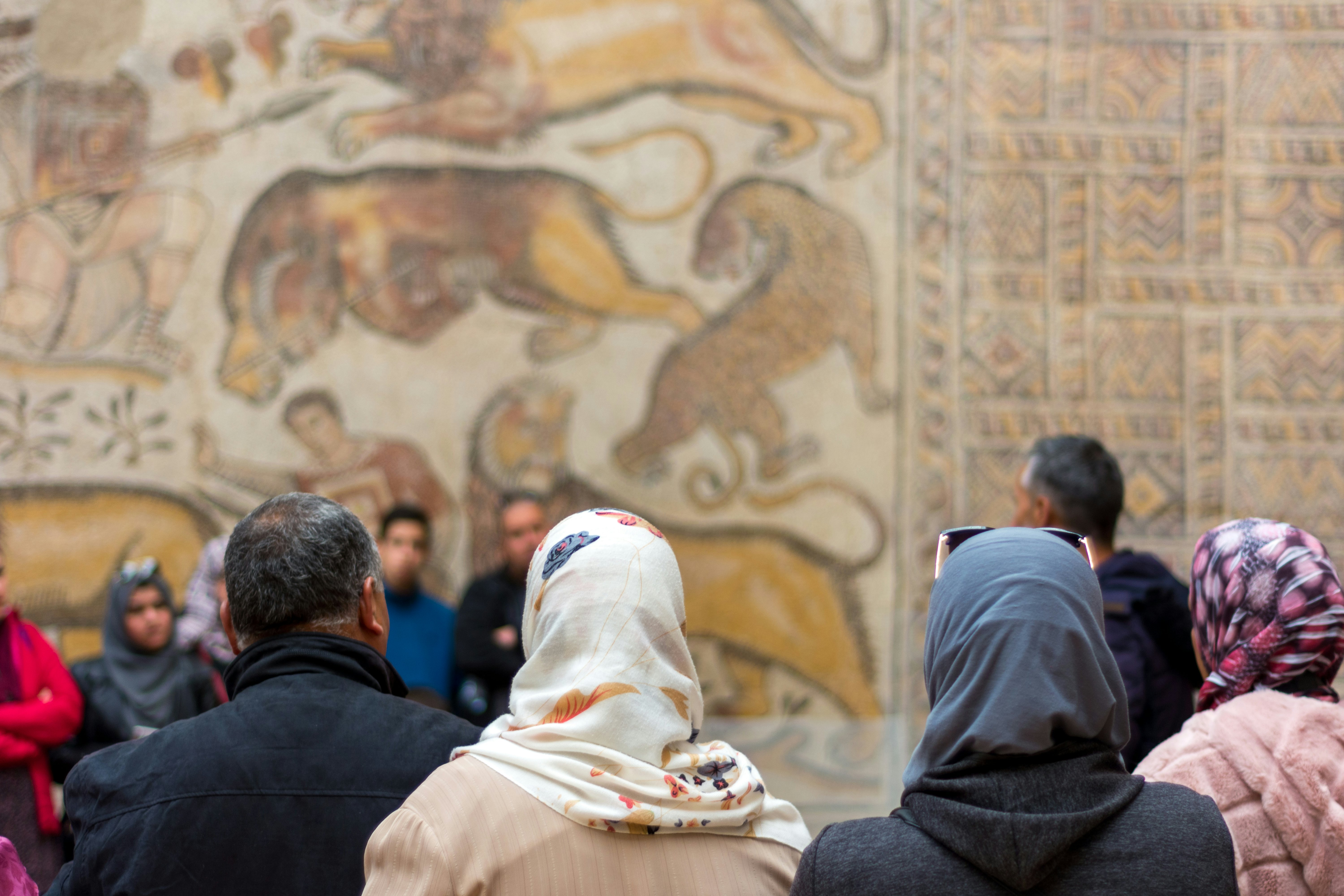
Sétif’s archaeological museum houses some of the best Roman mosaics in the world, including the unrivaled Triumph of Dionysus. Most artifacts come from Djemila (previously Cuicul), a UNESCO-heritage Roman city which sits on an scenic hillside in the Petit Kabyle mountains – and which is an essential excursion. You can tour the lovely ruins in half a day, but you’ll probably want to linger longer to enjoy the picturesque views. An excellent on-site museum exhibits incredible mosaics that cover almost the entire wall space.
Planning tip: Djemila is most easily visited from Sétif (1 hour) or Constantine (1 hour 45 minutes). Stay at Hotel Tadj el Mouada in Setif or Novotel Constantine.

10. Timimoun
Best base for exploring the desert
Timimoun in Central Algeria is a spectacular desert oasis set at the edge of an escarpment overlooking a sebkha (salt pan) and the undulating dunefields of the Grand Erg Occidental. Since this stunning landscape is miles from anywhere, you’ll feel like you’ve landed on the moon, with the red town rising from the earth like a wind sculpture. From here, you can (and should!) head into the desert. Most hotels can arrange quad biking and sandboarding close to town. Or you can tour the Sebkha Circuit, which takes you to abandoned villages crumbling in the heat on a roller-coaster ride over towering dunes.
Planning tip: Timimoun’s S’Boue Festival lasts 7 days and draws thousands who come to celebrate at the mausoleum of Sidi El Hadj Belkacem and enjoy sacred music, poetry and traditional dances.
Advertisement