Advertisement
When is the best time to visit Bangkok?


A woman places a lit offering during the Loi Krathong festival in Bangkok. krsiiixth/Shutterstock
The capital of Thailand, Bangkok, is a city for all seasons, with some of the world's most wonderful food and a fabulous variety of things to do, whether it's rainy, sunny, or anything in between.
It used to be said that Bangkok had three seasons – the “cool,” the "hot," and the "wet." But these days, locals like to joke that there is only hot, hotter and hottest. Climate change has certainly added a few degrees to peak temperatures in the city, but some seasons are definitely less steamy than others, and with air conditioning everywhere, this is a city you can enjoy even when the burner is on high flame.
Whether it's your first time in Bangkok, or you're a repeat visitor to the city's magical markets and gilded temples, you’re never going to have to worry about being cold here, except when the air-con is turned up too high.
Advertisement
If you like to travel with just shorts and sandals, you’ll be in your element in Bangkok, but how well you handle the heat and crowds might well influence when you decide to visit. To help you plan, here's a guide to the best times to visit Bangkok, covering the weather, prices, tourist seasons, major festivals and how to avoid the crowds.

November to February is the best time for comfortable weather
Weather in Bangkok in winter: While some people refer to the northern hemisphere winter as the “cool” season in Bangkok, note that this is a relative term. Temperatures can still reach 30°C (86°F) or higher, and there will be plenty of sunshine during the day. Evenings can be quite pleasant, too, with lots of outdoor beer gardens opening up as locals take advantage of the cooler temperatures after dark.
November marks the start of both Bangkok’s most comfortable weather as well as the tourist high season, which runs until the end of February. During this period, you might even experience the odd cold snap, where the temperature drops to 20°C (68°F) and locals bundle up in thick jackets and other winter-associated garb! This is also the one time of year when you'll get the chance to go sightseeing without being drenched in perspiration.
While the weather at this time of year is ideal for a winter escape, you’ll have fierce competition for plane seats and hotel rooms from other sun-worshippers, as this is considered high season in Thailand. Hotel prices peak and rooms at popular hotels and guesthouses need to be booked well in advance, especially around Christmas, New Year and Chinese New Year.
Across the city, tourist attractions and shopping malls tend to be packed, and nearby beach escapes such as Pattaya, Hua Hin and Ko Samet can be overrun with visitors. One pleasant exception to this is during the days leading up to and after New Year, when Bangkok empties out. Residents with family in the countryside return home or go on vacation for a week, meaning that you’ll get to experience the capital without gridlock and crowds.

Not only is winter the most pleasant time of year weather-wise, it’s also the season for some of the top Thai festivals, including Loi Krathong, held during the November full moon, when everyone floats illuminated banana-leaf boats along Bangkok's canals and the Chao Phraya River. Many Thais use the occasion to honor the river goddess Khongkha, a local variation of the Indian Hindu goddess Ganga.
Advertisement
Loi Krathong is followed by the busy Christmas and New Year festivities. While Christmas has no religious significance for Thai Buddhists, shopping malls are adorned with decorated trees and there are countless sales and restaurant holiday promotions. All the holiday energy is capped off by a massive New Year’s Eve celebration that features fireworks across the city, buzzing outdoor beer gardens and countdown parties.
Towards the end of this season, Thais of Chinese heritage celebrate the Chinese New Year, usually in February. You can see traditional Chinese opera performances and boisterous lion dances, and watch the streets of Bangkok's lively Chinatown neighborhood come to life with fantastic food, dragon parades and other colorful happenings.

March to May is the hottest time of the year
Weather in Bangkok in the spring: The beginning of March marks the start of the hot and dry season in Bangkok. It rarely rains during this period and temperatures soar – reaching 40°C (104°F) for prolonged stretches in recent years. However, if you're interested in Thai culture, this can be one of the best times to visit Bangkok.
With the oven-like temperatures, the hot season can be a challenging time for sightseeing and traveling in Thailand, but visiting Bangkok from March to May does have some rewards. This is the low season for tourism, with far fewer visitors than at other times of the year.
If you’re into shopping and elegant stays, this can be an excellent time to come – you’ll find plenty of ice-cold air conditioning in malls, hotels, and on the Bangkok Skytrain, plus some great promotions on accommodation. Try to visit sights early in the morning, before the heat builds.
Coming here in April also means you can experience Songkran, the Thai New Year. Celebrated from April 13 to April 15, the festival is an excuse for the world’s biggest water fight, as everyone takes to the streets to joyfully soak their neighbors and get soaked themselves. Wear some old clothes, wrap your wallet and cellphone in a sealable plastic bag, buy a squirt gun, and go out and join the fun.
Songkran is a great way to beat the heat and see Bangkok at its best, but accommodation reservations need to be made well in advance. For the rest of the hot season, you can pretty much just show up and still find great deals – one of the perks of traveling during the heat.

June to August sees the beginning of the wet season
Weather in Bangkok in the early monsoon: While temperatures drop back down below the April-May sizzle, the humidity goes up, so it can feel pretty sticky in Bangkok when the southwest monsoon arrives. On the plus side, the rainstorms clean out the smoggy Bangkok air, and this can be the least-polluted time of year to experience the capital.
As this is the summer holiday season for Europeans and North Americans, there will be more tourists than during the hot season, but nowhere near the crowds seen from November to February, and you’ll still be able to find great deals on hotels and travel, especially at nearby beach resorts such as Hua Hin or Pattaya. This can also be a good time to take morning day trips from the capital to sights such as Ayuthaya, with fewer tourists crowding the temples.
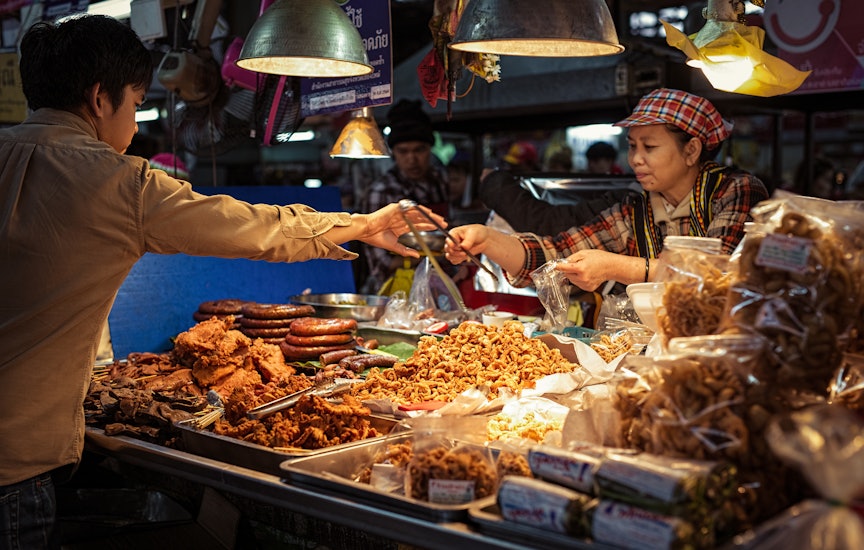
While you can expect to see plenty of rain during your stay, it doesn't rain all day, so this can still be a rewarding time to explore. Plan outdoor activities for the mornings, as rain showers tend to arrive in the afternoon or evening, and carry an umbrella if you head out to enjoy Bangkok's fabulous night markets.
As the rainfall builds, don't be surprised to see the odd spot of street flooding, often caused by blocked storm drains. Occasionally, more severe flooding can cause problems with transport in this low-lying city, and even impact hotels and homes, so monitor the weather forecasts.

September to October is the rainiest period, great for budget travel
Weather in Bangkok during the late monsoon: While the onset of the monsoon season tends to see short heavy showers, the end of the monsoon is when it gets really wet. September and October are the rainiest months in Bangkok, the only time when it consistently rains all day long.
Despite the rain, for many visitors, the cleaner air, green countryside and general lack of tourists make this the optimal time of year to plan a trip to Bangkok. If you don’t mind the wet, you’ll be here at the quietest time of year, with no need to book hotels in advance and plenty of deals to entice budget travelers.
As September marks the end of the school and university holidays in Europe and North America, there are fewer families around, and evenings are less noisy in youth-oriented traveler hangouts such as Khao San Rd. Temperatures are also a bit lower than at the start of the monsoon.
Be prepared for a bit of disruption because of the rain. Streets close to the Chao Phraya River often see some flooding, although hotels and restaurants put up sandbags to minimize the damage, and staff assist guests with getting in and out of the building. Expect traffic to be at full gridlock and carry an umbrella with you throughout your stay; use public transport such as the MRT and Skytrain to beat the traffic.
On the plus side, there are several really excellent festivals. Held in either September or October, depending on the lunar calendar, the Vegetarian Festival is a 9-day Taoist celebration where people refrain from eating meat, wear white and throng Chinatown's temples for opera performances, parades and plenty of vegetarian food. This is followed by the Moon or Mid-Autumn festival, where families carry lanterns through Chinatown and exchange bean-paste-filled mooncakes.
Advertisement