Advertisement

Playa Carrizalillo in Puerto Escondido on the Oaxaca coast. Jakub Zajic/Shutterstock
The Oaxaca coast, along Mexico's southern Pacific shoreline between Chiapas and Guerrero, is an independent traveler’s dream come true: a dramatic, nearly empty shoreline with long golden beaches, lagoons full of wildlife, and fishing villages, bohemian enclaves, surf towns and mellow resorts.
The lush Sierra Madre del Sur are both the backdrop to the coast and a buffer to everything (and everyone) else. For those who make the journey across the mountain range, the reward is multifold. Just off paradisiacal beaches are world-class surfing swells, or go snorkeling right from the shore. All that plus proximity to nesting turtles and whale watching, as well as the Oaxaca coast’s famously laid-back vibe, inviting you to disconnect, slow down and stay awhile.
Get to know the Oaxaca coast with this guide to the climate, transportation, costs and top things to do.

Advertisement
When should I go to the Oaxaca coast?
It’s hard to beat the weather on the Oaxaca coast. The climate is temperate year-round, with daytime temperatures averaging 27°C (80°F) and evenings rarely dropping below 21°C (70°F); the ocean water, too, hovers around 25°C (77°C).
There are just two seasons. From November to April, the dry season brings blue skies, windy days and virtually no clouds. The beaches and bars are busy, yoga retreats are in full swing, and hotel prices spike. Whale watching is best from December to March. Christmas, New Year and Semana Santa (the week before Easter, often in April) are peak travel times, so make arrangements well in advance.
During the rainy season, between May and October, afternoons and early evenings see showers, though they’re typically short-lived and the sun makes an almost daily appearance. This is prime time for surfers; the waves are big and consistent, and Puerto Escondido hosts international surf competitions on its monster break at Playa Zicatela. In September and October, the rain gets heavier, and traveler numbers drop dramatically. Deals can be had, but some businesses close shop. Hurricanes can threaten the coast in the fall – check the weather forecast and heed warnings. This is turtle-nesting season too.
How much time should I spend on the Oaxaca coast?
Plan at least 4 days of your itinerary in Mexico on the Oaxaca coast to just chill out and enjoy the beaches. For even more beach time and to surf, snorkel and take a boat excursion, a week is ideal. Add more time for exploring the coastline or leaning into the slower rhythm of life.

Is it easy to get to and around the Oaxaca coast?
The easiest – but most expensive – way to reach the Oaxaca coast is by air. Bahías de Huatulco International Airport is the main coastal airport. It has direct flights to and from several Mexican, US and Canadian cities. Puerto Escondido’s Aeropuerto Internacional primarily handles flights from Mexico City, with a few arrivals from Guadalajara and Monterrey.
Since the new Hwy 175D opened in early 2024, the overland route has been reduced from 6–7 hours on winding, often precarious mountain roads to about 3 hours.
Exploring along the coast is relatively easy via pasajeros (pickup trucks with benches in back), colectivos (shared taxis) and private taxis. All can be flagged down along the main coastal road (Hwy 200) and in more populated places like Puerto Escondido, Pochutla and Huatulco. Most have their destinations written on the windshield.
A rental car offers more freedom and comfort but doesn’t come cheap. Agencies are set up at the two airports and in their nearby towns.

Where should I go on the Oaxaca coast?
The Oaxaca coast couldn’t be more inspiring. Miles and miles of dramatic beaches are backed by the verdant Sierra Madre del Sur. The coastal waters are full of dolphins, turtles and migrating whales. The string of small beach towns and fishing villages with a laid-back, boho-hippie vibe attract backpackers, surfers, New Age types and international residents. And while some of Oaxaca’s beaches front surf towns, most lie hidden from view, down a dirt road or at the end of a leafy path – just another way that Oaxaca delights and surprises, even as you relax and unwind.
Advertisement
Top things to do on the Oaxaca coast
Bahías de Huatulco
Best snorkeling
A 25km stretch of curlicue coastline, with nine bays and a whopping 36 beaches, Bahías de Huatulco is the easiest section of the Oaxaca coast to explore. Take taxis or splurge on a car rental, and don’t forget your gear – many of Huatulco’s beaches have healthy reefs and calm turquoise waters, making for excellent snorkeling from the shore.
Where to stay: Hotel Quinta Bella on Playa Chahué has a gorgeous pool and great restaurants.
Parque Nacional Huatulco
Best beaches
If you’re short on time, head toward Parque Nacional Huatulco, starting at the family-friendly Bahía Maguey and beach-hopping your way to the dreamy Bahía Cacaluta, a long curving beach backed by golden dunes you’re likely to have all to yourself.
Chacahua, Barra de la Cruz and Playa Zicatela
Best surfing
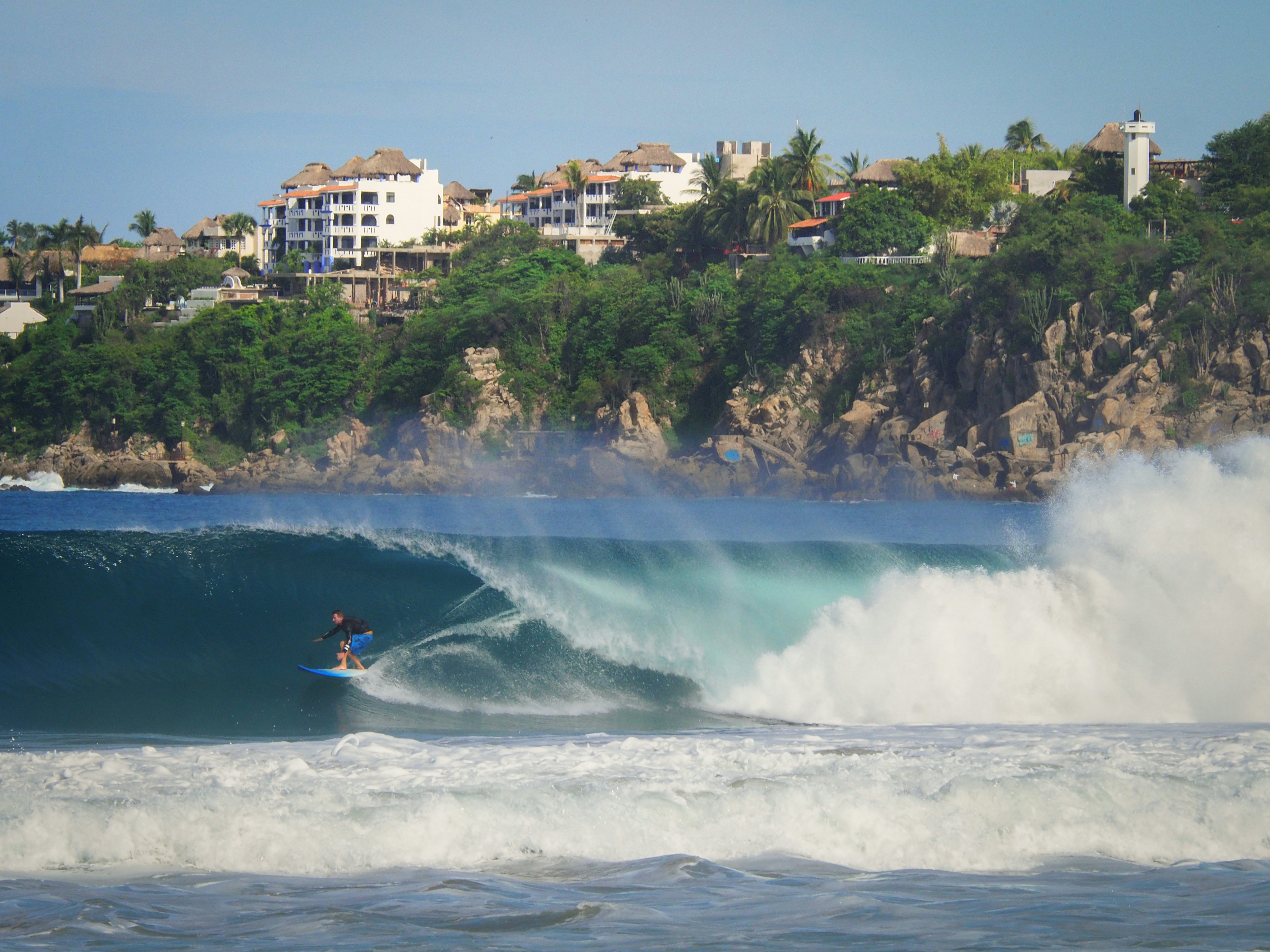
The Oaxaca coast boasts some of the best surfing spots in the country. Chacahua and Barra de la Cruz have point breaks peeling for hundreds of meters. Playa Zicatela’s Mexican Pipeline is unmissable, with monster tubes and walls 9m high – even nonsurfers come to watch the experts do their thing.
If you’re looking to learn, surfboard rentals and a local instructor can be found in virtually every town. Surf camps also populate the coastline, providing lessons from dreadlocked pros and an instant community of like-minded travelers.
Where to stay: The region's main surf hub, Playa Zicatela, is in Puerto Escondido, where Villas Carrizalillo overlooks Playa Carrizalillo. If you opt for Chacahua, stay in one of the rustic beachside cabanas on the east side, called La Isla.

My favorite thing to do on the Oaxaca coast
Watching an arribada on Playa Escobilla is far and away my favorite thing to do on the Oaxaca coast. It’s the mass arrival of nesting olive ridley turtles, a phenomenon that happens around the full moon from July to January – and is unlike anything I’ve ever seen.
The ocean waters become pocked with thousands of turtle heads, like a crowd of swimmers waiting to be waved ashore. The beach fills with countless more turtles. As far as the eye can see, turtles, like slow-moving rocks, pull themselves through the sand, dig nests with their flippers and, at long last, lay their ping-pong-ball-shaped eggs.
The olive ridleys return here year after year, drawn back to the same sand where they hatched. Looking out over this living, breathing landscape is a lesson in the power of a place, the pull of Oaxaca.

How much money do I need for the Oaxaca coast?
The Oaxaca coast is one of the least expensive beach destinations in Mexico. The cost of meals, accommodations and excursions is markedly less than along the Riviera Maya and the Riviera Nayarit.
However, less expensive also means less infrastructure. The roads are often potholed or unpaved, wi-fi can be spotty, ATMs are scarce (and often empty), and taking public transportation means flagging down a pickup truck and climbing in.
Sure, you can find boutique hotels and specialty restaurants, but simple thatch-roofed hotels and mom-and-pop eateries are the norm – and that’s exactly the charm.
Night in a dorm bed at a hostel: from 200 Mexican pesos (M$)
Night in a basic room for two: from M$700
Night in a self-catering apartment: from M$1000
Taxi ride in town: M$30–50
Pasajero ride: M$7–M$15
Liter of bottled water: M$14
Beer on the beach: M$20
Street taco: M$9
Dinner for two: M$200–450
Hourly surfboard rental: M$100
Drop-in yoga class: M$60
Can I use my credit card?
Cash is king on the Oaxaca coast. Credit cards are not very useful for day-to-day purchases, and many businesses, especially in villages, don’t accept them (and if they do, they’ll often tack on a 5–6% fee). You should still carry plastic for resorts, high-end hotels, car rentals, and airline or first-class bus tickets, but plan to withdraw enough cash in Oaxaca City, Huatulco, Pochutla or Puerto Escondido before heading to smaller villages, where card payments are uncommon.
Should I bring my ATM card?
ATM cards are useful. However, outside of the bigger towns like Puerto Escondido, La Crucecita and Pochutla, ATMs are scarce and often empty. If you’re staying in smaller villages, take out plenty of cash at one of the airports or in the bigger towns so you don’t end up in a bind.
How do you pronounce Oaxaca?
Oaxaca is pronounced wah-HA-kah.
Is the Oaxaca coast safe?
The Oaxaca coast is a safe place to visit overall. Like most places in the world, petty theft can happen, so carry only what you need, leave your valuables locked in your hotel, and avoid flashing expensive phones and jewelry. Violent crime, especially against tourists, is rare. Nevertheless, avoid wandering alone at night and be aware of your surroundings.
Drowning is actually the most common danger here; beware of undertows and riptides at ocean beaches, and heed water safety flags. Know your limits – monster breaks like the Mexican Pipeline can be dangerous for novice surfers.
What should I pack?
There’s no need for winter jackets or wetsuits on the Oaxaca coast – ever. Pack for a beach vacay: flip-flops, a couple of swimsuits, casual street clothes, a hat with a brim. Bring a light sweater and pants for breezy nights or to keep the mosquitos off you in the evenings. If you’re here during the rainy season, you’ll want a raincoat or an umbrella.
Advertisement