Advertisement

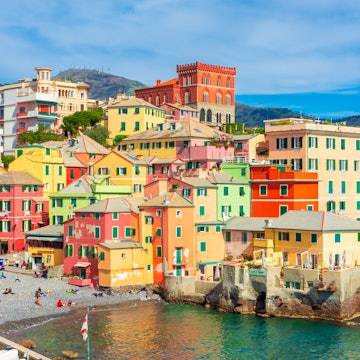
Varenna, Lake Como. Claudia Gori for Lonely Planet
Nestled between Milan and the mountains of northern Italy, the Italian Lakes are glimmering, glacier-made pools of brilliance. Whether you are looking for a romantic trip, an outdoor adventure or some relaxing time with the family, these sparkling lakes are some of the most charming places to spend time in Europe.
Most visitors focus their sights on the three largest Italian Lakes: Maggiore, Como and Garda. All are ringed by picturesque lakeside villages and backed by steep mountains, but each has its own character, defined by the landscape and the vibe of the towns and villages along the lakeshore.
The biggest reason to visit is the spectacular scenery, but there's much more to do besides admiring the views from a shorefront dining room. You can swim in the clean waters from lakeside beaches, or explore islands and the shoreline by boat or kayak. On land, roam to Roman ruins, ancient castles and historic villas – and the grand gardens that surround them – or get your nature fix on mountain bike excursions and hilltop hiking trails.
Here's everything you need to know for your first visit to the Italian Lakes, from where to go to what to see and how to get here.

Advertisement
When is the best time to visit the Italian Lakes?
The warm summer has obvious appeal, with long days and a packed calendar of events and festivals. On the downside, the lakes overflow with visitors between June and early September. You'll have to contend with higher prices for flights and accommodation, congested roads, and sizable tour groups filtering through the prettiest villages.
You can beat the worst of the crowds and still enjoy pleasant weather for outdoor activities in the Italian Lakes by coming in May or October. Winter sees few visitors, and some restaurants, hotels, and key attractions shut down for the season.
Nevertheless, with careful planning, winter can be a magical time to visit the Italian Lakes with kids, with snow adding extra sparkle to the scenery. Lake towns such as Cernobbio on Lake Como and Riva del Garda on Lake Garda have a festive buzz in December, with holiday lights, Christmas markets and special activities for families.
Planning tip: You'll need to book well ahead (six months at least) for accommodation in towns such as Bellagio, Varenna and Sirmione during the busy peak season in July and August.

How much time should I spend at the Italian Lakes?
You'd need more than a month just to see the highlights of the Italian Lakes, given the large size of each lake and the wide range of attractions found along their shores. Rather than trying to pack everything into one whirlwind visit, plan a more manageable itinerary.
If you have just a weekend to spare, pick one lake and narrow your focus. You might spend a few days enjoying outdoor activities in Riva del Garda, or exploring lovely Bellagio and Varenna on the shores of Lake Como on foot. Or you could devote your time to visiting the islands and villas close to Stresa and Verbania on Lake Maggiore.
If you have a week, you can combine a couple of these itineraries, or focus on a more complete lake circuit – perhaps even adding a neighboring country into the mix. The north end of Lake Maggiore extends into southern Switzerland, as does enchanting Lake Lugano, near the Swiss town of the same name.
How do I choose the right Italian Lake for me?
Which of these dreamy bodies of water you choose will depend on the activities you hope to enjoy when you get here. Here's a snapshot of the best Italian Lakes to visit.
Lake Como: Italy's most famous and busiest lake, attracting a glamorous set (including George Clooney and Madonna). Here, adventures come in many forms, from kayaking to mountain climbing. Less active adventurers can stroll around scenic gardens and villas, with fabulous meals waiting at day’s end. This is the closest lake to Milan, less than an hour away by train; base yourself in Como or Varenna to explore.
Lake Garda: The largest of the Italian Lakes, and perhaps the best for families, easily accessed from the town of Verona, with its Romeo & Juliet connections. Come to soak in thermal springs, visit Roman ruins, explore waterfront villages and enjoy myriad outdoor adventures. Explore from Riva del Garda and Torbole in the north, or family-friendly southern spa towns such as Sirmione and Bardolino.
Lake Maggiore: Smaller than Como but bigger than Garda, for many, Lake Maggiore is just right. A mountain-draped lakeside forms a stunning backdrop to island palaces, verdant botanic gardens and myriad activities on water and land, from boating to funicular rides. Budget options are easier to find here – pick a base from Stresa, Verbania, Cannobio, or, on the Swiss side of the border, Locarno. The nearest airport is in Milan, an hour away by train.
Less busy Italian Lakes: There are several smaller Italian Lakes that offer lower prices and smaller crowds, with similarly stunning scenery but less public transport than the big lakes. Lake Iseo can be reached easily from medieval Bergamo, while Lake Orta is tucked away west of Lake Maggiore.

How do I get to the Italian Lakes?
How you arrive will depend on which Italian Lake you choose to visit. Milan is the main air hub for Como and Maggiore, while Verona has the closest airport to Lake Garda, but it's quite possible to go green and reach the Italian Lakes without using a plane or car.
It's easy to reach the gateway towns for each of the lakes by train, with international connections to Milan, and local trains serving Verona and towns around the lakeshores. From Milan, trains take an hour to reach Como town, 1.5 hours to reach Laveno Mombello on Lake Maggiore, and 1.5 hours to reach Desenzano del Garda on Lake Garda. From Verona, it takes 30 minutes to reach Desenzano del Garda. Book ahead on the Trenitalia website.
What's the best way to get around in the Italian Lakes?
On arrival, local buses connect lakeshore towns, backed up by a handy ferry system linking key destinations such as Bellagio and Varenna on Lake Como. Expect regular daytime boat services between key hubs in summer; in winter, ferries operate reduced schedules and some routes stop entirely.
Advertisement
If you have a more ambitious itinerary and want to explore the mountains above the lakes, a car will give you more freedom. Just keep in mind that the roads are narrow and parking can be difficult, especially on summer weekends. Drive slowly and stick to the speed limits; speed traps are common.
In towns such as Como, non-residents are banned from driving into the center at certain times; park outside designated "Zona a Traffico Limitato" areas and walk or take public transport to the sights.
Top things to do at the Italian Lakes
All of the Italian Lakes offer a mix of historic sights, outdoor activities and relaxing spots where you can relax and enjoy the scenery.
Explore Lake Maggiore's islands
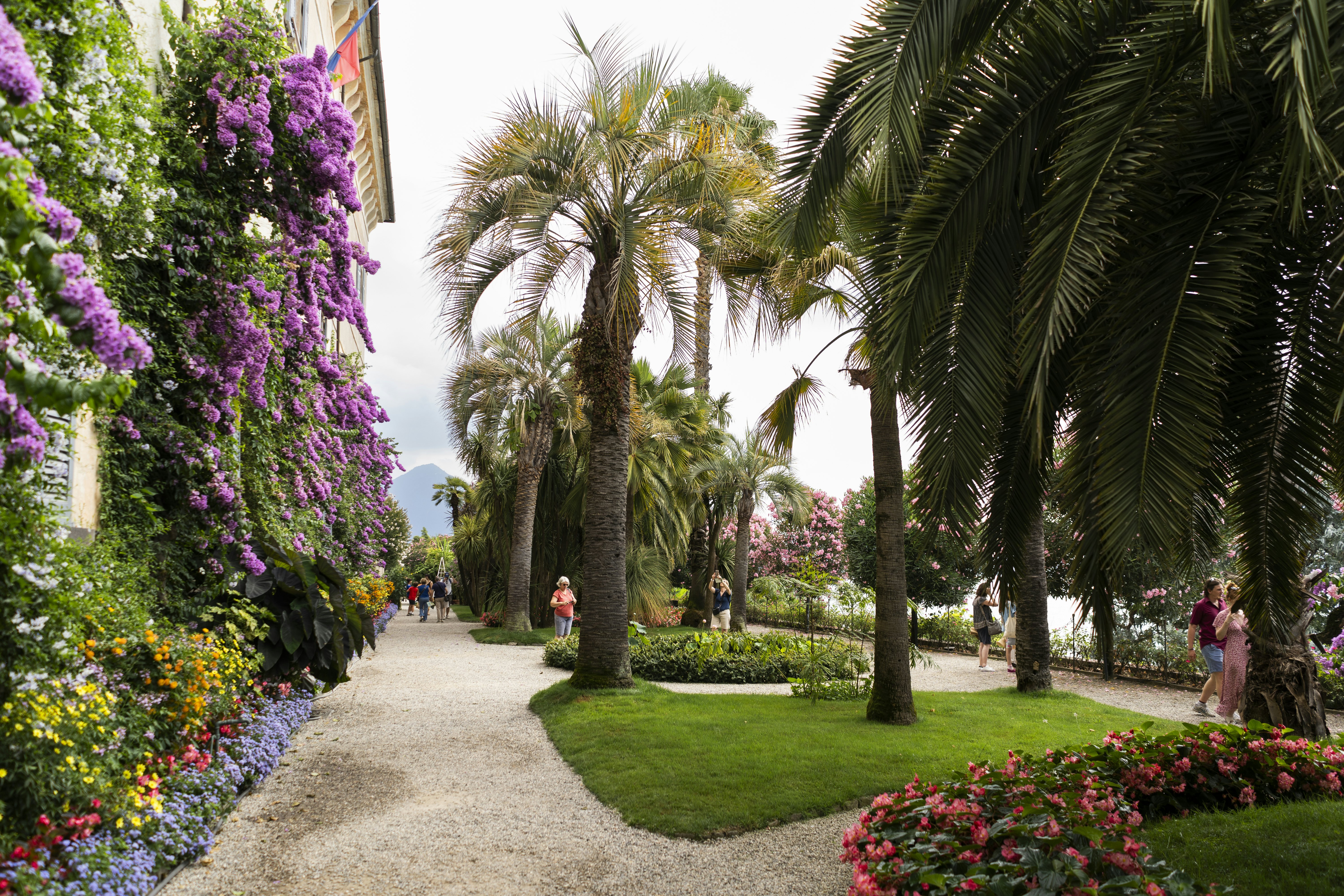
Lake Maggiore is best known for its trio of islands. From Stresa or Verbania, catch the boat over to Isola Bella for a wander through the 17th-century Palazzo Borromeo. The lavishly decorated rooms of this grand mansion are full of artwork by old masters – including Van Dyck, Titian and Rubens. The baroque gardens out back, complete with strutting peacocks, are equally captivating.
For lunch, take the boat over to Isola Pescatori and have a meal at one of the lakeside restaurants – Casa Bella is superb for its creative Italian fare. Afterward, continue to Isola Madre to visit another palatial house and its gardens – this one full of exotic plant species sourced from across the globe.
Tour Lake Garda's ruins and thermal springs
Lake Garda has some of the most significant ruins of all the Italian lakes. On a finger-like peninsula near the south end of the lake, the gorgeous town of Sirmione is home to several important Roman and medieval sites.
At the Grotte di Catullo, you can view the remains of a sprawling Roman villa from the 1st century CE; it's easy to imagine the villa's former grandeur while wandering around the ruins on the hillside. Fast forward through the ages to the Castello Scaligero, a remarkably well-preserved square-cut castle dating from the 14th century. You can walk the battlements for a view of the water that surrounds the castle on all four sides.
In the evening, head to the Terme di Sirmione Aquaria Thermal Spa and relax amid steaming open-air pools with views over the lake.
Take in the views (and villas) of Lake Como
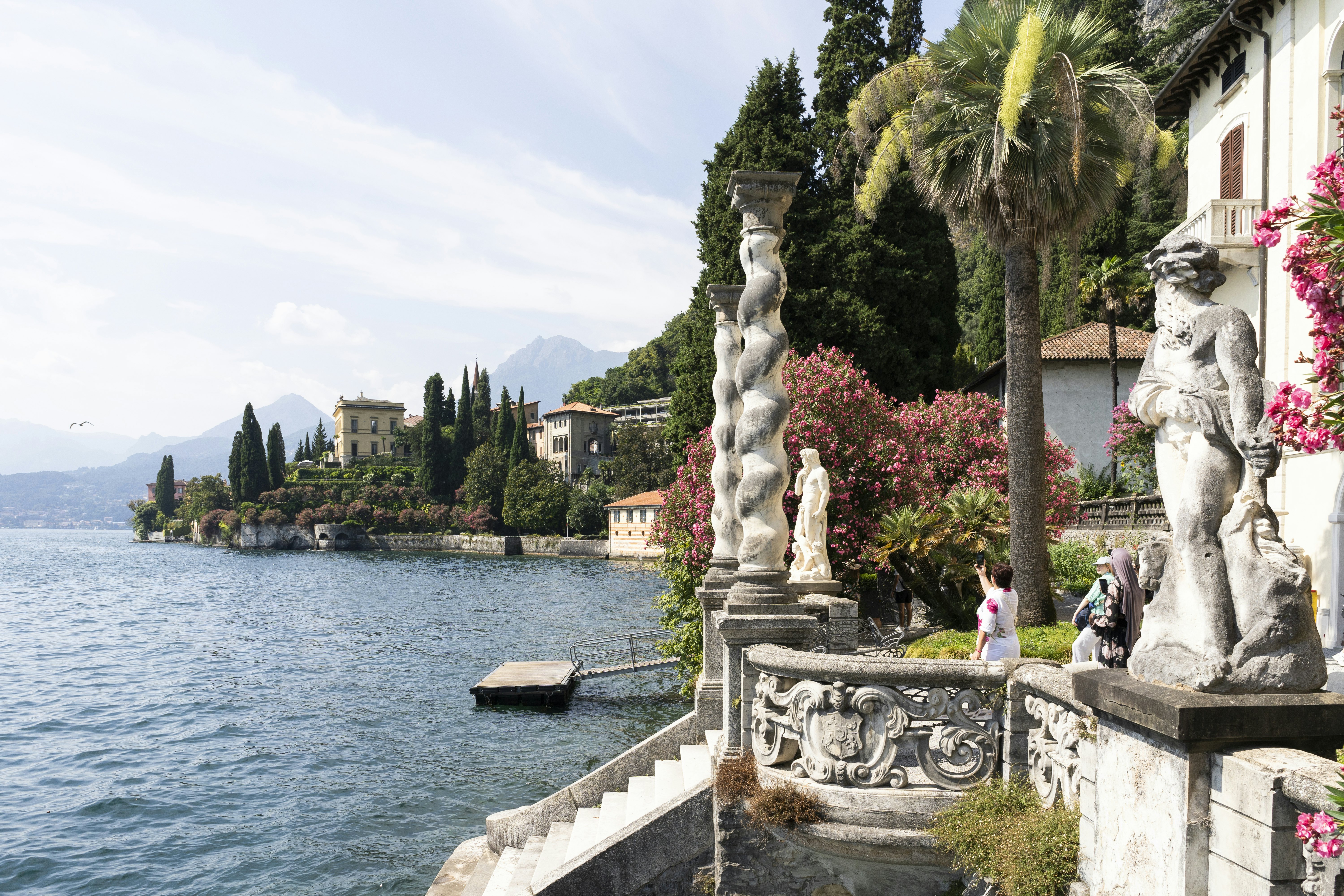
Make the town of Como your base for exploring Lake Como. Get your bearings with a scenic walk along the Chilometro della Conoscenza ("Kilometer of Knowledge"), a lakeside promenade that takes you through verdant gardens, passing three photogenic lakeside villas – Villa Olmo, Villa del Grumello and Villa Sucota – with memorable shoreline views along the way.
Afterward, check out the historic sites in town, such as the grand cathedral and several medieval churches, then set out through Como's cobblestone lanes, which are dotted with indie shops and boutiques, wine bars and terrace cafes.
Don't miss the funicular ride from Como up to Brunate for stunning views across the mountains. This is also a prime hiking destination, with numerous trails crisscrossing the slopes, delivering more sweeping lake vistas.
Swim in sparkling waters at Garda and Como
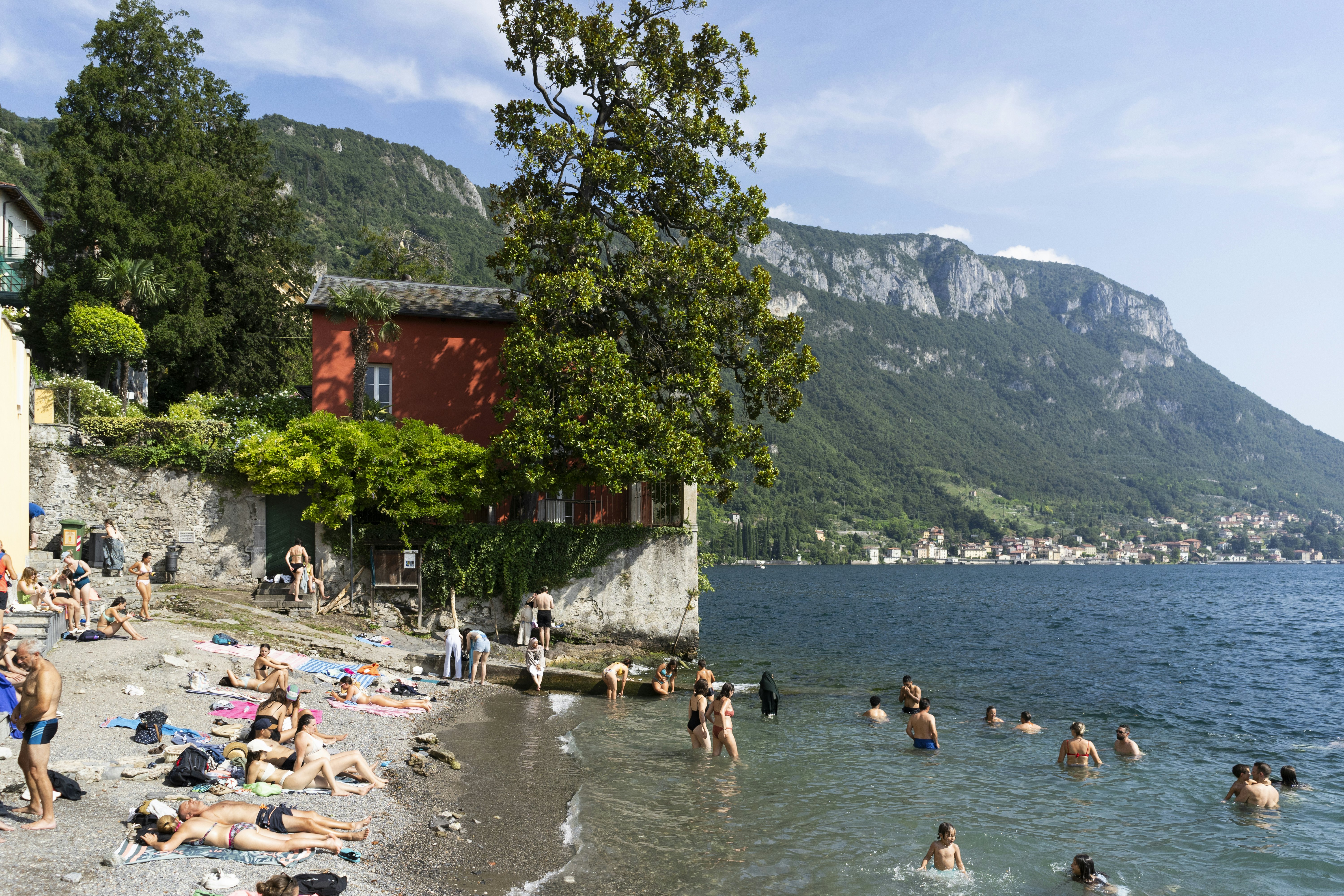
Lake Garda and Lake Como are blessed with pretty shingle and pebble beaches where sun worshippers bask and swimmers bathe in summer. Varenna has one of the most popular beaches, and there are more appealing stretches at Bellagio, Griante, Nesso and Colico.
Then there are the famous lidos (waterside resorts) in Varenna and Bellagio. On Lake Garda, try Sirmione's Jamaica Beach, or the pebble beaches around Riva del Garda and Lazise. Stay safe by only swimming in designated swimming areas with lifeguards and wearing water shoes.
Hop between Lake Como's prettiest villages
To sample the best of Lake Como, ride the ferry between three of the best villages in the Italian Lakes. Start in Varenna, a beguiling waterfront settlement of pastel-hued houses and narrow lanes. Take a 25-minute walk up to Castello di Vezio for a view over the rooftops and shimmering Lake Como beyond.
A short boat ride from Varenna, Bellagio is another charmer, with hilly pedestrian lanes lined with galleries and flower-trimmed restaurants. It's delightful to explore on foot, though you can also join a kayaking tour with Bellagio Water Sports for a unique perspective from the water.
Cap the day with a trip to Menaggio on Como's western shore. This tiny village has a tangle of cobblestone streets that invite exploration and a water-facing piazza that's perfect for an aperitivo (pre-dinner drink). Cafè del Pess is a favorite spot for an al fresco spritz.

My favorite thing to do in the Italian Lakes
I love to head to Riva del Garda for mountain biking adventures. One of the best rides I've ever taken is along the Via Ponale (aka Strada del Ponale), a 10km-long dirt road that snakes along cliff faces and ducks into tunnels as it veers higher to reveal ever more astonishing views over the lake. It's well signed, and there are good places to refuel, including Ponale Alto Belvedere, where you can enjoy a drink on the terrace to an unrivaled backdrop.
I like to get an early start and pedal all the way up to Lago di Ledro, where I can cool off with a swim. You once needed quads of steel to make such a steep journey, but nowadays, you can hire a quality e-bike that takes the bite out of the hills. Outfitters in Riva del Garda rent e-bikes, including the excellent Happy Bike.
How much money do I need for the Italian Lakes?
The Italian Lakes can be expensive, especially if you come during the summer (June to September), when hotel prices are at a premium. You can save money by foregoing a rental car and staying at hostels and simple guesthouses, or by renting an Airbnb apartment and self-catering.
You can also economize on meals (well, the occasional meal) by skipping the multi-course dining experience and eating at markets and simpler cafes. Make lunch the big meal of the day to cut down on costs; lunch deals are common.
Daily costs
Hostel room: €48
Basic room for two: from €140
Self-catering apartment (including Airbnb): from €110
Ferry ticket from Varenna to Bellagio: €4.60
Train ticket from Milan to Como: €5.20
Cappuccino: €2.50
Pizza: from €12
Dinner for two (with wine): from €100
Spritz (or other cocktail): €8

Frequently asked questions about the Italian Lakes
Which are the best Italian Lakes for boating?
As well as tours by ferry or chartered speedboat, rental companies on the shores of Como, Maggiore and Garda rent out motorboats for self-guided explorations. Apart from a valid driver's licence, no special boat licence is required for watercraft up to 40hp.
Rates start around €130 for two hours and €180 for four hours, with discounts for longer rentals. You'll also need to pay for the fuel you've used when you return the boat. Como probably offers the best boating opportunities; Como Lake Boats near the north end of the lake has competitive prices (costs are higher around popular tourist hubs such as Bellagio and Menaggio).
What are the beaches like on the Italian Lakes?
While popular with bathers, the beaches around the Italian Lakes are stony rather than sandy, with small to medium-sized pebbles or shingle, so bring wet shoes to enjoy the water. Some of the best beaches are backed by grassy lawns, perfect for stretching out and having a picnic.
What are the best festivals in the Italian Lakes?
Visit in spring or summer to enjoy the best of the festivals that happen in this area. Carnival celebrations take place from January through March, bringing music and color to Lake Garda and Lake Como. Big events include Sagra di San Giovanni in June, with boat flotillas and fireworks, and the Stresa Festival, bringing classical music (and other types of music) to the shores of Lake Maggiore from July to September. In August, visit Basilica di Sant'Abbondio in Como as the church celebrates its patron saint with a weeklong festival.
Is overtourism a problem in the Italian Lakes?
Lake Garda and Lake Como can get very busy in summer, with many tourists arriving by car from other parts of Europe, putting a significant strain on local infrastructure. If you are looking for a peaceful break, visit in the shoulder seasons or stay in smaller villages. Follow these tips to avoid contributing to the problem of overtourism in Italy.
Advertisement