Advertisement

The Tower of London. Mistervlad/Shutterstock
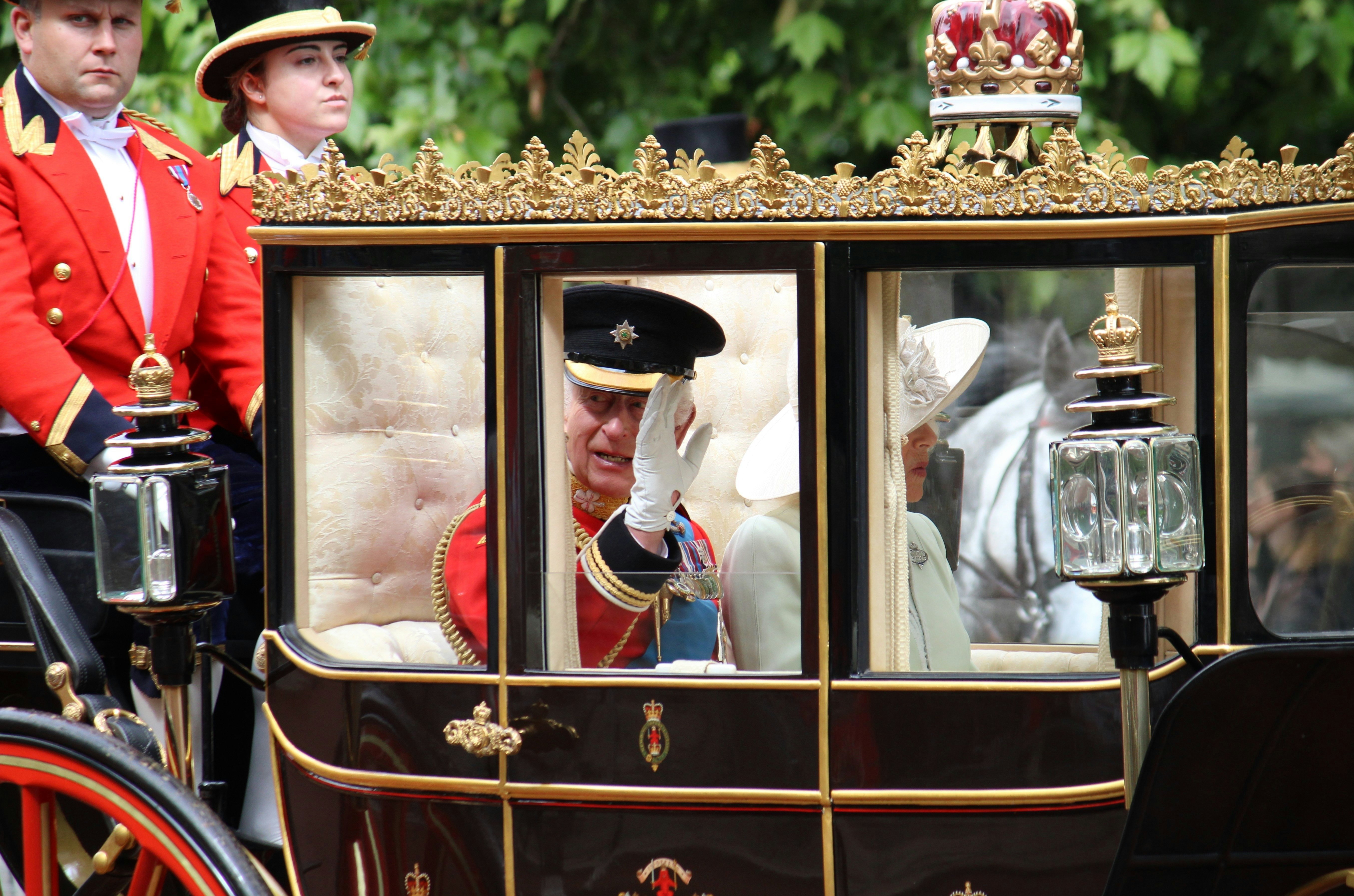
The British people may be divided over the virtues of the country’s millennium-old monarchy, but the palatial properties occupied by the royal family have an undeniable appeal for fans of pomp, architecture and history. Visiting the regal cribs once occupied by King Henry VIII or Queen Victoria is one of the best things to do in London.
While they are not the only royal residences in London, Buckingham Palace and the five palaces managed by Historic Royal Palaces – the Tower of London, Hampton Court Palace, Banqueting House, Kensington Palace and Kew Palace – lie at the core of Britain’s royal story.
Whether you're a committed monarchist or just love history and architecture, here’s how to get more from a visit to London’s royal palaces.
When should I visit London’s Royal Palaces?
Each of London’s royal palaces has its own opening hours; some properties are open to visitors year-round, and some are open on fixed dates. July to September is the best time to get your royal fix, coinciding with the summer opening of the State Rooms at Buckingham Palace.
If you can’t make the summer opening, you can peek at Buckingham Palace’s royal carriages and art collection at any time of year. The only surviving part of the fire-destroyed Palace of Whitehall, Banqueting House is open on select days in 2026, but Hampton Court Palace, Kensington Palace, Kew Palace and the Tower of London are open year-round, except for occasional closures during renovations and royal functions.
Advertisement
Check the Royal Collection Trust and Historic Royal Palaces websites for current palace opening times. Set aside at least 3 hours for a visit to the Tower of London, Buckingham Palace, Hampton Court Palace or Kensington Palace, and 1–2 hours for the smaller palaces.
How much do tickets cost?
All of the royal palaces charge entry fees – the Tower of London and the State Rooms at Buckingham Palace have the highest ticket prices, around £35 each. There are discounts for older adults, students, and visitors with disabilities, and kids under 5 are free.
Find prices for individual palaces at the Royal Collection Trust and Historic Royal Palaces websites; booking timed tickets guarantees you won't be turned away and will save you from waiting in a long line. You can also purchase a year-long Historic Royal Palaces membership for £60, granting unlimited entries to its five properties.
Where can I eat and drink on a trip to the royal palaces?
Most of the royal palaces are centrally located in London, so finding somewhere to eat is easy. If you’d rather eat on-site, all of the palaces have cafes, some serving suitably swanky fare. If you fancy snacking like a royal, book a high tea in the garden at Kensington Palace.
What to see at Buckingham Palace
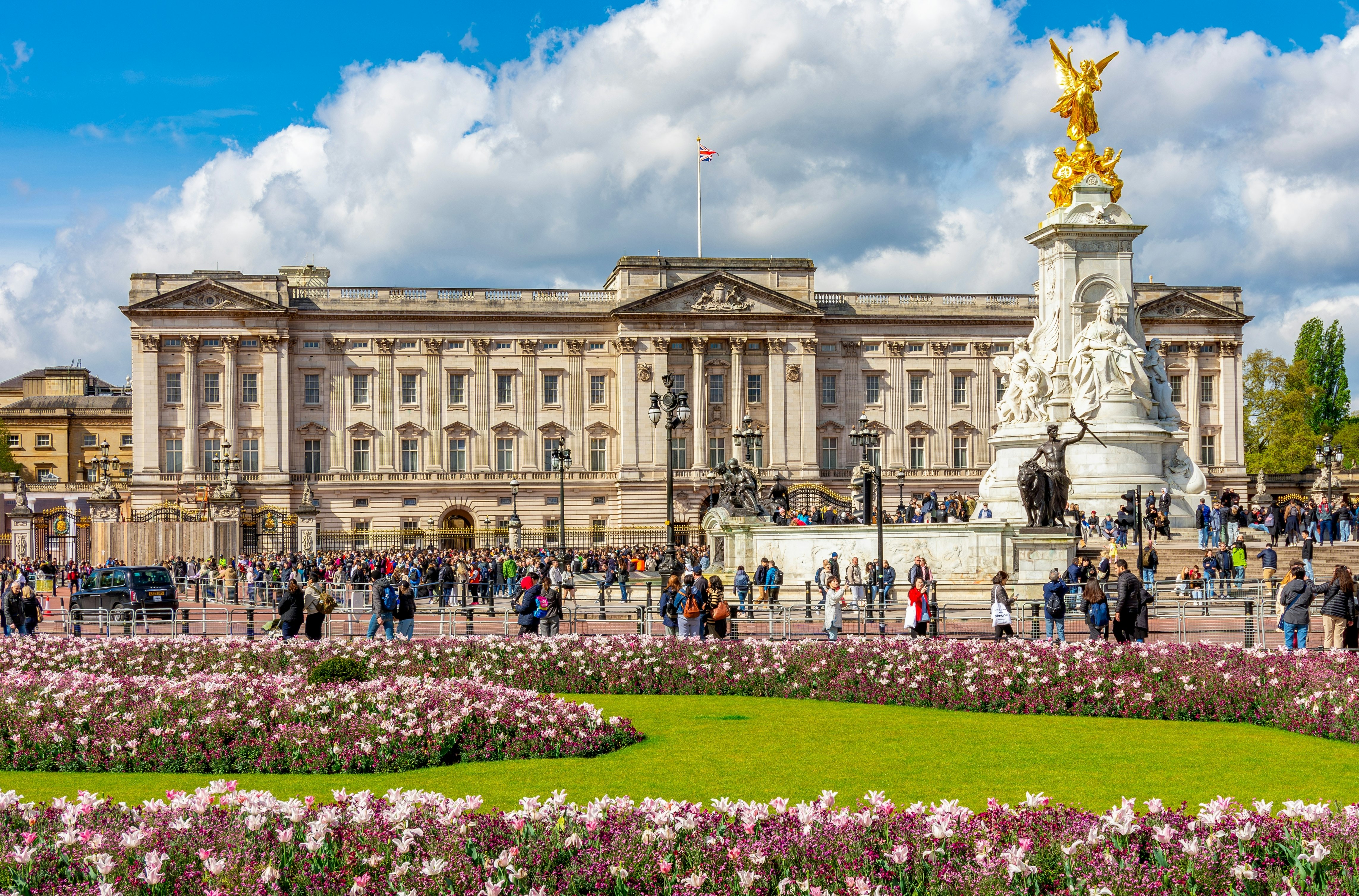
The most recognizable palace on the planet, Buckingham Palace has been the official London residence of the royals since Queen Victoria ascended to the throne in 1837. Today, with King Charles III at the helm, it remains a working palace as well as a tourist sight.
Pose by the palace facade
Originally the country house of the Duke of Buckingham, Buckingham Palace was revamped for the accession of Queen Victoria by architects John Nash and Edward Blore, who added three wings around a central courtyard. The Portland stone facade provides a familiar backdrop for the Victoria Memorial, erected outside the main gates following the queen’s death in 1901.
The palace is best approached via the Mall, starting at Trafalgar Square. During royal jubilees, weddings and funerals, millions of onlookers pack this red-carpet route and die-hard well-wishers aim to get as close to the palace's balcony as possible for the chance of glimpsing a wave from the royals.
View the state rooms in summer
Formal events for visiting dignitaries are held at the palace year-round in the State Rooms. You can peek at these 19 elegant reception spaces during the summer opening from mid-July to September.
The State Rooms are filled with treasures from the Royal Collection, including paintings by Van Dyck and Canaletto, sculpture by Canova, Sèvres porcelain and fine English and French furniture. Tours also visit the Throne Room and the monumental White Drawing Room, but you’ll need to book early.
Watch the Changing of the Guard
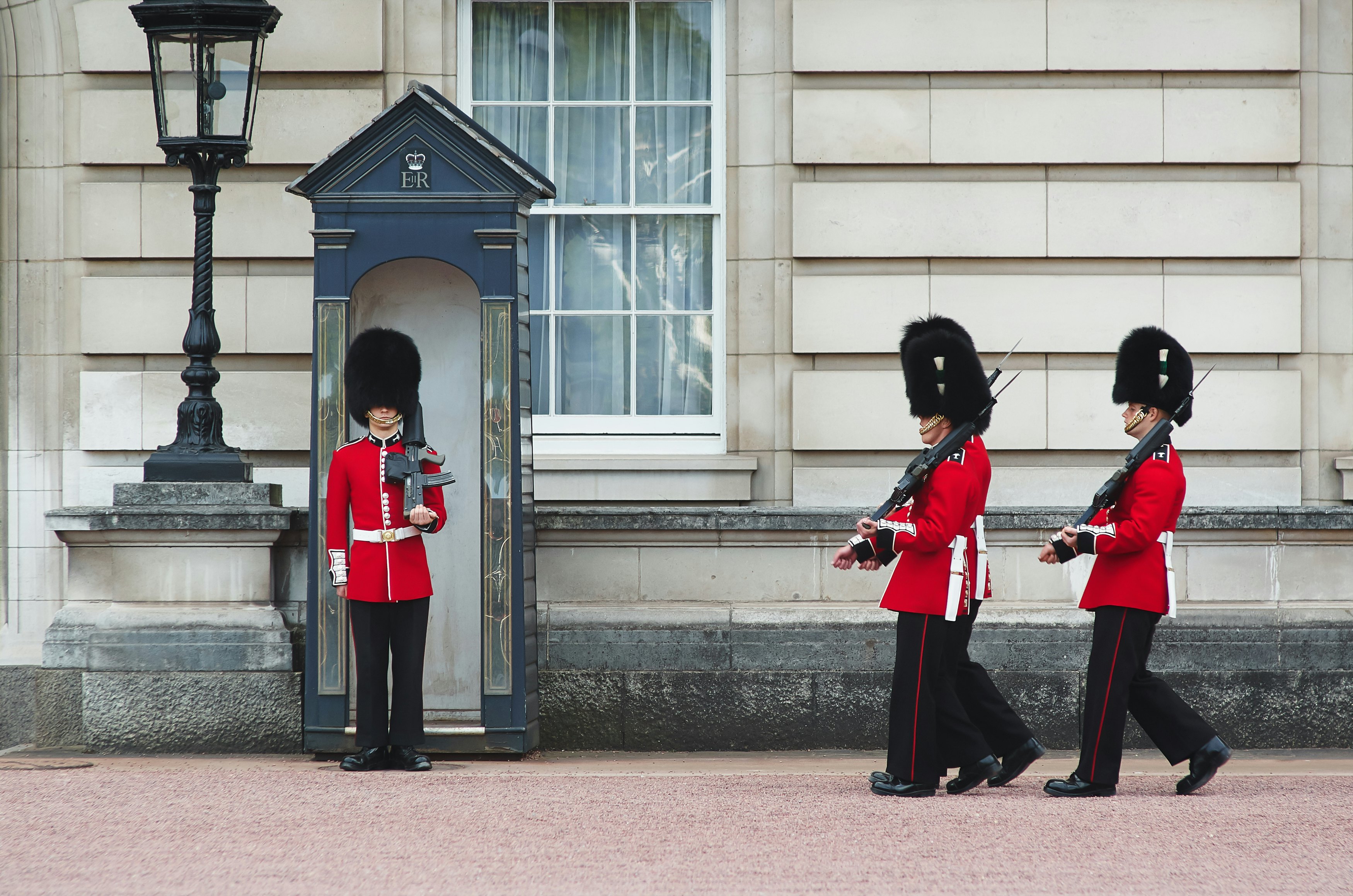
The Changing of the Guard ceremony at Buckingham Palace has been a London ritual since 1660. This free-to-see display of pageantry takes place every Monday, Wednesday, Friday and Sunday at 11am. Hundreds of tourists gather to watch immaculately turned-out soldiers in black bearskin hats and red tunics step into position, accompanied by a military band.
Dive into the palace museums
Accessed on a separate ticket, the Royal Mews is responsible for the monarch’s travel arrangements. Visitors can get up close to the royal stables and elaborate carriages, including the Gold State Coach, which has been used for the coronation of every monarch since 1831.
Also accessed on a separate ticket, the King’s Gallery is a treasure house of old master paintings, rare furniture, decorative artifacts and photographs from the Royal Collection. Just off the Mall, Clarence House has been used as a home by a string of royals; it’s currently closed to visitors.
What to see at Hampton Court Palace
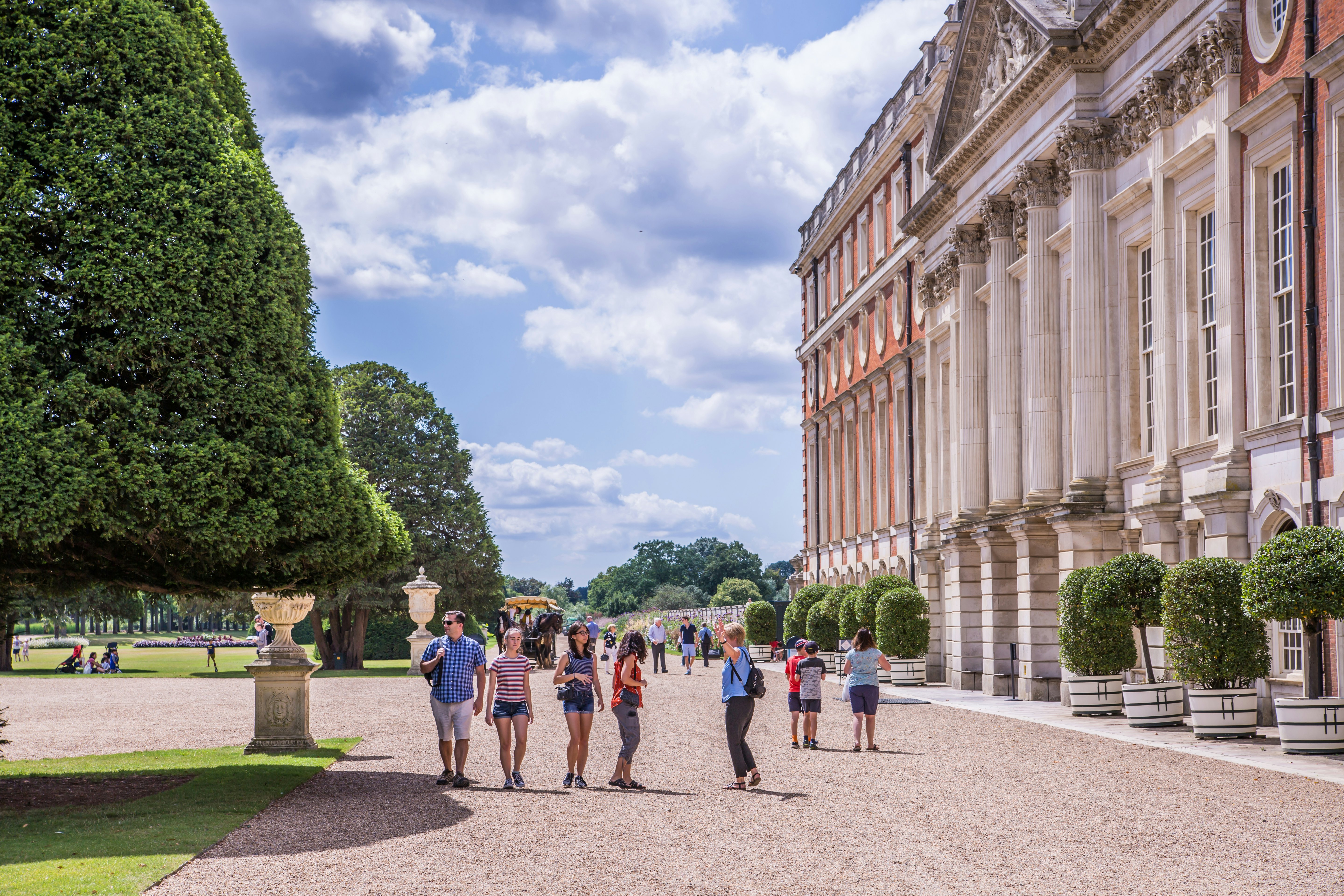
King Henry VIII’s favorite residence, Hampton Court Palace sprawls amid lavishly decorated gardens on London’s southwest fringes. Intended to rival Versailles near Paris, it’s one of England’s grandest homes.
Explore centuries of royal architecture
A stunning example of Tudor architecture, Hampton Court Palace was built by Cardinal Thomas Wolsey at the beginning of the 16th century in an unsuccessful bid to curry favor with Henry VIII. After Wolsey failed to secure the king’s divorce from Catherine of Aragon, the palace was seized as a royal possession.
The original Tudor building was much modified by Henry VIII, and later by Sir Christopher Wren and a succession of Georgian kings and princes. Queen Victoria opened the palace to the public in the first half of the 19th century. When you visit, take a self-guided audio tour for extra context on the palace’s colorful (and sometimes macabre) stories.
Advertisement
The palace’s meticulous craftsmanship shines through in the Chapel Royal, with a blue and gold plaster and timber ceiling that was originally designed for Christ Church at Oxford. Another highlight is the astronomical clock, installed in 1540 to help Henry predict the Thames tides.

Roam the royal quarters
The opulent state apartments offer a glimpse of the day-to-day life of Henry VIII and later monarchs. Henry’s living quarters flank the Great Hall in the Tudor part of the palace, and a perfect replica of the king’s crown (the original was melted down by Oliver Cromwell) is displayed in the Chapel Royal.
In King William III’s apartments, note the delicate 17th-century wood carvings and the private dining room, where the king organized small parties.
Take a walk from Henry VIII’s private apartments toward the chapel and you’ll pass the legendary Haunted Gallery. This part of the palace is reputed to be haunted by the ghosts of at least two of the king’s wives – Jane Seymour, his third wife, and Catherine Howard, his fifth.
Wander the royal kitchens and gardens
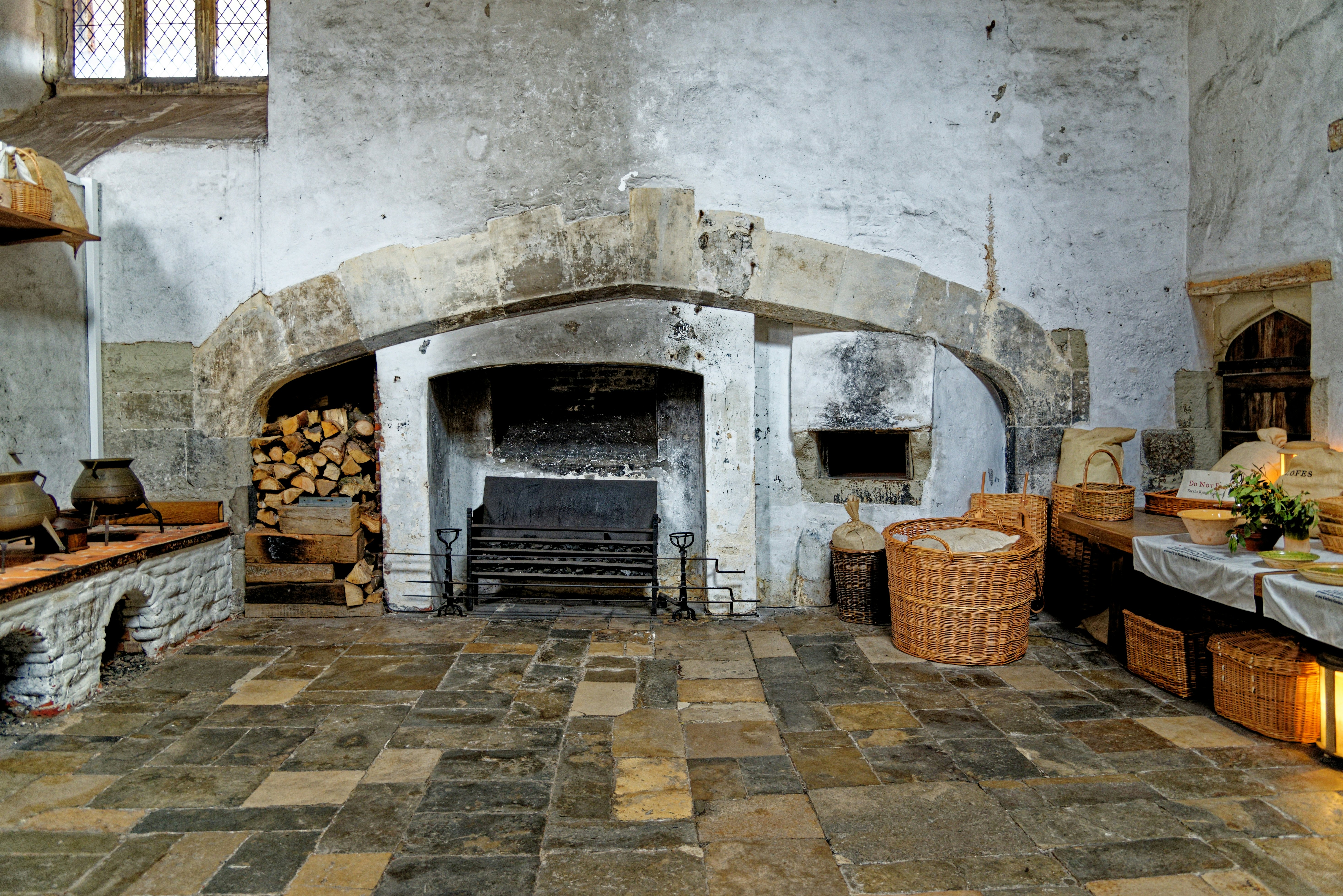
In Tudor times, it was a sign of status to carry a few extra pounds, and Hampton Court Palace employed 200 cooks, grooms and pages to keep Henry VIII and his entourage well fed. The palace kitchens were built in 1530, and they once prepared up to 800 meals a day.
Cooking demonstrations on weekends provide a glimpse of the Tudor specialties that were served and enjoyed at the castle. Grand feasts were dished out in the Great Hall, perhaps the greatest medieval hall in England, which was later turned into a theater (Shakespeare’s troupe performed here in 1603).
Hampton Court is surrounded by some of London’s loveliest green spaces, from peaceful parkland and formal Elizabethan gardens to the world’s oldest hedge maze, first planted in the 1690s. For even more gorgeous greenery, take a short trip northeast to Richmond Park, a former royal hunting reserve near the now-vanished Richmond Palace.

What to see at the Tower of London
The oldest of London’s royal palaces, the Tower of London is infused with history. Founded by William the Conqueror, this imposing riverside castle has served as a palace, observatory, armory, mint, zoo, prison and execution site.
Visit famous prison cells and execution sites
The Tower was used as a prison for many famous figures, including Elizabeth I, Guy Fawkes, Sir Walter Raleigh and the Kray twins, and Tower Green was the spot where two of Henry VIII’s wives, Anne Boleyn and Catherine Howard, were beheaded.
Over the centuries, a total of 22 people were executed inside these walls, including a number of WWI and WWII spies. This tally does not include Henry VI, bludgeoned during the 15th-century War of the Roses in 1471, or Edward V and his brother, Prince Richard of Shrewsbury, who were murdered in the Bloody Tower, reputedly on the orders of Richard III.
Take a peek at the Crown Jewels
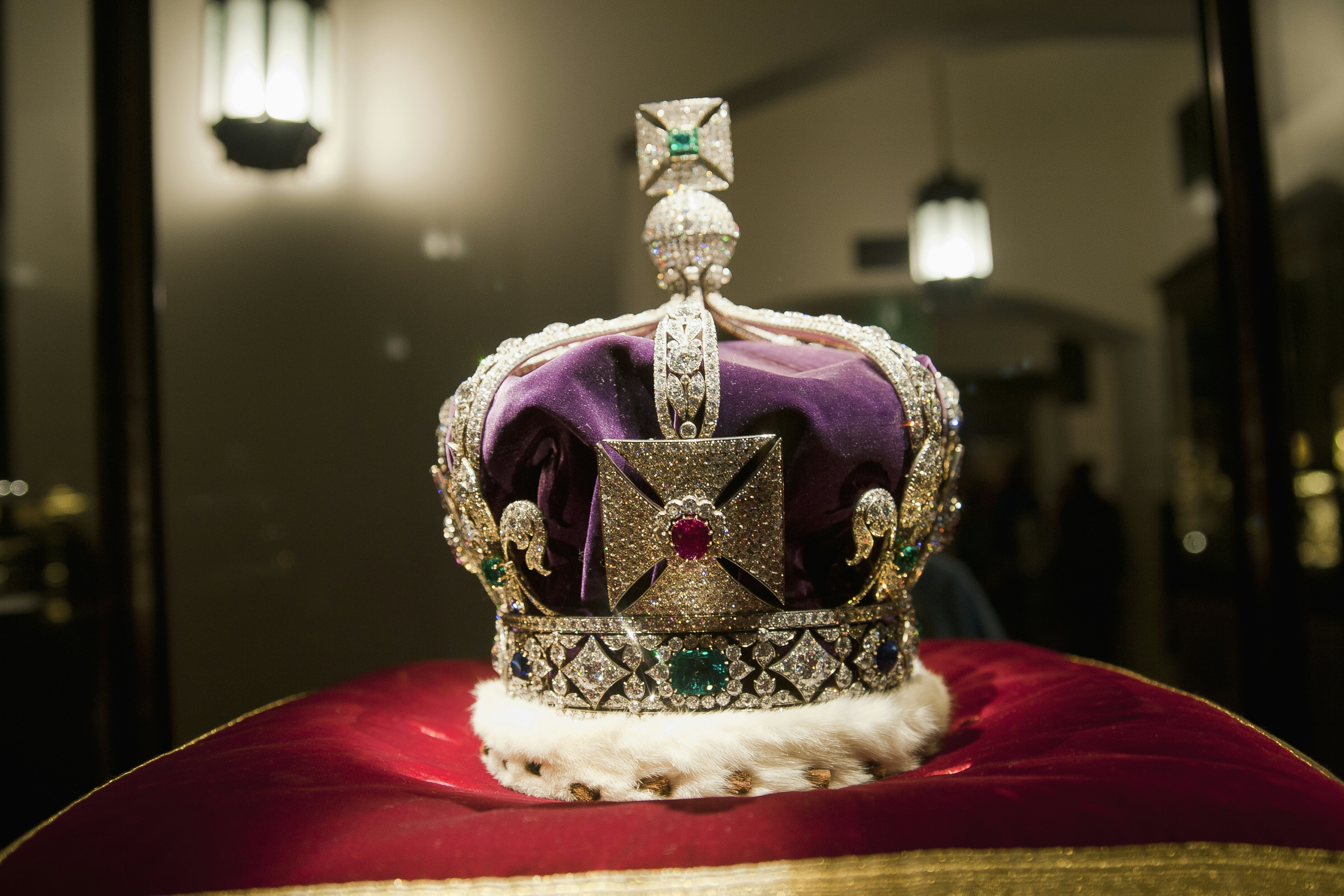
North of the White Tower is Waterloo Barracks, home of the priceless Crown Jewels. Moving sidewalks take you past the bejeweled coronation regalia, including Elizabeth II’s platinum crown, controversially set with the 106-carat Koh-i-Nûr diamond, and the Sovereign’s Sceptre, topped with the 530-carat Great Star of Africa diamond (also known as Cullinan I).
Other famous crowns include St Edward’s Crown (1661), used in the coronation of King Charles III, and the Imperial State Crown (1937), bearing the 317-carat Second Star of Africa (Cullinan II). Needless to say, security is tight at this treasure house of royal trinkets.
Aside from a golden anointing spoon used at King John’s coronation in 1199, almost all of these extravagant objects date from after Oliver Cromwell ordered the destruction of the original collection of royal regalia in the 17th century.
Check out the royal armory
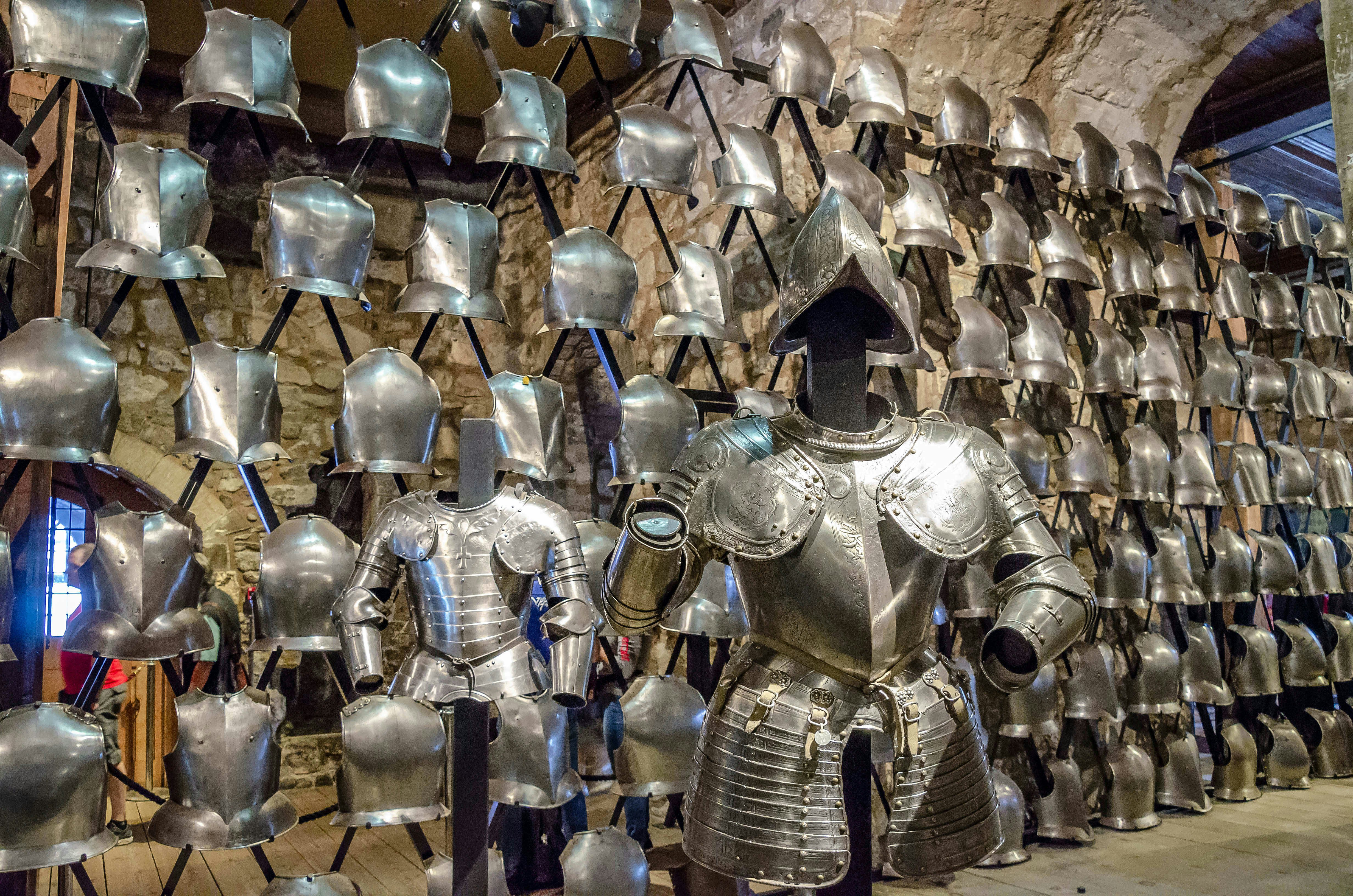
The oldest intact building in London, the White Tower was constructed in the 1070s; the name arose after Henry III had the castle whitewashed in the 13th century. Most of its interior now houses the Royal Armouries’ collection of cannons, armor, guns and bloodthirsty bladed weapons. Look out for the axe used for Britain’s last public beheading, in 1747, and a roomy suit of armor made for the generously proportioned Henry VIII.
Uncover centuries of palace history
The medieval part of the castle is entered via St Thomas’s Tower, which holds a reconstructed hall and bedchamber from the time of Edward I, who reigned from 1272 to 1307. Adjoining Wakefield Tower was built by Henry III, and it contains a mock-up throne room. The similarly ancient Lanthorn Tower was the residence of medieval queens.
On the northern edge of Tower Green is the 16th-century Chapel Royal of St Peter ad Vincula, a rare example of ecclesiastical Tudor architecture, where three queens (Anne Boleyn, Catherine Howard and Lady Jane Grey) and two saints (Thomas More and John Fisher) are buried. Also drop by the Norman-era Chapel of St John the Evangelist in the White Tower, where Elizabeth of York, wife of Henry VII, was laid in state.
Meet the Yeomen Warders and ravens
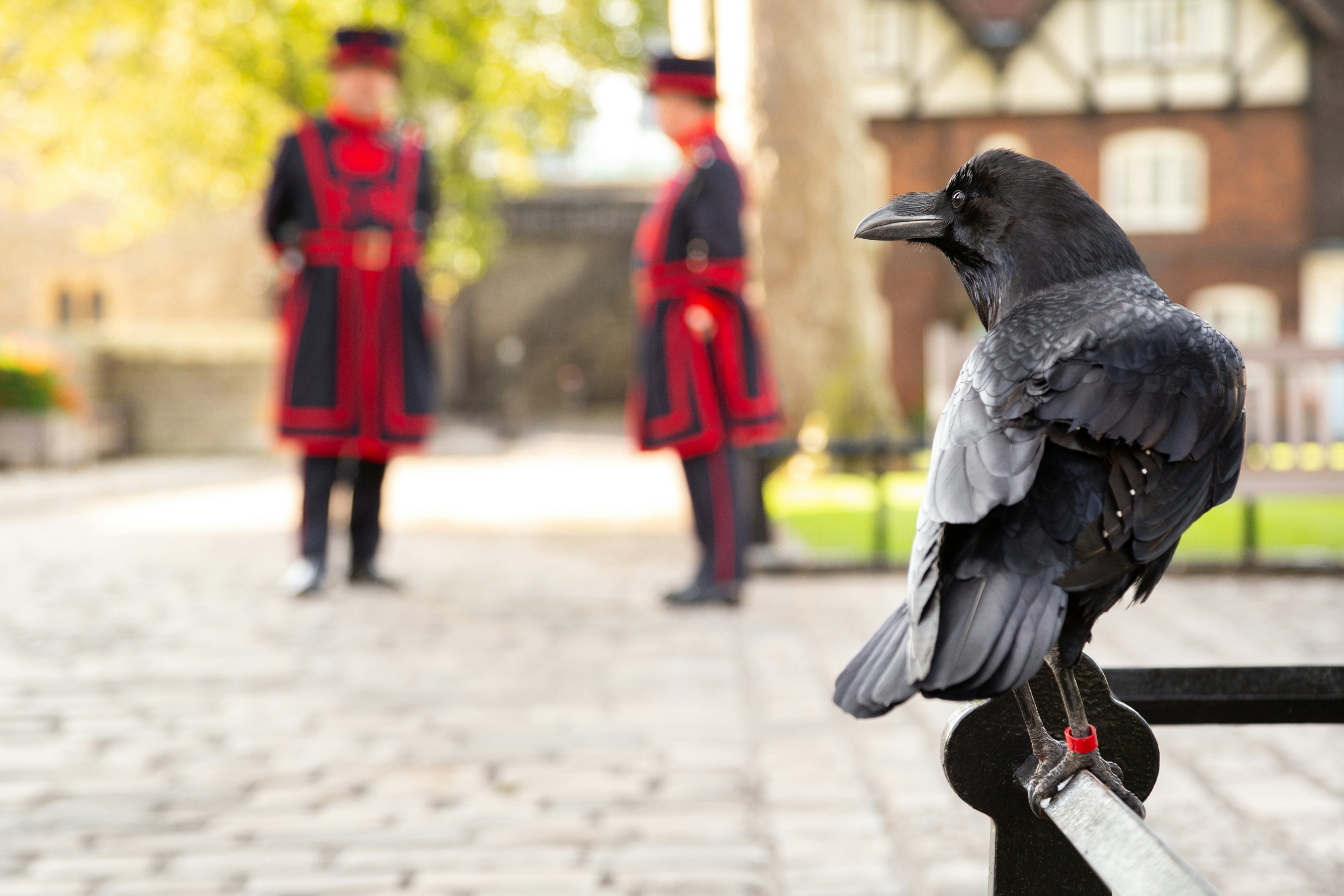
Dressed in signature red-trimmed navy blue uniforms, the iconic Yeomen Warders (Beefeaters) have been guarding the Tower of London since the 15th century. Free Yeomen Warder–led tours run every 45 minutes during opening hours, offering a lively introduction to the castle’s rich history.
Another popular ticketed event is the nightly locking of the Tower gates, known as the Ceremony of the Keys, which starts at 9:30pm (book ahead online). Then there are the six palace ravens in the aviary – according to legend, if these celebrity birds ever depart from the Tower, the kingdom will fall.
Walk the walls
The Tower’s immense inner wall was added by Henry III in 1220, and you can walk along its eastern and northern edges. Start at the Salt Tower, built to store saltpeter for making gunpowder and later used as a prison for Catholic martyr St Henry Walpole in the 16th century.
The walk continues through the Broad Arrow and Constable Towers, containing displays on medieval weaponry and the Peasants’ Revolt led by Wat Tyler in 1381. Martin Tower, which once housed the Crown Jewels, now has an exhibition on the original coronation regalia.
Along the north wall, Brick Tower has a fascinating display on the medieval royal menagerie, including the captive polar bear that hunted for fish in the Thames. Bowyer Tower has exhibits on the Duke of Wellington, while the Flint Tower explores the castle’s role in WWI.
What to see at London's other royal palaces
The other royal palaces are less mobbed by visitors, but they show a more domestic side to royal life. On days that Banqueting House isn't open, focus your attention on Kensington Palace and Kew Palace.
See how the other royals live at Kensington Palace
Containing the official living quarters of the Prince and Princess of Wales (William and Kate), Kensington Palace has accommodated a string of royals, including the young Queen Victoria and Lady Diana Spencer. At this grand reworking of a Jacobean mansion from 1605, visitors can roam around some truly lavish rooms, including the grand King’s State Apartments.
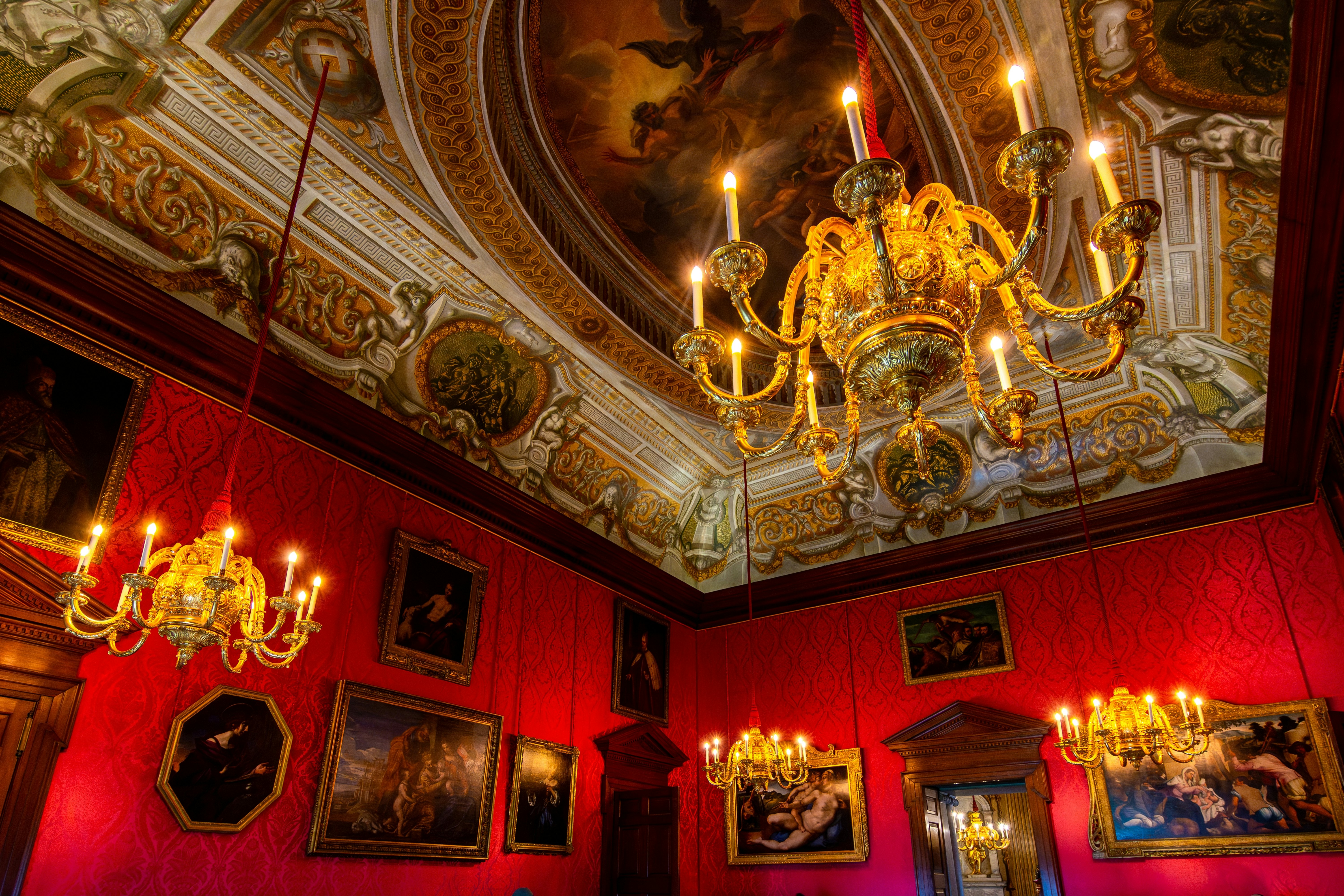
Highlights include the King’s Staircase, decorated with life-size paintings of characters from George I’s court, and the early 18th-century chambers of George II and Queen Caroline, featuring a riot of murals, chandeliers and gold trim. Don’t miss the beautiful Cupola Room, where Queen Victoria was baptized, with its gilded statues and striking painted ceiling.
Other interesting areas include the apartments of King William III and Queen Mary II, studded with Asian artworks, and the Jewel Room, containing jewelry specially commissioned for Queen Victoria by her husband, Albert.
Visitors can also see a recreation of the environment that Victoria grew up in, including the bed where she was born, the doll’s house and wooden peg dolls she played with, and many more family heirlooms.
Look for traces of royal life at Kew
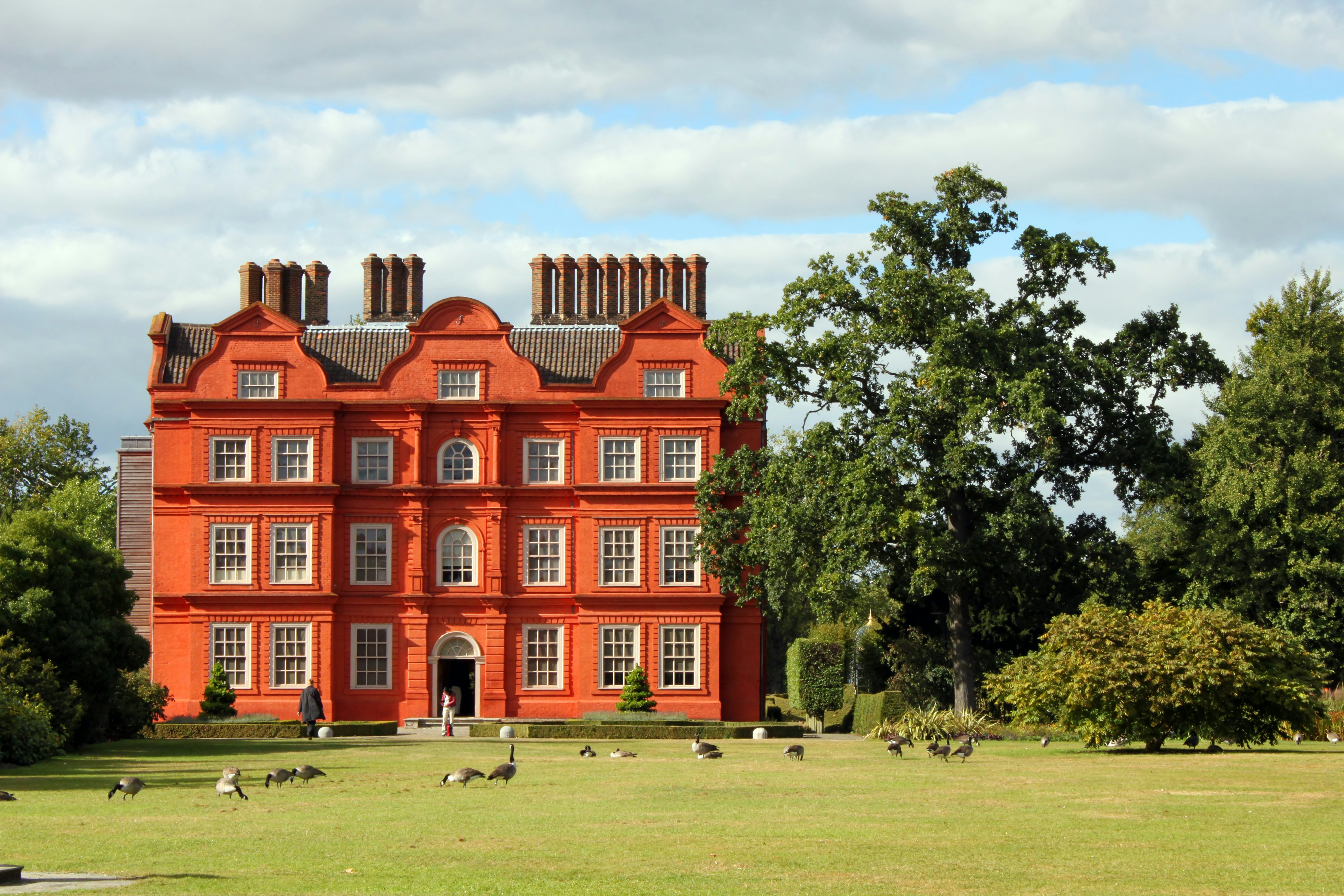
The former summer home of George III and Queen Charlotte, Kew Palace is part of a once-grander royal residence that originally encompassed land now covered by Kew Gardens. Also known as the Dutch House, the imposing brick-red main building was constructed in 1631.
Inside, you can view graceful period decor that hints at the European origins of its occupants. The rulers of the Germanic House of Hanover governed Britain from the crowning of George I in 1714 until the death of Queen Victoria in 1901. Next to the palace, the royal kitchens have been reopened after lying dormant for two centuries.
Are the royal palaces accessible?
While efforts have been made to open the royal palaces to all, the age of the buildings means that not all areas are accessible to visitors with wheelchairs or mobility issues. This particularly applies to the millennium-old Tower of London.
Buckingham Palace is perhaps the most accessible space, but step-free access and free companion tickets must be booked ahead of time. See the Royal Collection Trust and Historic Royal Palaces websites for more information.
This article was adapted from Lonely Planet’s London guidebook, published in June 2025.
Advertisement
Explore related stories


Aug 15, 20226 min read
Get off the beaten path in Bristol for English history, culture and cutting-edge food