

Advertisement

Interior view of London's Borough Market. Brester Irina/Shutterstock
London has long shaken off its reputation for dubious dining, with world-class restaurants now competing for attention in practically every neighborhood. But the gourmet revolution is just beginning.
London’s food markets have joined the ranks of the most fabulous epicurean experiences around the world, featuring superlative cuisine from every corner of the globe. Whether you’re here for a long trip or just want to spend the weekend, these are some of the very best food halls and markets you should visit in London.
1. Market Halls Victoria
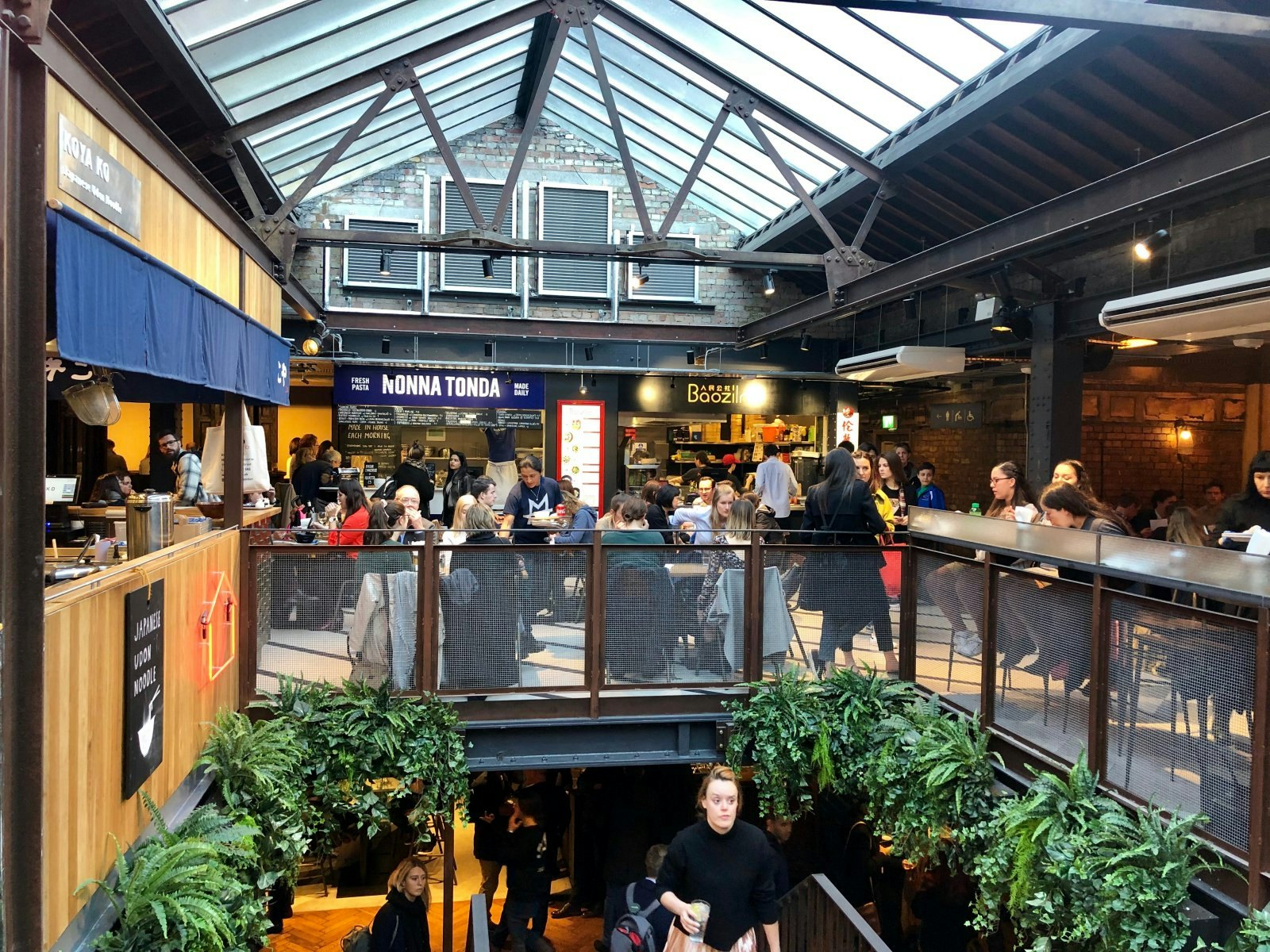
Not that long ago, the Victoria terminus in central London was not somewhere to linger, but that’s changed with the opening of Market Halls Victoria. Located directly opposite the main station concourse, the airy, three-story building includes a roof terrace and contains nine food vendors spread across two indoor levels, three bars, and plenty of communal seating. Arrive early if possible – it gets incredibly busy come evening, with a one-in, one-out policy not uncommon.
Getting there: Market Halls Victoria is next to Victoria Station and can be reached by Tube, bus or train.
Advertisement
2. Bang Bang Oriental Foodhall
Easily the biggest oriental food hall in London, Bang Bang contains 24 Asian restaurants and stalls across two levels, under one enormous roof. On the ground floor you’ll find the Golden Dragon, a Chinese restaurant serving classic dishes and with room for 360 diners. The top floor hosts the remaining vendors, which between them sizzle up cuisine from the rest of Asia, including India, Japan, Indonesia and Taiwan.
Getting there: Bang Bang Oriental Food Hall is a 10-minute walk from Colindale Tube station.

3. Mercato Metropolitano
One of the coolest food markets in the city, the original Mercato Metropolitano is an enormous venue housed in and around an old paper factory. The focus here is on serving natural foods that are sourced locally, and keeping waste to a minimum. It's mainly Italian fare, including an Italian food store alongside the stalls, but you’ll also find options ranging from Vietnamese to Argentinian to Turkish. Since opening in 2016, the market has expanded to locations in St Mark’s Church in Mayfair, and Wood Wharf.
Getting there: It’s a 10-minute walk from Elephant & Castle station.

4. Maltby Street Market
Maltby Street Market has long ceased to be a secret, but it still somehow feels like a new discovery, even if you’ve been before. Squeezed between Victorian railway arches along a smokey, open-air corridor called the Rope Walk in a quiet patch of Bermondsey, around 30 artisan food and drink vendors serve meals, snacks, desserts and cocktails from round the world. For a tipple to wash down lunch, check out Jensen’s – a gin distillery, bar, and shop, all in one.
Getting there: It’s a 15-minute walk from Bermondsey station (Tube) or London Bridge station (Tube/train).
5. Vinegar Yard
Vinegar Yard opened in spring 2019, and became a huge hit with Londoners. Located in the shadow of the Shard, and offering incredible views of the same from its spacious terrace, the venue is full of food traders throughout the week (Baba G’s Indian-inspired burgers are the talk of the town, and for good reason) and at the weekends a flea market pops up. British artist Joe Rush is behind the mechanically-themed sculptures, with the highlight being an abandoned train carriage covered in giant, red ants.
Getting there: Vinegar Yard is located next to London Bridge station.

6. Flat Iron Square
Spread throughout seven railway arches, and an outdoor area for those summer vibes, Flat Iron Square is primarily a food market, though more generally acts as a cultural complex that hosts regular events, including live music, film screenings and quiz nights. On the food front, around four traders operate at any one time, serving up everything from tacos to burgers to sandwiches. The venue forms part of the “Low Line” project, which aims to transform the Bankside railway arches into a public cultural space.
Getting there: Flat Iron Square is located between London Bridge (Tube/train) and Southwark (Tube) stations.

7. Brixton Village
The arcades of Brixton Village Market have been around for almost a century (originally it was called Granville Arcade), but it’s only in the last decade or so that they’ve become home to arguably the best food market in South London – certainly the best for budget eats. A variety of stalls, restaurants and cafes serve dishes from around the world, and if you fancy even more choice, head over to Pop Brixton, a collection of repurposed shipping containers hosting pop-up food and drink options.
Getting there: Brixton Village is next to Brixton station (Tube/train).

8. Borough Market
Borough Market has been operating in one form or another for at over a thousand years, and remains a top London attraction in its own right. It’s a bit of a maze and always chaotic, but that just adds to the fun – using a map will be as futile as resisting the vast array of gourmet eats on offer, so enjoy getting lost and discovering a new favorite. Lunchtimes are unsurprisingly busy, especially on Saturdays, when it feels like the whole world has descended on the market, so try to arrive early if you can.
Advertisement
Borough Market operates partly as a wholesale market. In the mornings, it supplies the freshest produce, meats, seafood and other goods to London’s restaurants and food vendors before transitioning into its bustling self later in the day. Go early to get the best picks.
Getting there: Borough Market is next to London Bridge station.

9. Broadway Market
A classic Hackney haunt dating back to Victorian times, Broadway Market has found new life since being revitalized in the early 2000s by the local community, who reinvented it as a street food and fresh produce market, open for business every Saturday and Sunday. Once you’ve had your fill (look out for the prawn burger), you can browse the permanent shops and boutiques that line the street, and stroll along nearby Regent’s Canal.
Getting there: It’s a 10-minute walk from London Fields Overground station.

10. Camden Market
Hawker stands have long been a Camden Market staple, and most are congregated in the West Yard huts of Camden Lock Market, selling tasty, inexpensive flavors from around the world, from steaming tubs of bang bang chicken and zingy Pakistani BBQ to South American arepas stuffed with shredded beef and black beans.
Waits at weekends can be long, especially for freshly made dishes (these are tiny kitchens). Camden’s food markets have a scattering of tables, which are nearly always full – people line up to sit. If you don’t want to eat shoulder to shoulder or standing up, head to the canal and sit along the water’s edge.
If the lines are too long, head to Poppie’s for a bag of traditional battered fish (eight types) and thick-cut chips. Chase with organic ice cream from Chin Chin Labs, which is literal food chemistry – hand-churned on the spot and turned into ice cream using liquid nitrogen. Watch the dessert science in action through a glass window.
Most people visit Camden on a weekend, when the market swells in size. There will always be crowds, but there are fewer people in the morning and midweek.
Getting there: It’s a five-minute walk from Camden Town station.

11. Old Spitalfields Market
Markets have operated in this location since 1682, and Old Spitalfields Market has evolved into a popular spot for independent traders, along with a few established brands, as they congregate under one grand Victorian roof. Situated a mere five-minute stroll from Liverpool Street and Shoreditch High Street stations, you can shop here seven days a week.
When you’re feeling hungry, venture towards the heart of the market, where you’ll come across the Kitchens, featuring street food from all over the world. There are a number of different restaurants dotted along the periphery of the space as well, providing you with over 40 food choices.
The day you choose to visit will influence your experience – Thursdays are for the Antiques and Vintage Market, while the first and third Friday of every month is all about vinyl records.
Getting there: It’s a five-minute walk from Liverpool Street station (Tube/train).

12. Brick Lane Market
Once the ultimate flea market, but now arguably East London’s most famous Sunday market, Brick Lane Market was established in 1888 and now offers the hipster clichés of vintage clothes, boutique items, gourmet food stalls and artisan coffee. Look carefully though and you’ll find a sliver of the original flea market along Sclater St, on a small car park where no doubt luxury flats will soon be built – hurry along if you want a final glimpse of a market where anyone can unload the bric-a-brac contents of their car boot onto a stall selling an intriguing collection of defunct ‘90s technology.
For a quieter alternative, try Cheshire Street, a nearby side street that hosts a mix of global foods like South Asian curries and Middle Eastern kebabs.
Getting there: It’s a 10-minute walk from Shoreditch High Street station (Overground).

13. BOXPARK Shoreditch
BOXPARK Shoreditch is made from shipping containers, spread across two levels and featuring over 50 vendors, and is a dynamic space for creativity and commerce. The upper level is purely for food and drink, which makes it an ideal spot for pre-drinks – when the lights dim, the music volume rises. The lower level is a fusion of food, accessories, apparel and skincare, although the roster of pop-ups tends to rotate frequently. There are also a variety of independent brands, and the common thread among them is that they are high quality and trendy.
The marketplace always has a buzzing atmosphere too; whether you’re swinging by during the day or hanging out at night, the vibe is that of a laidback house party. Among the highlights are seasonal entertainment and events like football viewings, brunches and parties – always be sure to check the website for what events will be running during a particular month.
Getting there: It’s less than a minute's walk from Shoreditch High Street station (overground).

14. Seven Dials Market
Seven Dials Market opened in 2019 in what was previously a banana warehouse. The vision: a street-food destination in a similar vein to Time Out Markets around the globe. Think rich Penang curries, stacked truffle burgers dripping with cheese, and massive pizzas from Bad Boy Pizza Society in the main “warehouse,” and then a separate Cucumber Alley with row after row of snack and dessert stations offering dumplings, soft-serve ice cream and matcha pancakes.
There are also two bars, numerous pop-ups and a Market Bookshop carrying cookbooks, food biographies and sustainability titles on its shelves – browsers can eat while they shop. In a nod to Seven Dials Market’s banana origins, there’s a huge yellow banana sculpture there too, which you’re welcome to touch and sit on like all the other social-media creators.
The hip spots don’t end inside the market. Mosey along surrounding Monmouth St, Mercer St and Neal St for boutiques, vintage kicks and coffee stops galore, and add a pin to Neal’s Yard, a colorful little enclave with more sweet digs for cool kids.
Getting there: It’s a five-minute walk from Covent Garden or Leicester Square station.

15. Portobello Road Market
After Camden Market, this is London’s most famous – and crowded – street market, welcoming up to 150,000 visitors on a warm summer’s day. Portobello is not just one market, but an accumulation of several, with as many as 1000 stalls offering a heady mix of antiques, curios, vintage fashion, fruit and veg, and street food stalls. Starting near the bright-yellow Sun in Splendour pub in Notting Hill, the market (or rather markets) wends its way northwards to well past the Westway flyover. Though most of the shops and some stalls are open daily, the busiest day is far and away Saturday.
Antiques, handmade jewelry, and paintings are concentrated at the Notting Hill Gate end of Portobello Rd (roughly from Chepstow Villas as far as Elgin Crescent on the west and Colville Terrace to the east). The stalls dip somewhat downmarket and become more workaday as you move north from Elgin Crescent to Talbot Rd – fruit and veg, secondhand clothing, cheap household goods and bric-a-brac. In and around the area below the Westway, more stalls dispense modern fashion and vintage clothes and shoes. The enclosed Portobello Green Arcade, with its cutting-edge clothing and jewelry outlets, is a pleasant respite from all the hullabaloo. If you still haven’t had your fill, move further north to the quieter market stretch along Goldborne Rd.
Getting there: It’s a five-minute walk from Notting Hill Gate station.
16. Eataly
With more than 2000 wine labels under its belt, Eataly has quickly become a main attraction since it was launched in 2007. Stop by during the week to enjoy an Aperol spritz in one of Eataly’s two bars, restaurants or takeaway spots, or watch the pros make mozzarella on a Saturday morning. Another great thing about Eataly is you can eat delicious food and then go and shop for the exact high-quality ingredients in the same location.
The star attraction here is learning all about Italian cuisine and how to cook like a local in Eataly’s cooking school, La Scuola, where you’ll make dishes like ravioli, pasta alla Norma or fresh handmade pizza while expanding your cooking arsenal and skillset. The expert chef will walk you through the recipes while cooking their own dish so you can compare visuals. You’ll also get to sample a glass of Italian wine while you’re cooking. At the end of the class, you can enjoy your culinary creation and wine over a good conversation with new friends, before getting a detailed recipe card to recreate the dish at home.
Getting there: It’s next door to Liverpool Street station.
Advertisement
Explore related stories


Nov 1, 20223 min read
A reason to travel to Hauts-de-France in 2023: Europe’s new region of gastronomy


