Advertisement

Nampodong shopping street in Busan. Iryna Makukha / Shutterstock
South Korea is expensive and the nation's cost of living is on the rise, but it's still possible to keep an eye on your expenditure and control your budget. Between its vast and affordable transit system, wide range of dining options and abundance of low-cost activities and attractions, South Korea can prove a relatively inexpensive travel destination.
To maximize your money in South Korea, here's our guide to finding budget transportation and accommodations, as well as top tips on how to track down low-cost options for places to eat and discount passes for major attractions.
Advertisement

1. Fly to South Korea in January, November, October or March
Winter weather enthusiasts, rejoice! January is the cheapest month for airfare to South Korea, and it's a prime time for avoiding the crowds and partaking in winter sports activities. But if below-freezing temperatures are not your thing, the next most affordable (non-winter) months to fly are November, October and March. For the best deals, be sure to book your tickets at least 5 weeks in advance, and bear in mind that prices will fluctuate with local events, such as cherry blossom season, which can happen from late March.
2. Consider whether you need a SIM card
South Korea is one of the most connected countries in the world, with many cities offering free wi-fi in busy public areas, in public transport stations and aboard buses and subways. Almost every cafe will provide customers with free wi-fi, and most accommodations, even small places, are likely to have internet access.
With so much free internet around, it's entirely doable to forgo the SIM card altogether and rely on the nation's robust wi-fi infrastructure and pre-downloaded maps and translation apps instead. But if you want to guarantee that you'll always be connected, buy a SIM card in advance through sites like Trazy, Klook or Korea eSIM and then pick it up at the airport. If your phone supports an electronic SIM card, purchase a 3-day eSIM plan for around ₩6800.

3. Buy a Korail Pass if you plan to travel by train
If you plan on traveling to several cities in a short time span, look into purchasing a Korail Pass, which is available as a 2-, 3-, 4- or 5-day pass for travel within a 10-day period. Adult prices (that includes anyone aged 13 and over) start from ₩131,000 for a 2-day pass, and cost ₩275,000 for a 5-day pass. Children's tickets start at ₩66,000 for a 2-day pass, with kids under 6 traveling free with an adult ticket. The Korail Pass is specifically for international travelers and works for both the high-speed KTX and slow trains, but not super-fast trains, metropolitan networks or temporary tourist services.
4. Leave the airport by bus or airtrain
Taxis from the airport are expensive and no faster than the bus or airtrain. The AREX train runs to Seoul Station with an Express (approx 45 minutes) and All-Stop (1 hour) services, with fares varying depending on distance traveled and any transport cards you may have. From there, transfer to the subway to get around the capital, or if you're heading beyond Seoul, buy a Korail railway ticket.
Advertisement
Even more affordable than the Korail are the airport buses, which leave directly from the airport (1F from Terminal 1, B1F from Terminal 2) and go to many major cities across the country.
5. Ride the slow rail
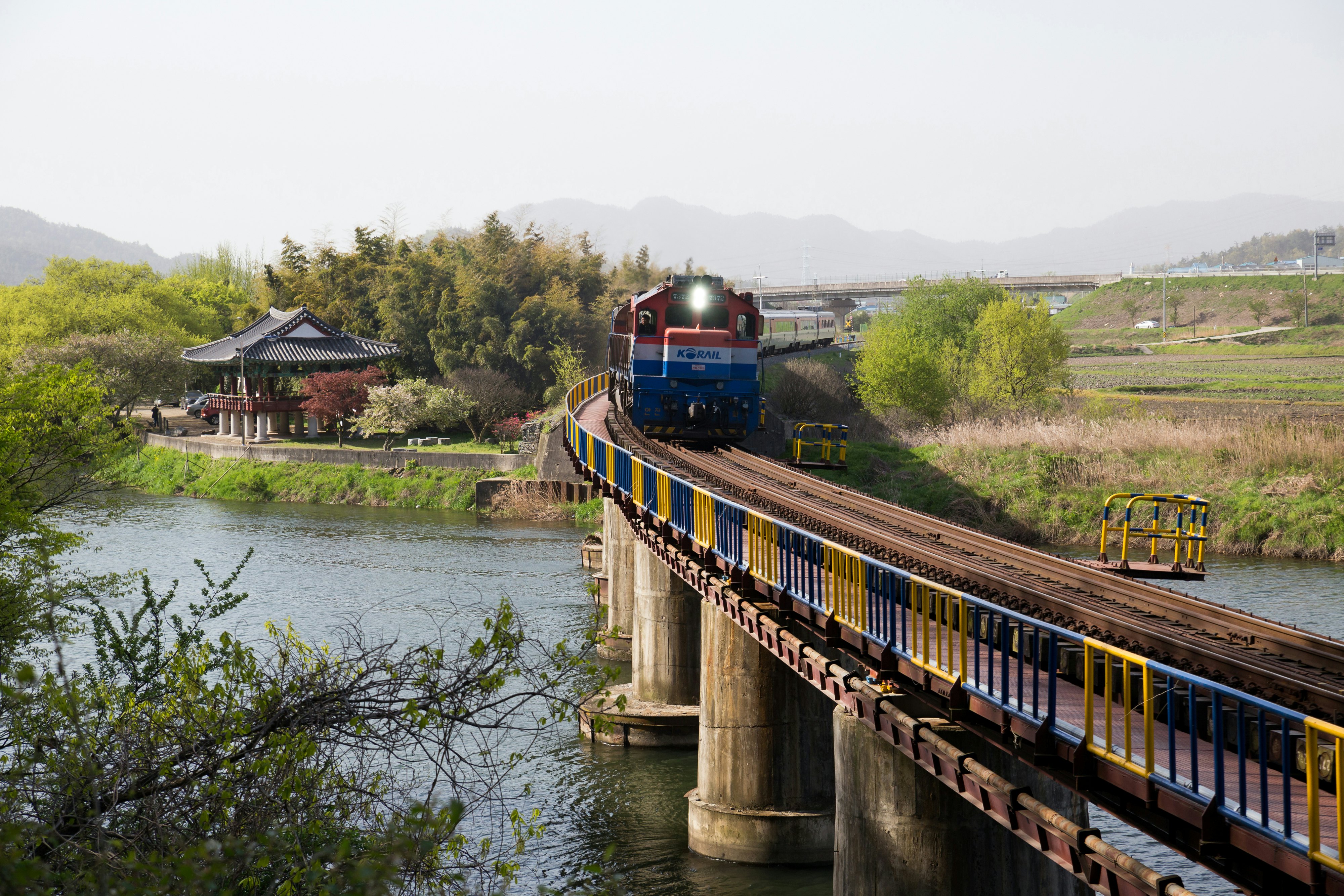
If you don't expect to ride the train more than a handful of times within a 5-day period, it's better to buy tickets as you go. Look for the budget-friendly Mugunghwa trains. As the most sluggish class of trains, they'll slow down your journey considerably (Seoul to Busan, for example, takes an extra 3 hours by Mugunghwa than by KTX), but they offer a chance to take in the stunning scenery out the window at a more leisurely (and less nauseating) pace.
To save even more, buy a train ticket for the dining car or the standing-room only spaces between cars. These sections have a limited number of stools or folding seats, so board early for your best chance of snagging one. Or, hit the pavement and use the intercity bus system instead.
6. Opt for local accommodations over international hotels
With international hotel chains costing upwards of ₩250,000 a night in South Korea, budget-conscious travelers should aim for small local lodgings instead. In Seoul, cute boutique options abound. Outside major centers, though, these can be hard to find, so consider a minbak (private homes with rooms for rent) or pension, which are usually ondol-style rooms equipped with underfloor heating and often sleeping mats rather than beds. When possible, book directly with the lodging as opposed to through a intermediary aggregator site, as proprietors often have to drive up their nightly rates to cover the platform's service fees.
If you're in a pinch and feel comfortable with sleeping in a shared space, there's always the possibility of staying in a 24-hour jjimjilbang (bathhouse).
7. Eat at markets, street stalls and small restaurants
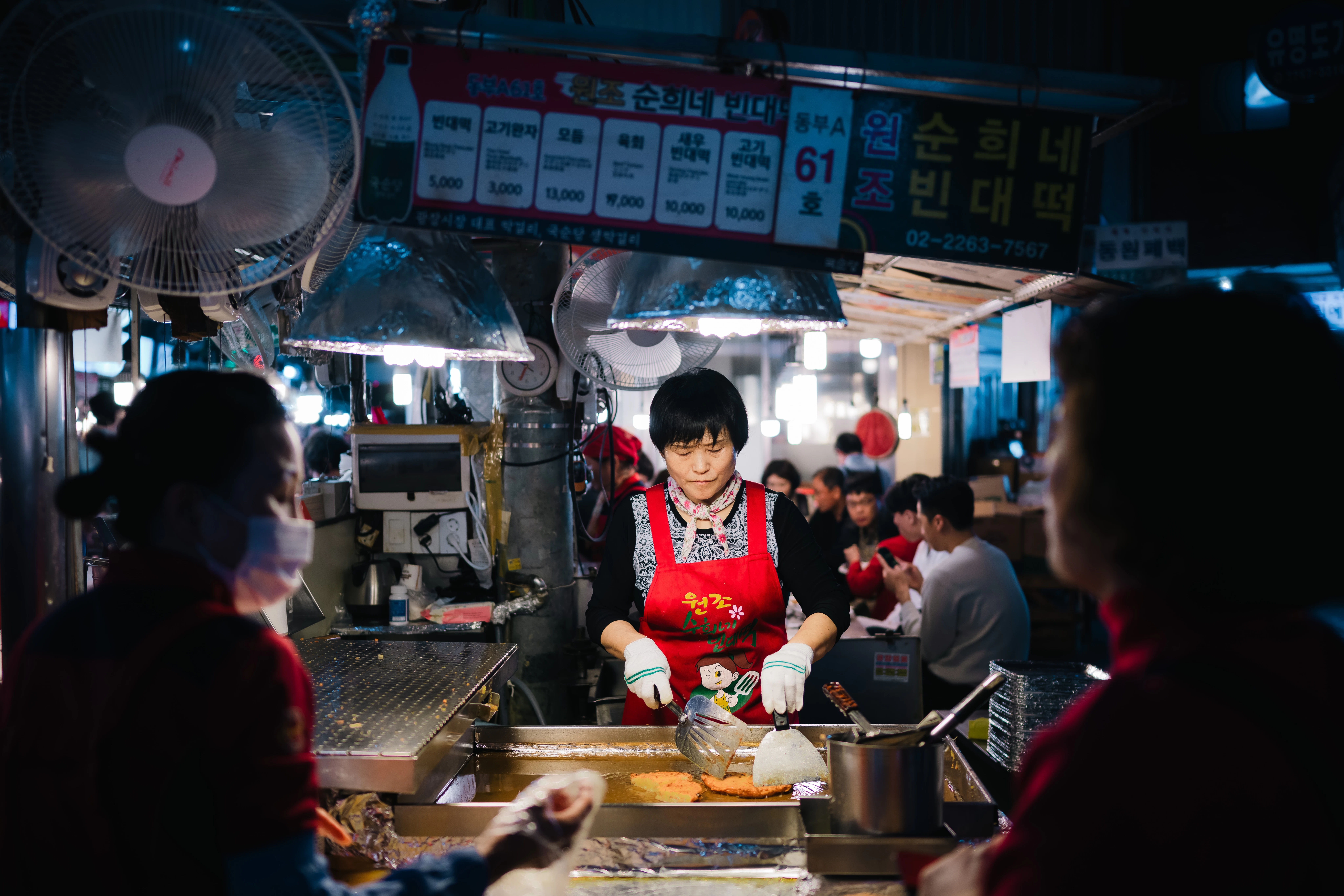
For homey, satisfying eats, head to the traditional markets, where you can find heaping portions of noodles, soups and fried snacks at reasonable prices from the restaurants and food stalls tucked inside. Budget travelers should keep an eye out for pojangmacha (tented dining areas), where you can order dishes like meat skewers, fish cake soup and tteokbokki rice cakes (as well as soju and beer) while seated outside at a plastic table. Small mom-and-pop places also provide big bang for your buck, serving up your main course with a bowl of rice and a table full of banchan (refillable side dishes).
8. Search for tourist savings cards, promotions and coupons
For travelers interested in doing a lot of sightseeing on their trip, several different tourist savings cards discount or waive admission to many of the country's most popular attractions. The Discover Seoul Pass (starting from ₩49,000) offers entry to three attractions or theme parks, plus an eSIM card and a prepaid transit card.
For travelers who don't intend on visiting so many sights, it's worth stopping into a tourist information center to see what one-off coupons are available. Check out the Korea Tourism Organization's website or app for a list of special promotions.

9. Visit museums, movie theaters and other attractions on Culture Day
If you happen to be in South Korea on the last Wednesday of the month, check to see whether any of the venues you're interested in participate in Culture Day. On this day, more than 2000 museums, art galleries, performance halls, movie theaters, sports facilities and heritage sites across the country give free or discounted admission.
10. Travel to Jeju by plane rather than by ferry
For those visitors who have Jeju on their itinerary, going by plane can often cost much less than going by boat, plus flying is exponentially faster. Choose budget airlines such as Jeju Air, Air Busan, Jin Air, T'Way, Air Seoul or Eastar Jet over the pricier Korean Air and Asiana Airlines. Weekday flights without a flexible cancellation policy can be found for less than ₩21,000 one way.

11. Take advantage of South Korea's vast national park system
South Korea is home to 22 national parks, some of which are free, and others of which charge around ₩4000 for the entrance fee. For nature lovers, these parks offer not only a bit of hiking but also a glimpse of some of the country's most beautiful Buddhist temples that are hidden within.
12. Claim your sales tax refund before you go
Foreigners who stay less than 6 months (and overseas Koreans staying less than 3 months) in South Korea are eligible for a refund of 5–8% for the sales tax paid on purchases. These purchases must be more than ₩15,000 and can be made only at participating tax-free stores. You can claim your reimbursement immediately at the tax-free store itself, at a tax-refund booth outside airports and ports, or at the tax-refund counter or kiosk inside major airports. You'll need your receipts and your passport.
Daily costs in South Korea
Hostel room: ₩30,000–45,000
Basic guesthouse or minbak room for two: ₩40,000–70,000
Self-catering apartment (including a pension): ₩60,000–120,000
Public transport ticket (one bus ride using a transportation card): ₩1500
Coffee: from ₩5000
Gimbap (rice rolls): from ₩3000
Dinner for two: from ₩50,000
Beer at the bar: from ₩5000
Advertisement