Advertisement

A church located on an island in Lake Bled with a castle in the background, Slovenia. Vara I/Shutterstock
Europe packs a ludicrous amount of scenic, cultural, culinary and linguistic variety into one pocket-sized continent. A single trip could take you from the sunlit towns of the Med to the snowcapped peaks of the Alps in mere hours because the next great adventure is always just a quick ferry, train ride or flight away.
While knockouts like Venice, Vienna and Spain’s Alhambra are likely high on your wish list, there are plenty of other ways to get a sense of Europe – from chocolate making in Brussels to whale watching in Iceland and hiking the mountain-clasped lakes of Slovenia.
Start planning your next trip by checking out our pick of the 15 best things to do in Europe.

1. Ride Swiss rails to Europe’s rooftop
Traveling from valley to glacier-frosted peak is a breeze in heart-racingly beautiful Switzerland. Since 1912, a little red train has chugged through Eiger’s icy core to reach UNESCO-listed Jungfraujoch, Europe’s highest train station at 3454m (11,332ft). Begin your journey on Grindelwald’s eco-cool Eiger Express. The ultra-fast tri-cable gondola drifts high above the forested landscape into the realm of rock and ice, getting so close to Eiger’s mile-high North Face that you feel you’ll bump right into it.
Advertisement
Temperatures plummet at the top, where a Narnia-like scene of eternal winter is revealed. Gasp at the view from the Sphinx observation deck, which ripples across a sea of 4000m (13,123ft) peaks and the 23km (14.2-mile) swirl of the Aletsch Glacier. If you think the Ice Palace’s frozen tunnels and sculptures are impressive today, just imagine what people thought when mountaineers hacked them out by pickax in the 1930s.
Planning tip: Bring warm layers and boots, especially if you plan on stomping through the snow on an hour-long walk to Mönchsjochhütte, Switzerland’s highest-serviced mountain hut, for a hot chocolate or bowl of goulash.
2. Raise a toast at Munich’s Oktoberfest
Dust off your dirndl or lederhosen in Munich, the regally cool capital of Bavaria in southern Germany. Bratwurst, tankards of foaming beer, thigh-slapping oompah-pah music and festivals come to Munich’s Wiesn for the big 16-day bash in autumn. What began as a horse race to celebrate Crown Prince Ludwig of Bavaria’s marriage to Princess Therese of Saxe-Hildburghausen back in 1810 has evolved into one of the world’s biggest parties, attracting around 7 million visitors each year. And it’s a party worth planning an entire trip around.
If you have ever harbored a desire to dress up, guzzle wheat beer, devour wurst, dance to folk music and ride Ferris wheels until dawn, here’s your chance. Go with the flow or choose a tent to suit your mood, from the Hofbräu for mad parties with a 10,000-strong crowd to Augustiner, with its Hirsche (wooden barrels), brass bands and butcher’s shop
Planning tip: Oktoberfest runs from late September to early October (book rooms well ahead), but Munich parties 365 days a year at world-famous beer halls like the cavernous Hofbräuhaus and historic Augustiner Keller.


3. Stop to smell the lavender in Provence
You can climb Paris’ Eiffel Tower in the twinkling dusk, tour the turreted chateaux of the river-woven Loire, sip Saint-Émilion wines in the vineyards of Bordeaux and live your best silver-screen diva life on the Côte d'Azur, but nothing beats the lavender fields and honey-stone hill towns of Provence for the French romcom dream.
A vision in hazy purples, violets and blues, the Plateau de Valensole blooms in all its fragrant glory in June and July. Bees hum as you wander or cycle in quiet wonder through sunlit meadows. Factor in time for distillery visits to buy essential oils at the source, such as Lavande Bio Berenger for organic lavender that is grown and harvested by hand. And fill your pannier (picnic basket) with local lavender honey, almonds and goat’s cheese that taste of the Provençal summer.
Planning tip: Valensole is just over an hour’s drive north of Marseille, where you’ll find the nearest airport. Or you can reach it in just over 2 hours with a train-bus combo.
4. Marvel at Spain’s simply Moorish Alhambra
Hot, fiery and wildly beautiful, the sun-bleached cities of Andalucía in southern Spain wing you back through 800 years of Moorish rule in what was then known as Al-Andalus. The architectural brilliance of the Islamic age shines at Granada’s soul-soaring Alhambra, a fortified palace of epic proportions and unfathomable intricacy, set against the backdrop of the Sierra Nevada's snowcapped peaks.
Don’t rush. Arrive as the palace opens and devote the best part of a day to exploring at leisure. You’ll be blown away by the lace-fine stucco and carved wooden ceilings of Palacios Nazaríes, the dizzying honeycomb vaulting of the Sala de Dos Hermanas, and the terraced orchards and fountain-splashed courtyards of the Generalife gardens.
Detour: Granada can easily be combined with a day trip to Córdoba and its multi-arched Mezquita, a triumph of Islamic architecture.

5. Road trip Ireland’s Ring of Kerry
Glorious in summer sun and dramatic in winter storm, the 179km (111-mile) Ring of Kerry driving tour is where Ireland takes a turn for the wilder. Looping around the Iveragh Peninsula, this road trip sets senses on high alert, with the Atlantic booming on beaches that reach for miles. The region is Ireland in a nutshell, with stone cottages dwarfed by the shadow of great mountains, patchwork fields in every shade of green, Iron Age ring forts swirling in mystery, and pubs filled with cheerful banter and woodsmoke.
Make time for lake-splashed, forest-blanketed Killarney National Park, perhaps scrambling up 1038m (3407ft) Carrauntoohil, Ireland’s highest peak, via the Devil’s Ladder. Other highs include the fairy-like, mist-dashed Torc Waterfall, the dune-buckled sands of Derrynane Beach and UNESCO-stamped Skellig Michael. On this jagged hunk of rock, 618 steps stagger up to the beehive huts, or clocháin, that early Christian monks built on these remote shores in the 6th century.
Planning tip: You can fly into Kerry Airport from a number of European destinations including London, Manchester, Frankfurt, Faro and Dublin. Car hire is available. The ring can also be toured by bicycle. Avoid peak summer for quieter roads.
6. Break the Arctic ice in Svalbard
Midway between Norway and the North Pole, and home to more polar bears than people, Svalbard is the Arctic of your wildest childhood dreams. At 78° north, the island of Spitsbergen is the final frontier of civilization and the springboard to exploring this fiercely beautiful archipelago of rock, ice, muscular mountains and frozen tundra.
During the long, dark days of the polar night (mid-November to mid-January), strike out into the white wilderness on a dogsledding or snowmobile expedition with Basecamp Explorer. As you dash past wind-sculpted ice and ice-encrusted mountains, keep an eye out for reindeer, Arctic foxes, walruses and perhaps the distant flicker of a polar bear. On clear nights, the Northern Lights rave in dazzlingly clear skies.
Advertisement
Planning tip: Norwegian and SAS operate direct flights from Tromsø and Oslo to Longyearbyen on Spitsbergen. The flight time is 3 hours.


7. Whale watch in Iceland
Nature stages one of its most dramatic shows in Húsavík in northeastern Iceland, where you’ll hold your breath in wonder as whales breach, blow and lobtail under the glare of the Midnight Sun. Come in summer to bounce by RIB or traditional oak boat across the North Atlantic waves, scanning the horizon for the sudden glimpse of a fluke.
Rimmed by mountains and dipping into the steel-blue waters of Skjálfandi Bay, Húsavík is whale-watching central. In summer, you might spy puffins, dolphins and porpoises in these cold waters, but – let’s face it – you’re really here for that hairs-on-end moment when a whale surfaces from the deep. Humpbacks, orcas, minke whales and fin whales all love these krill-rich waters, and if you’re really lucky you might spot a migrating blue, gliding past like a torpedo.
There are incredibly high odds of spotting whales (around a 97% chance), but even if they are a no-show, you can see the enormous, 25m-long skeleton of a mighty blue, the largest creature on earth, in the harborside Whale Museum.
Planning tip: Húsavík is a 6-hour drive from the capital, Reykjavík. Prime time for spotting cetaceans is May to September.
8. Trek and stargaze in Tenerife
Far closer to the Sahara than Spain, Tenerife knocks against the coast of North Africa and is topped off by a perfectly etched volcano, Teide, Spain’s highest peak at 3715m (12,180ft). The centerpiece of the 189-sq-km (73-sq-mile) UNESCO-listed Parque Nacional del Teide, the volcano punches high above a desert-like lunar landscape of rock formations that deepen to red at sunset. Looks otherworldly? NASA’s Perseverance Rover, which searched for extraterrestrial life on Mars, was trained here because the climate and landscape were so similar.
By day, the national park is terrific for hiking, with top billing going to the twisted lava pinnacles of Roques de García, the lava flows of Pico Viejo and the tough full-day climb to Pico del Teide (online reservations required). By night, the park shines as a Starlight Destination, with some of the northern hemisphere’s darkest, starriest skies – 83 of the 88 recognized constellations can be spotted on clear nights.
Planning tip: You can spy the misty swirl of the Milky Way with the naked eye alone, but to see more, peer through giant telescopes at the Observatorio del Teide or hook onto a stargazing tour with Volcano Teide Experience.
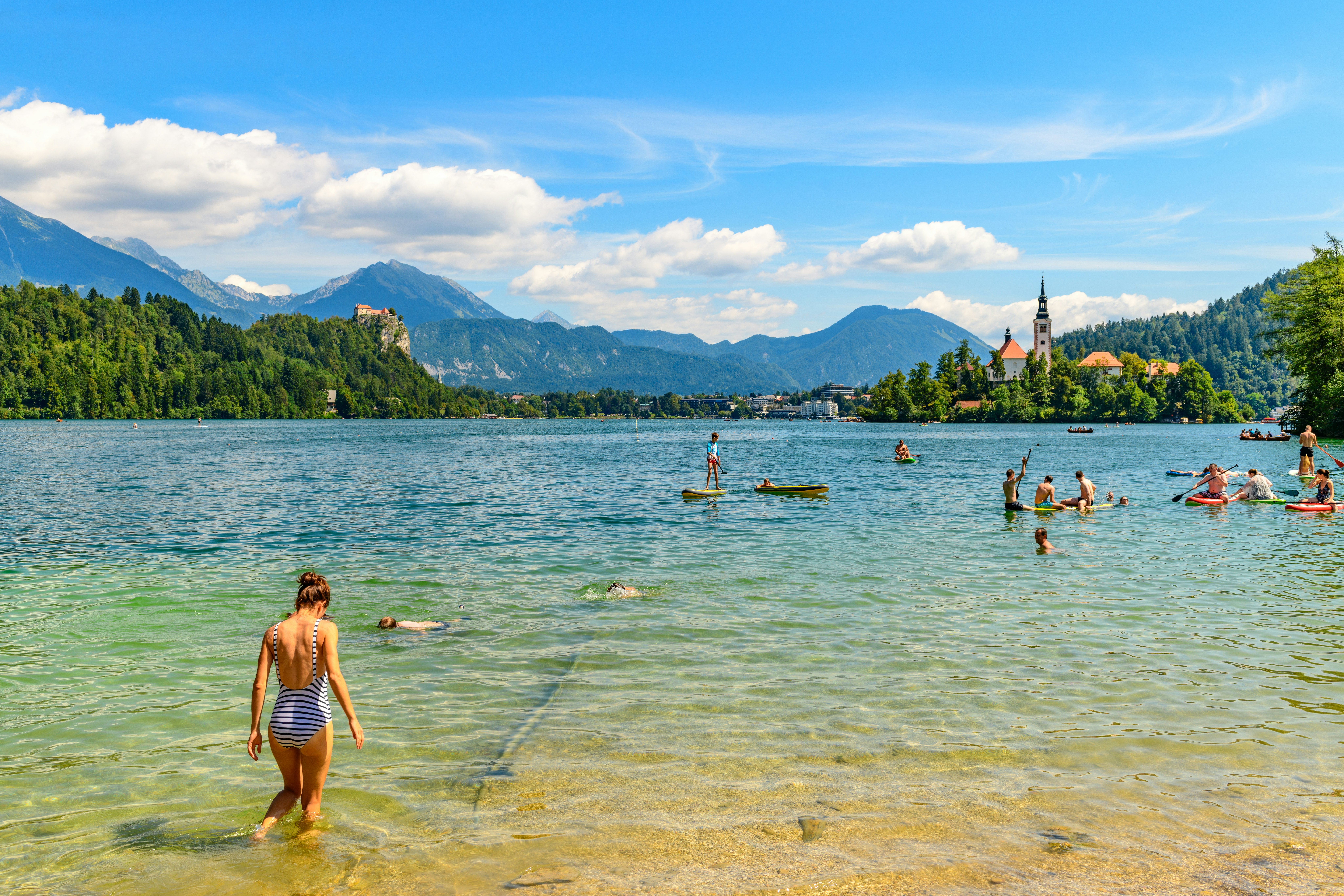
9. Dive into Slovenia’s lakes
Lake Bled in Slovenia has a beauty that is off the charts, with the Julian Alps framing waters of stained-glass blue. This lake gets a lot of attention, so sidestep the madding crowds by visiting in spring or autumn for leaf peeping in copper-gold forests of beech, oak, silver birch and maple. The colors reflect in the lake like paints dripping from an artist’s palette. The 6km (3.7-mile) trail encircling the lake has uplifting views. Or see the lake from on high from the 611m (2005ft) peak of Ojstrica.
If you like Lake Bled, you’ll rave about nearby Lake Bohinj in Triglav National Park, a piercing blue lake ringed by forested slopes and rocky peaks that receives just a trickle of Bled’s visitors. Fed by mountain streams, the glassy water tempts you to jump straight in. On the lake’s western shore, Ukanc’s pebble beach is ideal for doing precisely that. Base yourself at eco-aware Camp Bohinj, where you can rent out a canoe, SUP or kayak to paddle across the mirror-like lake in quiet exhilaration.
Planning tip: Lake Bohinj is a scenic half-hour drive southwest of Lake Bled, so you can easily combine both into the same trip.
10. Make chocolate in Brussels
Brussels impresses from the first moment you trip across the cobbles of the resplendent Grand Place, craning your neck to admire guildhalls festooned with baroque gables and gilded statues. But beyond historic clout, the Belgian capital is a place of sweet seduction. That’s right: chocolate. Cocoa-dusted truffles, grand cru ganaches, caramel pralines and chocolates filled with fresh cream that melts on the tongue – it’s all divine.
Temptation awaits on every corner in Brussels’ medieval heart, with chocolatiers like Wittamer, Piere Marcolini, Laurent Gerbaud and Neuhaus luring you in for a box of something special. Or give chocolate making a whirl with a bean-to-bar workshop at The Belgian Chocolate Makers, where you can get creative with molten chocolate, making your own mendiants (chocolate discs topped with nuts and dried fruits) and truffles.
Detour: Brussels is an hour’s train ride from Bruges, a gorgeous medieval city of cobbles, canals, soaring spires and chocolate shops. Trace the history of the bean and sample pralines at the Choco-Story.


11. Explore Venice in low season
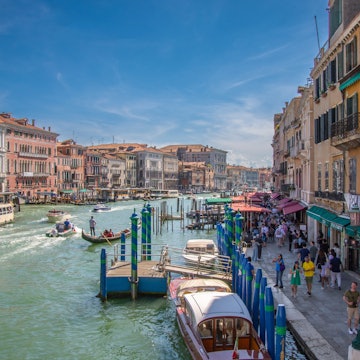
No trip to Europe is complete without visiting Venice, Italy’s floating city of marble palaces and cinematic piazzas. Trouble is, everyone thinks so. Come in summer and you can’t see the canals for the Instagramming crowds, so plan your trip for spring – when the city’s gardens bloom with magnolias, mimosa and wisteria – or autumn instead.
Naturally, you’ll want to tick off big-hitters like the exquisitely mosaic-clad Basilica di San Marco, the palazzo-studded Grand Canal and the Venetian master-crammed Gallerie dell’Accademia, but Venice’s real charm is revealed in small daily rituals – from morning espresso as the gondoliers call to pre-dinner prosecco at a bacaro (bar) in the pink of sunset.
Detour: Escape central Venice’s buzz by hopping on a vaporetto (public water bus) to drift across the lagoon to the islets of Murano (for glass art), Burano (for colorful photo ops) and Torcello (for golden mosaics).
12. Get the royal treatment in Vienna
A capital to out-pomp them all, Vienna is terribly grand, with its whirl of imperial palaces bearing the hallmark of the Hapsburgs, who ruled Austria for more than 600 years. These palace-obsessed royals enlisted the finest architects of the age to create Schlösser that are the stuff of Disney fantasies, filling them with imperial treasures, Old Master paintings and antique porcelain.
Begin your royal romp of the Austrian capital at the bombastic Hofburg, where you can eye imperial jewels in the treasury, hear choir boys sing like angels at the Burgkapelle (9:15am every Sunday from September to June), waltz around Empress Elisabeth’s chandelier-lit apartments, and watch Lipizzaner stallions prance gracefully around the Spanish Riding School.
Done, you should also check out 1441-room Schloss Schönbrunn, a UNESCO World Heritage summer palace fringed by landscaped gardens, and extravagantly baroque Schloss Belvedere, which hides Klimt’s famous painting The Kiss.
Planning tip: Visit during quieter seasons for far fewer crowds. Save time and skip the queue by pre-booking tickets with fixed time slots online.

13. Take a bite out of Transylvania
Thickly forested, mountainous and mist-veiled, Transylvania is the stuff of spine-tingling bedtime stories. In Romania’s folksy heart, this is a region of Gothic castles perched high atop crags and deep, dark woods. Though he never visited, Irish writer Bram Stoker was inspired to set his 1897 horror novel Dracula here, as Transylvania was the birthplace of the historical Dracula, a brutal 15th-century prince known as Vlad the Impaler.
After a spin of medieval Braşov, visit nearby Bran Castle, a turreted fantasy clinging to a rocky promontory. For a deeper dive into the outdoors, shuffle west to Piatra Craiului National Park where you can hike along a jagged limestone ridge, past woods and gorges where bears, wolves and lynx prowl.
Planning tip: For a taste of Transylvania beyond blood-sucking Dracula tales, dive into the region’s rural reaches, where you’ll find Roma communities, horse-drawn carts and Székely Land hamlets where only Hungarian is spoken.
14. Shop Istanbul’s Grand Bazaar
Sitting astride the border to Europe and Asia, Istanbul is instant enchantment. Its historic heart is Sultanahmet, where you’ll be captivated by the Byzantine and Ottoman brilliance of Aya Sofya, the soaring domes and minarets of the Blue Mosque, tales of courtiers and concubines in the opulent Topkapı Palace and the vast, chaotic, endlessly enthralling Grand Bazaar.
In the bazaar’s dusky depths, you can feel the pulse of Istanbul’s Old City. Nose around mazy alleys and passageways, lingering to watch craftspeople at work, gaze up at intricately painted ceilings and find a hidden han (courtyard) for çay, poured from a great height. Put on your haggling hat to bargain for treasures – from fragrant spices to glittering lanterns, wool kilims (pileless woven rugs), ornate nargile (water pipes) and pointed leather slippers.
Planning tip: Get to the Grand Bazaar as it opens at 8:30am to experience the bazaar at its least frenetic. Crowds swell by midday, when the bazaar throngs with hawkers and shoppers. The bazaar is closed on Sunday.


15. Go island hopping in Greece
The early morning ferry chugs across an ink-blue sea. Pine-clad mountains and cicada-filled olive groves rise above white-pebble bays. Happy chatter drifts from kafeneia terraces in pastel-painted harbors. In the silent hinterland, monastery bells ring, goats hop from rock to rock and time stills.
The Greek Islands are one of Europe’s greatest adventures. Picking up a map, letting your finger fall on a tiny speck of an island, then boarding a boat to get there still feels intrepid. Sprinkled across the cerulean-blue sea, these 6000 islands and islets are a world unto themselves.
But how do you choose? Closer to Italy’s heel than Athens, the lushly forested Ionian Islands were ruled by the Venetians for centuries. Boat between Corfu’s fortress-topped old town, Homeric myth-steeped Ithaka, wildly mountainous Kefallonia and cliff-rimmed Zakynthos. Or else swing east to the Cyclades, where islands like Santorini, Naxos and Mykonos nail the Greek island dream with volcanic shores, sugar-white villages and blue-domed churches.
Planning tip: Dodge the peak summer season for a quieter feel and book your ferry tickets in advance.
Advertisement