Advertisement

Rooftop dining at Monal in Lahore, Pakistan. Mehar Danish/Shutterstock
Pakistan has many layers that just can't be summed up in headlines. It’s a land where cherry blossom petals scatter around mountains like confetti, where ancient forts rise from desert plains, and where coral gardens shimmer with diverse fish species.
This often-misunderstood South Asian nation asks travelers to go beyond the usual and immerse themselves in a land that is as alive indoors as it is outdoors. But with so much to absorb, where do you even begin?
Here is our pick of unforgettable experiences to guide you through Pakistan – its past and present, its spirit and its charms.
Advertisement

1. Fly alongside snow-dusted peaks to Skardu
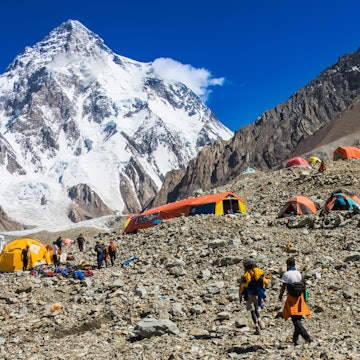
This is no ordinary domestic flight. Whether departing from Islamabad, Karachi or Lahore, the journey to Skardu unfolds like a cinematic experience in the clouds, revealing an unmatched panorama of the Karakoram mountain range. On a clear day, you might glimpse Nanga Parbat, one of the world's most prominent peaks, and with luck, even the ice-draped summit of K2 rising to meet your window seat. With only one flight landing at a time on its single runway, Skardu’s airport offers travelers a rare and intimate arrival, framed by the stillness of the encircling mountains.
Local tip: Mountain weather is unpredictable, so delays or cancellations are common. Pack your patience along with your camera.
2. Dive with jellyfish at Charna Island
Just off Karachi’s coast, Charna Island floats in the Arabian Sea, where thousands of pink jellyfish often drift through, transforming the waters into a scene straight out of 2003-movie Finding Nemo.
Getting here is half the adventure. Karachi dive clubs offer James Bond-style speedboat rides from Mubarak Village (about 90 minutes away), racing across the waves at 15 to 30 knots. The experience includes PADI-certified instructors guiding snorkelers and divers through vibrant coral reefs, where you might spot dolphins, stingrays, parrotfish, and occasionally barracudas gliding past.
Detour: After your dive, explore Mubarak Village, meet the locals who call this coast home, and try locally-prepared fresh seafood.

3. Explore Pakistan’s heritage through its museums
One of Pakistan’s standout qualities is its dedication to preserving arts and culture, with several museums worth visiting. Begin at the Lahore Museum, a grand colonial-era landmark featuring Stone Age tools, Gandharan sculptures from the 1st century CE, and exquisite Mughal art. For an even deeper look into this period, visit the Peshawar Museum, home to world-class Buddhist statues still fixed to their bases, or explore the lesser-known but rich Swat and Taxila Museums, which feature locally excavated sculptures.
But the real beauty of Pakistan’s folk culture is on full display at Lok Virsa in Islamabad, where you can listen to traditional music and watch craftspeople create beautiful handmade items. Nearby, trace Pakistan’s road to independence through lifelike key wax figures at the Pakistan Monument Museum.
If military history is more your thing, the Pakistan Air Force Museum in Karachi and Army Museum in Lahore won’t disappoint, with vintage aircraft and tanks on display. Don't miss the sleek COMO Museum, also in Lahore, which showcases the best of contemporary Pakistani art.
4. Hike to Nansoq Organic Village
Nansoq welcomes you with a simple wooden sign: "Welcome to the First Organic Village." With just 11 houses and around 90 residents, this tiny village made headlines in 2006 when King Charles III of the UK – then the Prince of Wales – visited alongside the Aga Khan IV. Here, life follows ancestral wisdom and traditional farming methods: fruit orchards, fresh goats milk, and almost no synthetic materials.
Accessible only on foot via an uphill trek, the path shifts from desert sand to rocky terrain. Although the walk is manageable, the changing landscape encourages you to slow down, pause, and admire the Indus River Valley below.
Advertisement
Local tip: For a true taste of organic village life, climb up to the community-run treehouse hidden among apricot trees on your first right. Your host will welcome you with thick, fresh apricot juice, homemade mulberry jam, and trout caught from nearby streams. The treehouse isn’t widely advertised, but guides and guesthouses in the area often know how to get in touch with the hosts.

5. Spot marmots and Himalayan brown bears in Deosai National Park
At over 4000m (13,123ft) above sea level, Deosai National Park is a wildflower kingdom spread across a vast high-altitude plateau, where glacial streams cut through endless meadows.
So, what makes Deosai worth the journey? First, the bumpy 4WD ride there, complete with chai (tea) and pakora (vegetable batter) stops at tented roadside stalls. Then, keep your eyes peeled for the elusive Himalayan brown bear, and don't miss the adorable marmots popping out of their burrows like curious jack-in-the-boxes.
Local tip: Camp overnight at Glamp Pakistan Deosai to maximize your chances of spotting wildlife, and take a walk with an experienced guide – Abbas Jaan Sadpara knows just where to look.
6. Visit the ancient Buddha of Swat
You won’t find this 7th-century Buddha displayed in a museum or behind protective glass. Instead, it’s carved high into a giant rock face in Jahanabad, deep in the Swat Valley. Weathered by centuries of exposure and damaged during the conflict in 2007, the sacred figure was later restored in 2016 by archaeologists. Today, it sits once again with its meditative gaze and hands folded in quiet serenity. It’s a powerful place to pause and stand face-to-face with a nearly lost masterpiece.
Local tip: The Buddha is best seen in the morning light. While Swat is generally safe to visit, check with your consulate for the latest recommendations always check local security updates and weather conditions before heading out.

7. Experience the light and sound show at Noor Mahal, Bahawalpur
During scheduled evening shows on weekends, Noor Mahal’s grand facade lights up with stunning 3D projection effects that trace its elegant outlines. The display is accompanied by soft traditional music and a narrated voiceover recounting the history of the Abbasi family of Nawabs, who ruled here until 1955. Built in 1872, Noor Mahal itself is a star, boasting lavish interiors and intricately carved woodwork that make it a favorite filming location for Pakistani films and TV dramas. Arrive early to secure a front-row seat in the palace gardens and watch history come alive in a dazzling display of light, art and storytelling.
8. Dine at Lahore’s best rooftop restaurants
There’s an old Punjabi saying: "Jinnay Lahore nai vekhya, oh jameya nai," which means “if you haven’t seen Lahore, you haven’t really been born.” And the best way to soak in this legendary city? Eating across its rooftops, with a constant hum of activity below.
At Haveli Rooftop, the soothing sizzle of reshmi kebabs drifts through the air, while the call to prayer rises above the golden minarets of the Badshahi Mosque, just to the left of your table. Next door, Cooco’s Den offers a classic Lahori breakfast of halwa puri (semolina pudding and deep-fried bread) served in a setting full of old-world charm. For a royal feel, Poet Restaurant in Lake City impresses with Mughal-dressed guards and chicken karahi presented in antique pots, all set beside the glowing dome of the Grand Jamia Mosque.
For a panoramic view of Lahore in all its chaotic energy, head to Monal's rooftop, where smoky barbecue platters pair perfectly with a dazzling tangle of city lights stretched out below.
Local tip: Reserve early because tables on the edge with the best views fill up fast.

9. Walk through one of the world’s first cities at Moenjodaro
Before you set foot in Moenjodaro, you might already recognize it from Pakistan’s Rs 20 banknote (US$0.07). But no photograph can truly prepare you for the haunting expanse of sunbaked brick ruins that whisper stories of a city built around 2500 BCE with the remains of a Buddhist stupa at its center. Often overlooked by travelers, this UNESCO World Heritage Site offers a rare opportunity to walk through one of the world’s earliest planned cities. With grid-like streets, drainage systems, deep wells and public baths, it reflects a civilization that valued order, design and vision, long before the rise of the modern world.
Planning tip: Be sure to avoid visiting in summer, when temperatures can soar above 50°C (122°F).
10. Go underground at Khewra Salt Mines
No matter how hot it is outside, stepping into the Khewra Salt Mines is like entering nature’s air-conditioned retreat. As one of the world’s oldest and largest salt mines, Khewra has plenty to see, including a small mosque carved entirely from salt bricks that’s still in use today. Deeper inside, spot salt sculptures of national landmarks like the Minar-e-Pakistan, and take a mid-tour break at the underground cafe. Before you leave, browse the souvenir shop for a handcrafted salt lamp, which is said to purify the air. Even if you’re skeptical, it makes a beautiful decoration.
Local tip: The walk through the tunnel to the mine entrance is longer than it looks. Hop on a mini electric train, but note it requires a separate ticket from the entrance.

11. Drive Pakistan’s most dramatic road, the Karakoram Highway
Strikingly scenic and soul-refreshing, the Karakoram Highway draws travelers to its iconic 1300km (808-mile) stretch where Pakistan meets China at the Khunjerab Pass. Glacier-fed rivers, snow-capped giants like Nanga Parbat, the sharp Passu Cones, and the famous turquoise waters of Attabad Lake are just the start. Expect to share the road with colorful, jingling trucks and herds of sheep. If you’re lucky, you might even spot the rare Markhor mountain goat roaming wild on the cliffs. Once part of the ancient Silk Route and dubbed the “Eighth Wonder of the World,” this highway has only been open to vehicles since 1978.
Detour: Take a side trip into the villages of Gojal, Gulmit or Karimabad. Here, women-led cafes, such as Hunza Food Pavilion, serve up local favorites like chap shuro (meat-filled flatbread), apricot cake, and steaming chicken momtu (dumplings).
12. Taste mangoes in Multan
The sun-soaked plains of Multan in southern Punjab are surrounded by centuries-old Sufi shrines and, in summer, dotted with mango trees heavy with beloved varieties like White Chaunsa, Langra and Anwar Ratol. Keep an eye out for mango orchards in and around the city, such as Organic Mango Farms, where farmers and exporters often welcome visitors to sample the juiciest mangoes straight from the source.
Although a seasonal treasure, Pakistani mangoes are famed for their sweet, melt-in-the-mouth texture and are eagerly awaited each year. Eating them is a joyful, messy ritual: sticky hands, juice dripping down your wrists, an experience celebrated as much as the fruit itself.
Local tip: Visit during July when the mango harvest is at its peak. Beyond eating them fresh, try mango milkshakes or thick, creamy desserts at cozy cafes like Chayee Khana in Multan.
Advertisement