Advertisement

Enjoy views of Mt Rainier as you cruise into Seattle on the new Amtrak service. RomanSlavik/Shutterstock/Shutterstock
Ambitious new routes and expanded rail services will transform how we travel by train next year. Sleek new upgrades are rolling out on classic routes, direct connections are eliminating tedious connections and summer specials are returning with style. From waking up to breakfast with views of the Scottish Highlands to watching the Italian coastline glitter from a wood-panelled restaurant car, these are the train journeys we think you should book in 2026.
1. A new start for Amtrak Cascades
Start: Vancouver, Canada
End: Portland, Oregon
Departs: 7:15am from Vancouver daily, arriving in Portland 3:35pm; more frequent trains connect Seattle and Portland
Distance: 509km/318 miles
Amtrak’s Cascades route is one of the most scenic journeys in North America, threading its way from Vancouver into Washington and on through Oregon. This is a spectacular route, with the Olympic Mountains rising to the west as you pass through Washington and the Cascades a constant eastward companion. The opportunities for stop-offs are tempting, including big-city Seattle and artsy Tacoma, also a brilliant place to gaze at snow-capped Mt Rainier, visible from much of the route on a clear day. While the Cascades runs on to Eugene, we suggest hopping off in Portland, a great starting point for wine tasting in the Willamette Valley. New Airo trainsets, painted in Cascades evergreen, cream and mocha, will roll out on this route at some point in 2026 before they appear anywhere else on the Amtrak network. If you can, grab a seat on the right-hand side of the train for optimal views.
Advertisement

2. From Central Europe to Scandinavia
Start: Prague, Czechia
End: Copenhagen, Denmark
Departs: Twice daily, leaving Prague at 6.30am and 10.30am and arriving in Copenhagen 11 hours later
Distance: 1115km/696 miles
First, the good news: Czech Railways is starting a twice-daily day service from Prague to Copenhagen via Dresden, Berlin and Hamburg. These trains will be made up of new ComfortJet rolling stock. Though the journey will be a hefty 11 hours when first operating, these services replace a complex journey that currently requires at least two changes. A night service is also promised in the summer season, but this will only have seats, not couchette or sleeper compartments. This route has been launched with one eye on the opening of the under-construction Fehmarn Fixed Link between northern Germany and Denmark, which will offer faster journeys bypassing Hamburg and Jutland completely when open around 2029.
There’s another possible night train (reputedly starting in April 2026) from Basel in Switzerland to Copenhagen, details of which are still currently fuzzy. If it gets off the ground it’ll offer a great way to reach Denmark's capital, but connections from there can be fiddly. Of course, if you have more time, taking a week or longer to travel through Germany and Denmark to Sweden is a thoroughly excellent slow travel trip.
If Copenhagen is getting better connected to European destinations to the south, onward travel to Stockholm is becoming trickier. As with the Paris to Vienna Nightjet, another night train suffering from a case of subsidy politics is the still fresh-feeling Swedish Railways (SJ) Berlin to Stockholm sleeper. After only 3 years, this train is being discontinued in July 2026. I’ve ridden this train twice and found it very busy on both occasions. There’s still a train running most nights on the same route – the long-standing Snalltaget service on the same route, which also runs through to Dresden on selected departures.

3. Summer high-speed on the TGV Lyria
Start: Lausanne, Switzerland
End: Marseille, France
Departs: 5 days a week, Thursday to Monday, from Lausanne at 7:46am, arriving approximately 5 hours later
Distance: 523km/326 miles
Speeding from the shores of Lake Geneva to the bustling port city of the Mediterranean, the quiet hit of summer special services will be back in 2026. A once-daily TGV Lyria, a train more normally seen hacking from Paris' Gare de Lyon to Swiss destinations, makes the journey between Lausanne and Marseille in 5 hours, stopping at Geneva, Lyon, Avignon and Aix-en-Provence. The first part of this train ride is the scenic highlight, hugging the lake shore between Lausanne and Geneva, threading between fields, villages and vineyards with the high Alps beyond.
While there’s only one service a day as in previous years, this route will operate for a longer period next summer, starting in April and ending in October. This is a popular train, so reserve as far in advance as possible. Look for bookings opening in mid-November for departures through July and in mid-March for the remainder of summer.
Advertisement

4. Stylish Espresso time along the Riviera
Start: Rome
End: Monte Carlo
Departs: Approximately 8pm, arriving around 10:45am in Monte Carlo the following day
Distance: 688km/428 miles
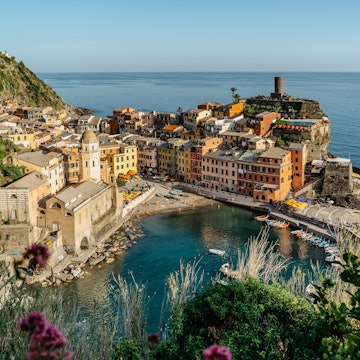
The Espresso Riviera, a train with a name like a funky 1980s lounge band, is a dreamlike journey that you probably won’t want to end. Starting at Roma Termini station, passengers on this Treni Turistici service snooze their way northwest in refurbished wood-panelled sleeper compartments, couchette bunks or comfy first-class seats. Awakening in Genoa, where the train transforms for day use, passengers can ogle the slowly unfolding Italian Riviera on one side and the Ligurian Hills on the other. The train continues to hug the Mediterranean in France, pausing at Menton and Monte Carlo, Monaco – a suitably elegant destination to detrain in – before reaching its eventual terminus in Marseille. There’s a restaurant on board, also oozing old-school style, serving a gently paced three-course menu paired with wine. Last year departures were from Rome on July and August Fridays, returning the following day. Check the Treni Turistici website for details of 2026 running.

5. Midlands to Highlands: a new stop for the Caledonian Sleeper
Start: Birmingham, England
End: Fort William, Scotland
Departs: 10:40pm from Birmingham International, arriving at Fort William at 10am the following day
Distance: 646km/404 miles
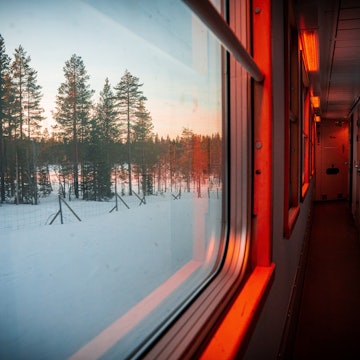
One of the world’s iconic train journeys is the London to Fort William Caledonian Sleeper train. Six nights a week, the UK’s longest train route rumbles out of the urban depths of Euston Station bound for the wild moorland and mountain scenery of the Highlands. Dozing off after a nightcap in the comfy lounge car before waking up to a breakfast that comes with spectacular views is an unforgettable way to start a Scottish adventure. The catch? You have to be in London to get on the train in the first place, making the Caledonian Sleeper inconvenient for would-be travelers who are in the Midlands (unless you’re aiming to get on at Crewe, and I'm not getting involved in an argument about where exactly that is in England).
From January 15, the train will make an additional stop at Birmingham International station, offering a direct connection from across the region to the wildest parts of the Highlands. While this might seem like a small shift, it represents some innovative thinking on the service and brings the chance to sample a night on the rails to more people in and visiting the UK. The train also serves stations to Inverness and Aberdeen, dividing while you (hopefully) snooze peacefully through some late-night shunting of carriages at Edinburgh Waverly.

6. High-speed Tangier – Rabat – Casablanca
Start: Tangier
End: Casablanca
Departs: Hourly from 6am to 9pm; journeys take 2h10m
Distance: 343km/214 miles
You could be forgiven for thinking that the intercontinental ferry ride across the Straits of Gibraltar from Spain to Morocco was all a mirage when the Al Boraq train rolls into Tangier Ville station. This double-decker high-speed service uses the same rolling stock as French TGV trains, and reaches the same 320km/h speeds while cruising to Casablanca in little over 2 hours. If it’s train with a Euro vibe, the start and finish points can only be of the Maghreb. Tangier remains a thrillingly evocative port city, its historic kasbah and art deco street scene offering a laid-back entry point to the country. At the other end of the line is Morocco’s largest city. With an urban population of over 3 million, Casablanca is also the country’s economic and creative heart. It is home to the magnificent Hassan II Mosque and the 1930s-era Quartier Habous, an atmospheric collection of old alleys, souqs and cafes to explore.
Along the way the Al Boraq pauses for breath in Rabat, Morocco’s capital, with a UNESCO World Heritage-listed combination of historic sights and modern urban development. Slower but equally efficient trains run from Casablanca to Fez and Marrakesh, which makes taking Africa’s only high-speed train an easy and enjoyable way to navigate around the highlights of Morocco.

7. Brussels to Vienna by Nightjet
Start: Brussels, Belgium
End: Vienna, Austria
Departs: Approximately 7pm Monday, Wednesdays, Fridays, arriving 10:15am the following day
Distance: 1150km/718 miles
A night train from Paris rolling through the heart of Europe to Vienna or Berlin is a romantic image. But even a love-struck departure from the City of Lights cannot, it seems, survive the humdrum realities of pan-European transport cooperation. From December, the French government’s withdrawal of funding for their share of the operating costs of this Nightjet has resulted in the end of the service just a few years since it was initially launched to great fanfare.
It’s a happier story for the leftover portions of this train, which will continue to run three times a week from the Austrian and German capitals, threading through Germany and Belgium to Brussels. While Midi is undeniably a station that gets the pulse racing less than Paris Gare de l'Est, it is now a serious hub for night train action. As well as this train, European Sleeper’s services to Prague (via Amsterdam and Berlin, a handy alternative to the Nightjet) and the weekly long-haul route to Innsbruck and Venice start from here. All this means that UK-based travelers looking for a night on the rails should aim for a Eurostar to Brussels rather than Paris, unless taking one of SNCF’s excellent domestic sleepers.

8. Private luxury cars on classic US western routes
Start: Los Angeles or San Francisco
End: San Francisco or Denver
Departs: Mid-January 2026, departures on consecutive days
Distance: 757km/473 miles (LA–San Francisco); 1931km/1206 miles (San Francisco–Denver)
Booking a private rail car in the US has traditionally meant contacting specialist owners and sorting out complicated arrangements. From January, Halloway is offering a more straightforward option: two restored 1950s carriages that attach to regular Amtrak services on the Coast Starlight and California Zephyr. You get a sleeper car with five bedrooms and a separate carriage with a viewing dome, dining area and kitchen. A chef travels with you and prepares meals throughout the journeys.
The first route runs from Los Angeles to San Francisco in 12 hours, following the coast before heading through California’s wine regions. The second is the overnight San Francisco to Denver service, which is arguably the more interesting option. This climbs through the Sierra Nevada, crosses Nevada and Utah, then navigates the Rockies before arriving in Denver. The viewing dome proves its worth on this journey as it passes through the canyon sections and rusty red mountain passes.
Both trips cost $10,000 (coastal) and $18,500 (mountains) for exclusive use of both carriages, accommodating up to six passengers with all meals. Split between a full group, it works out at around $1,700-$3,100 per person. By no means cheap, but it’s a decent luxury option if you’re after something memorable without having to cross the Atlantic for it. Bookings are open now for January departures.
Advertisement