Advertisement

Volcán Arenal, Costa Rica. Esdelval/Getty Images
With a rich and varied culture and the kind of natural landscape that leaves visitors in awe, Costa Rica is rightfully top of many travelers' must-visit lists. Adventure lovers in search of adrenaline-pumping experiences can get their fix hiking through steamy rainforests to still-smoking volcanoes. Visitors looking to relax in beautiful places have many sublime beaches scattered along the Pacific and Caribbean coastlines to choose from. The country’s motto is pura vida – pure life – and a quarter of its landmass is protected by national parks and reserves that offer a wealth of wildlife watching among untamed nature.
To help you plan your time in this stunning nation, we have picked our favorite places to go in Costa Rica, perfect for first-time visitors to narrow down their highlights. And if you're lucky enough to be returning for more, we don't blame you! Costa Rica has enough varied landscapes, captivating wildlife and superb things to do to keep you coming back again and again.

1. La Fortuna
Best place for outdoor adventures
Advertisement
Volcán Arenal’s picture-perfect cone looms over the town of La Fortuna. It is illegal to climb to the summit, but you can still get up close to its lava-covered lower slopes by taking the Las Coladas trail, one of several unforgettable hikes around Volcán Arenal National Park, about 7km west of La Fortuna.
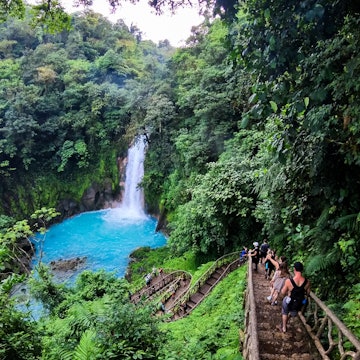
Hike down to the impressive waterfall, which plunges out of thick vegetation into an emerald-green pool, or get muddy on a spelunking tour through the limestone labyrinth of the Venado Caves.
Near Volcán Arenal National Park there’s horseback riding, mountain biking, rappelling, and ziplining on offer, along with kayaking and windsurfing on Lake Arenal. The region’s natural hot springs also make it the perfect place to ease weary muscles after all those adventures.
Planning tip: Allow for at least 2 days here, but stay longer if you can. Beware that restaurant prices around La Fortuna are higher than in other areas, so keep costs down by eating at small, local restaurants called sodas or shopping at one of the supermarkets and self-catering.

2. Osa Peninsula
Best place for getting off the beaten path
The wild and remote Osa Peninsula is all rainforests, rivers, and mangroves, ringed by pristine beaches. Wake to a chorus of chirrups, whoops, caws, and the sonorous roar of howler monkeys. Watch spider monkeys put on an impressive display of treetop gymnastics while scarlet macaws squawk and preen. It’s just a typical morning in the Parque Nacional Corcovado, one of the most biodiverse places on the planet.
The gin-clear waters of Bahía Drake are home to humpback whales and dolphins, and it’s the jumping-off point for diving and snorkeling tours to the marine playground of Isla del Caño.
Planning tip: Visit between December and April and July and October for whale watching .

3. Monteverde and Santa Elena
Best place for birds, butterflies, and cloud forest canopy tours
Away from Costa Rica’s sun-soaked beaches and steamy rainforests, Monteverde’s mist-wreathed cloud forest reserves sit high on the country’s mountainous spine. It’s one of the world’s biodiversity hot spots, with a staggering array of flora and fauna.
At Curi-Cancha – a cattle ranch turned private reserve – trails wind through primary, secondary, and open forests buzzing with jewel-colored hummingbirds and rowdy toucans. Look out for the aptly named resplendent quetzal with its brilliant green and crimson plumage and sweeping tail feathers – they’re easier to spot during the mating season which runs from March to June.
For a bird’s eye view of the forest, take an adrenaline-fueled ride on a zipline, skimming the canopy at high speed – Sky Trek Monteverde has an automatic braking system, useful for kids and anxious adults. Take a guided night walk to discover a different side to the forest, when nocturnal critters such as sloths, snakes, and kinkajous get active to a soundtrack of the frog chorus.
Advertisement
Planning tip: Monteverde's biggest population center is Santa Elena, where buses arrive and depart. This is also where you'll find the most restaurants and best choice of budget places to stay.

4. The Nicoya Peninsula
Best place for sand and surf
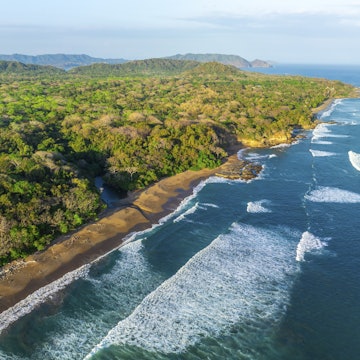
Famed for its postcard-perfect beaches and sweet Pacific swells, Nicoya has something for wave riders of all levels. There’s wildlife too: just north of the party town of Tamarindo, Grande Beach – part of Las Baulas National Marine Park – is a nesting site for leatherback turtles from October to March.
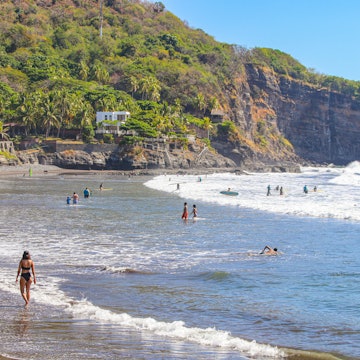
Among the peninsula’s finest strips of sand are the blissfully secluded Playa Barrigona and Sámara, popular with both Ticos and visitors thanks to its calm, safe waters that are ideal for novice surfers. Further south, the remote, jungle-backed town of Santa Teresa – long a haunt of surfers in the know – is now a hip hangout with cool cafes, sushi restaurants, and designer boutiques.
Like an advert for living the pura vida, Nicoya has been named one of the world’s five Blue Zones, where residents have longer-than-average lifespans thanks to their healthy habits and stunning surroundings.
Planning tip: Nicoya’s surf season runs from December to April; most surf schools are closed during the rainy season, from August to November.

5. The Caribbean Coast
Best place for turtle spotting
On Costa Rica’s Caribbean Coast, the flooded forest of Parque Nacional Tortuguero has been dubbed a mini Amazon. It’s home to 400 bird species and from July to October, it's a sanctuary for nesting green sea turtles. Look out for manatees, caiman, and crocodiles as you tour its skinny waterways by boat or kayak. For the best wildlife experience, hire a guide certified by the Asociación de Guías de Tortuguero.
To the south is the diminutive Parque Nacional Cahuita and its namesake village, which protects coastal rainforest, coral reefs and pristine beaches. Further south, the laid-back Puerto Viejo de Talamanca is the Caribbean Coast’s most developed beach town, with an Afro-Caribbean vibe and lively nightlife. It's not difficult to spend a few days here.
The village of Manzanillo is quieter, set in the Gandoca-Manzanillo National Wildlife Refuge, where you can snorkel the reefs, kayak through mangroves, and hike along rainforest trails. Cycle 4km to chill on the idyllic palm-fringed beach at Punta Uva – set your alarm to catch a spectacular sunrise.
Planning tip: Puerto Limón, with its thriving port and international airport, is the biggest city on Costa Rica’s Caribbean coast. It can be a good base for adventurous urban explorers.

6. Manuel Antonio National Park
Best place for getting up close to wildlife
Fronted by spectacular volcanic-sand beaches and backed by lush rainforest, Parque Nacional Manuel Antonio is Costa Rica’s smallest national park and one of its most popular. Hiking along its well-marked trails is one of the easiest ways to spot wildlife – but don’t expect to have it to yourself.
You may spot a black spiny-tailed iguana perched above the entrance gate, boisterous squirrel monkeys scampering from tree to tree or marauding raccoons searching for a snack. And with the help of a guide, you might catch a glimpse of a flamboyant poison dart frog no bigger than a thumbnail or a shadow that turns into a snoozing three-toed sloth.
Planning tip: Get to the park before 10am to avoid tour groups and peak temperatures. You cannot take food into the park with you, but there is a cafeteria in the center of the park serving light meals and many restaurants just outside the entrance. Remember your swimsuit and towel – showers and dressing rooms are available, but soap or shampoo is not allowed.

7. The Central Valley
Best place for volcanoes, coffee, and rafting
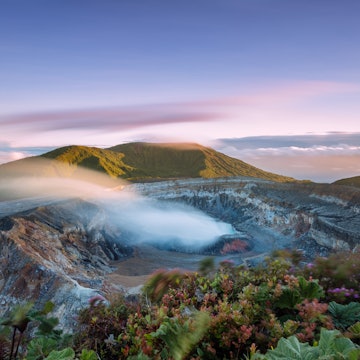
At the heart of the country, the Central Valley encompasses the cities of San José, Heredia, Cartago, and Alajuela, and three active volcanoes. Irazú is the country’s highest – on a clear day, you can see both the Pacific and Caribbean coasts from the summit. Turrialba is the most active, and at Poás you can peer into its enormous craters, one belching sulfurous mud, another filled with a shimmering lagoon.
Close to Poás, the La Paz Waterfall Gardens offers a multitude of natural wonders and Costa Rica’s largest animal sanctuary, and the town of Turrialba is the launching pad for white water rafting on the scenic Pacuare River, a waterway packed with adrenaline-inducing rapids.
And don’t miss a tour around an organic coffee finca (farm), such as Finca Rosa Blanca, to see how the beans are plucked, dried, and roasted before a cupping session.
Planning tip: Its well worth slowing your pace and allowing at least 3 days to linger in this underappreciated part of Costa Rica. You’ll need a private car or a driver to see the Central Valley properly, as the buses can only get you so far and there’s a lot of off -the-grid sightseeing to do. You can also cycle through quite a bit of it, especially near the Cachí Dam.

8. San José
Best place for museums and nightlife
Don't bypass the urban jungle: San José, Costa Rica’s cosmopolitan capital, is worth a stopover. There’s a dazzling collection of gold at the Museo de Oro Precolombino y Numismática, while the state-of-the-art Museo de Jade houses the world’s largest collection of pre-Columbian jade, or you can tour the architectural splendor of the Teatro Nacional.
The buzzy Mercado Central is perfect for souvenir shopping, and trendy Barrio Escalante is the city’s gastro hub, where you can feast on farm-to-table fare and sample local craft brews – there's organic coffee for the morning after.
Planning tip: If you want to go museum hopping, buying a three-museum pass covering the Museo de Oro Precolombino y Numismática, Museo de Jade, and Museo Nacional will save you money.
Advertisement