Advertisement

Fushimi Inari Taisha in Kyoto, Japan. Rintaro Kanemoto for Lonely Planet
There is never a bad time to plan your dream trips, and Asia is full of those fantasy-inducing journeys that live rent-free in our imaginations. Will you wander the lavish palaces of India or trek through the jungle in Borneo or the mountains of Nepal? Perhaps a foodie tour of Southeast Asia is more to your taste (pun intended).
Whether it's history, popular culture or deep nature that you're after (how about a mix of all three in Vietnam?), a dream trip to Asia awaits.

1. Fall for romantic forts and palaces in India
You haven’t seen luxury until you’ve seen India’s lavish forts and palaces. These are where the world’s most pampered royals lived extraordinary lives defined by ambition and indulgence. Kick off a 2-week journey with 3 atmospheric days wandering Delhi’s tangled bazaars and Mughal forts, mosques and tombs. A 5-hour train ride will deliver you to salmon-pink Jaipur – take 2 days absorbing the majesty of the City Palace, the Hawa Mahal, Amber Palace and Jai Singh II’s extraordinary royal observatory. Four hours south by bus, Bundi’s painted palace and bottomless stepwells are worth a day of investigation, as are the victory towers of mighty Chittorgarh. It’s 2 hours by train to Udaipur; allow 2 days to explore its many palaces and to enjoy dinners overlooking Lake Pichola. An overnight bus ride is an efficient way to reach Jodhpur, where you can get pleasurably lost in the maze-like, Brahminblue lanes surrounding Mehrangarh Fort.
Advertisement
For the full Arabian Nights experience, ride the rails to golden Jaisalmer (5 to 7 hours), adding on 2 more days for a camel safari into the dunes. It takes a day to reach tiger-stalked Ranthambore National Park by bus and train, and another 6 hours to reach Agra Fort train station and the wistful wonder that is the Taj Mahal.

2. Admire a rainbow of wildlife in Borneo
Borneo is the stuff of wildlife dreams: a rain-soaked haven for jungle-dwellers big and small, from elephants and rhinos to enigmatic orangutans. The easiest point of entry into this lost world of emerald-green foliage and cocoa-brown rivers is Malaysian Sarawak. Around multicultural Kuching, seven rainforest reserves offer a bumper serving of wildlife and wilderness, including almost guaranteed encounters with proboscis monkeys in Bako National Park. Ready for more?
Bedding down in national park lodges, campgrounds and tribal longhouses, you can hike into the hot and humid rainforest in search of rhinoceros hornbills, clouded leopards and tiny tarsiers, or just settle in at the Semenggoh orangutan sanctuary near Kuching and let the "old man of the forest" come to you. Sleeping out in the forest is an experience all by itself – a cacophonic chorus of unidentified whistles, shrieks and rattles will fill the air, while supersized bugs clamber across your mosquito net. Always tip out your boots before putting them on in the morning!

3. Travel through the Middle Kingdom’s Golden Triangle
China’s Golden Triangle of cities—Běijīng, Xi’an and Shanghai—offers fascinating insights into the country. Five thousand years of history, the world wonder of the ancient Silk Road, a futuristic cityscape and bullet trains are all on the 2-week itinerary.
Start in Běijīng and spend 2 days visiting Tian’anmen Square, the Forbidden City and the Temple of Heaven. Get lost in the vibrant hutongs and enjoy a food tour. Then take a day trip to part of the Great Wall, such as Mutianyu. On the fourth day, head to Xī’ān on a high-speed train (4 to 5 hours) and enjoy the sights, starting with the astonishing Army of Terracotta Warriors. Walk or cycle Xī’ān’s ancient city walls, visit the Wild Goose Pagoda and shop and snack through the Muslim Quarter. Save one day for a trip to Hua Shan, one of China’s most sacred mountains. On your final afternoon, board a sleeper train to Shanghai (14 hours).
In Shanghai, check out the Old Town, go shopping in Yu Garden and head up the country’s tallest building, Shanghai Tower. In the evening, stroll the Bund, taking in views of Pudong’s skyscrapers. Use the next 2 days to discover the French Concession and the art scene, before spending your final 2 days in nearby Hángzhōu and Sūzhōu, both quick trips by high-speed rail. In Sūzhōu, visit the classical Chinese gardens, and in Hángzhōu, meander around West Lake to see why Marco Polo called it heaven on Earth.

4. Follow a Southeast Asian food trail
The best trips are led by the taste buds. And in Singapore and Malaysia, every snack stop is a feast, and every street corner is a banquet. Overlanding along the Malay Peninsula is one of Asia’s greatest gastronomic journeys, taking in the culinary know-how of three great cooking cultures. Picking up your chopsticks in Singapore, you’ll graze hawker courts crammed with Malay soups and stir-fries, Chinese banquet halls piled with dim sum and Indian canteens perfumed by cardamom, cumin and coriander.
Take a bus or train to reach Malaysia’s culinary triumvirate – Kuala Lumpur, Melaka and Penang – and celebrate the nation’s gourmet heritage with a carnival of open-air eating. Set your alarm clock early. You’ll need every waking minute to fit in all the grilled seafood, char kway teow noodles and roti canai (Indian-style flatbread with curry sauce). And don’t overlook Malaysia’s food detours –Klang’s kopitiam (coffeeshop) breakfasts, Kemaman’s banana-leafed-steamed seafood, Selangor’s family-run warong cafes and Ipoh’s famed chicken-beansprout noodles.
Advertisement
5. Enjoy temples and cherry blossoms in Kansai
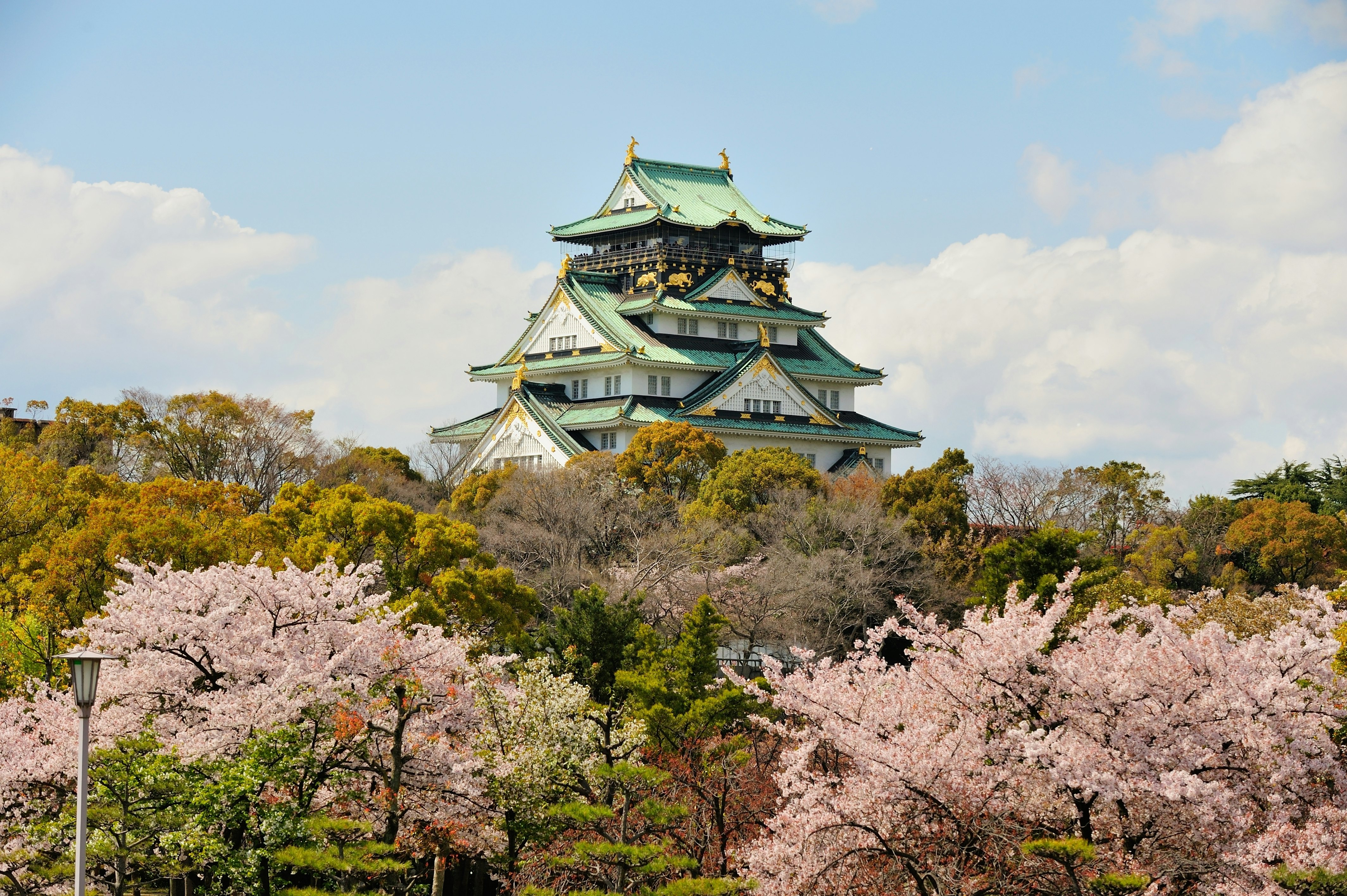
It’s spring in the Kansai region of Japan, and the cherry blossoms are in bloom. Blanketing hills, parks and temple grounds in pale pink froth, this is one of the most classic and beloved of Japanese sights, depicted in art and music since antiquity. Kyōto, the country’s best-preserved ancient city, is central to this spring splendor.
It’s easy to fill 5 days in Kyōto. Spend the first exploring the historic Higashiyama and Gion districts, visiting traditional shophouses and the Kiyomizudera, Kōdai-ji and Kennin-ji temples. Have a kaiseki dinner at the famed Kikunoi restaurant. Next morning, take the train to Arashiyama to visit its famous bamboo grove early, then walk to the Tenryū-ji temple, founded in 1339. Have a Kyōto-style tempura lunch at century-old Tempura Endo Yasaka.
Begin your third day climbing through the brilliant orange tori (gates) of the Fushimi Inari shrine before taking the train 30 minutes south to Nara for more temple-viewing and deer-feeding.
Day four and it’s all aboard again for the 45-minute journey to Osaka for street food, shopping, pachinko, bar-hopping and other fun. On your final day, grab a picnic at Nishiki Market, then walk 15 minutes east for a day of hanami (blossom viewing) at Maruyama-kōen Park. Cap the trip with a soak at the local sento baths.

6. Tour Hanoi and its surrounds
Hanoi is a city that refuses to grow old gracefully, and a journey from the millennium-old capital of ancient pagodas and labyrinthine streets to the hinterland is to see this country in all its contradictory glory: both raucous and rustic, exhilarating and eternal.
Start your 10-day adventure in Hanoi. The capital deserves at least 2 days for wandering around its temples and museums, and stopping by Ho Chi Minh’s mausoleum, where you can see the father of the modern nation in repose. Early on day three, take a 3-hour bus ride east to Bai Chay, the harbor from which most boats depart for Halong Bay. Sailings vary in duration and luxury, but 2 days is plenty, giving you a chance to moor at Titop Island and climb the stone steps for a view over the archipelago.
Halong voyage completed, head back to Hanoi and catch the night train to Lao Cai. Relax in the cool air of Sapa for 2 days – or work up a sweat ascending misty Fansipan, the 10,312ft (3143m) peak once known as the Roof of Indochina.
With your final 3 days, you might choose to explore more remote parts of these mountains around Ha Giang or ride the legendary Reunification Express to central Vietnam. Here, you can stride through the Imperial City of Hue and the colorful merchant warehouses of Hoi An.

7. Trek the serene Langtang Valley
Nowhere has trekking quite like in Nepal. Breathless trails strain over the highest mountains on Earth, and the reward for a hard day’s hiking is a slice of apple pie and a cold beer by a yak-dung fire. You’ll need a permit to take on the most popular trails, but beyond that, the sky is literally the limit. Everest (Sagarmatha) and the Annapurna massif offer weeks of rugged hiking on the shoulders of giants, but for a compact taste of Nepal’s mountain magic, head for the scenic Langtang Valley.
Starting by bus from Kathmandu, this seven-day loop will marinade you in the majesty of the mountains, linking dizzying high passes, ancient Buddhist monasteries and yak pastures guarded by a curtain wall of snow peaks. Best of all, you’ll immerse yourself in the culture of the Himalaya, staying in rustic village teahouses and carb-cramming for the trails with hearty, healthy meals. Bring extra camera cards – you’ll need them.

8. Seek out ancient cities by road and rail
Sri Lanka packs infinite wonder into one small space: golden beaches, pounding surf, wildlife-filled national parks, emerald tea plantations, and the toppled ruins of ancient cities tumbling from the jungle. Arrive at Bandaranaike International Airport and start your 10-day trip with a day on the sand at Negombo. Then, head into Colombo for fine dining, colonial-era history and the delights of the National Museum. Trundle up to Kandy on the hill railway and pay your respects at the Temple of the Sacred Tooth Relic.
Delve into local food and culture for a day or 2 – perhaps taking in a show of traditional Sri Lankan dance – before taking a 2-hour bus ride to Dambulla. Gasp at the vividly colorful carvings inside the cave temples, then take the bus to Sigiriya (45 minutes), ready for a first-light visit to the ruins on the rock. Take another 2-hour bus ride to the spectacular Polonnaruwa and devote 2 days to exploring supersized Buddhas and toppled temples. Consider an elephant-spotting day trip to nearby Minneriya National Park.
End with a 3-hour ride to the most stunning ancient city of all – 2 days is the minimum to get the best from Anuradhapura’s towering dagobas (stupas) and tumbledown temples.

9. Travel back in time in Thailand
Some travelers to Thailand set their sights on the beaches and islands. For others, it's all about the food and national parks. But history buffs plan trips around the meandering railway line linking Bangkok to Chiang Mai, which whisks sightseers from ancient capital to ancient capital in air-conditioned comfort.
Begin the journey back to imperial Siam in Bangkok, with 3 days of temple hopping, palace touring and riverboating around historic Rattanakosin Island. Block out one afternoon for a trip to Chatuchak, Thailand’s most mesmerizing weekend market.
On the fourth day, a 1½-hour train ride gets you to the plain of ruined temples in atmospheric Ayutthaya, serving up a rewarding experience of small-town life. Take a turn around Ayutthaya’s museums, from the gold-filled Chao Sam Phraya National Museum to the quirky Million Toy Museum.
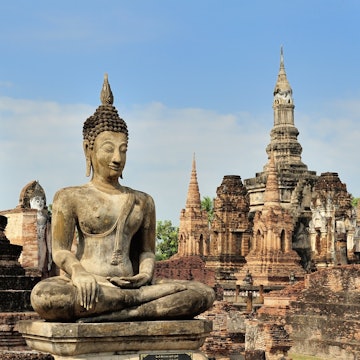
Continue by train to Phitsanulok (3½ hours) and take a 1-hour bus ride to Sukhothai, where you’ll easily fill 2 history-packed days visiting temples by bicycle and staring in awe at house-size Buddha statues. Return to Phitsanulok so you can take the train to Chiang Mai (7 hours) and settle in for cooking courses, full-flavored night markets, rainbow-colored prayer halls and strolls around the sleepy ruins of Wiang Kum Kam.

10. Travel the silk road in Uzbekistan
Amongst the sands of the Kyzylkum and Karakum deserts, the city-states of Uzbekistan served as crossroads on the Silk Road (which was really more of a web of trade routes), growing rich from the flow of goods, people and culture. Today, remarkable monuments and market bazaars stand as testaments to those early days of international commerce. Experience the best of them with a 1-week itinerary that starts in Tashkent.
Spend a day upon arrival in Tashkent to visit Chorsu Bazaar and the Khast Imom religious complex, then hop on a train for the renowned Silk Road cities. Samarkand is 2 to 3 hours and Bukhara 4 to 6 hours from Tashkent, both warranting 2-to 3-day stops. The former’s Registan Square is the Silk Road postcard of the country (though the Shah-i-Zinda mausoleums beat it for pure mosaicked beauty), while Bukhara’s quiet Old Town streets are as much a draw as any single sight.
Spare a couple more days for Khiva – 6 hours by train from Samarkand, though 2024 saw a new high-speed line drop that to 2. The Ichon Qala walled city is the best-preserved medieval town in the country – most beautiful as the fading sun lights the tiled minarets.
Advertisement