Advertisement
5 of the best driving itineraries for the perfect trip to England

Catherine Le Nevez
Jan 9, 2026 • 14 min read

Driving Honister Pass in the Lake District, England. blue sky in my pocket/Getty Images
If you're looking for somewhere that packs a lot into a small area – quaint towns and historic villages, vibrant cities, idyllic countryside strewn with castles, wild landscapes and miles of glorious coastline – start planning a trip to England. Each of these five itineraries takes a week, but you can spend longer at stops or link them with other routes to create your own tailor-made tour.
Wherever you go, you’ll find history at every turn and atmospheric pubs to end the day. The are good rail and bus connections between larger cities and towns, but a car gives you the most flexibility to explore, particularly for more rural regions. For first-time visitors to England, or those short on time, begin in London and follow the first itinerary to the highlights of southern England.


1. Tour the highlights of southern England
7-day itinerary
270 miles (434 km)
If time is in short supply, try this circuit of the highlights of southern England, starting in the capital. After London's museums and monuments, tour seaside towns, legendary historic sights and some of England's most stunning cities, with opportunities to soak up the scenery along the way.
London: the dynamic capital
2 days
London has it all – amazing free museums, magnificent monuments, royal memorabilia, stellar nightlife, spectacular shopping and to-die-for dining at every price point. There are even lush green spaces where you can escape the capital’s frenetic crowds. Whatever else you do, devote a day to the British Museum and the Kensington museums and you'll leave bursting with knowledge about this history-steeped island.
Next stop: Brighton is an easy train ride from London; hop on at London Victoria aboard the Gatwick Express (1 hour) or Southern train service (1 hour 20 minutes). From Farringdon, catch the Thameslink (1 hour 20 minutes).
Brighton: a lively seaside city
1 day
The English seaside is something else – a burst of color and noise that is as much about what goes on behind the beach as what happens on the shore. Amid the seagulls and slot machines, Brighton is the setting for some of England's most boisterous and inclusive nightlife. You might even find time to look at the sea!
Advertisement
Next stop: Pick up a rental car in Brighton. From here it’s a 2-hour drive to Stonehenge.
Stonehenge: iconic heritage site
1 day
Stonehenge isn't quite the same spiritual encounter with the ages that it once was, but this looming circle of standing stones is still a remarkable place to consider how England's history has been shaped by the centuries. Come for the summer solstice to see Stonehenge at its most uninhibited (parking must be booked in advance).
Optional detour: Tack on a visit to nearby Avebury, a 40-minute drive north of Stonehenge, for more neolithic history without the hordes (allow around three hours).
Next stop: From Stonehenge, it’s a 1-hour drive to Bath.
Bath: beautiful spa city
1 day
Hewn from soft, golden limestone, the UNESCO World Heritage–listed city of Bath is a true beauty. The Romans were the first to develop the hot springs bubbling under the Somerset hills, but it was the Georgians who transformed the streets of Bath into the height of period glamour. Despite the swirling crowds, visiting still feels a bit like being whisked away into an English historical drama.
Next stop: From Bath, drive 1 hour 30 minutes to Oxford.
Oxford: historic university city
1 day
For an experience as English as high tea, head to Oxford. In the city, though, all eyes are on the historic colleges, with their ancient chapels, heirloom libraries and arcane traditions. Rent a bicycle to explore and feel like an Oxford don for the day. Beyond the city are the picturesque villages of the Cotswolds.
Next stop: Pass through pretty Cotswolds villages on the 1-hour drive from Oxford to Stratford-upon-Avon.
Stratford-upon-Avon: Shakespeare's hometown
1 day
If you can leave Stratford-upon-Avon without buying at least a Shakespeare pencil, you've done well. The hometown of England's most celebrated playwright isn't shy about exploiting its literary heritage, but after touring the half-timbered homes where the Bard lived and wrote, and seeing a show by the Royal Shakespeare Company on its home stage, chances are you won't mind.


2. Explore the best of northern England
7-day itinerary
350 miles (563 km)
The north of England has history to match anything served up by the south, with the added bonus of soaring, plunging landscapes that witnessed everything from the Wars of the Roses to the Industrial Revolution. Bring your walking boots and raincoat – the landscapes of the north are best experienced on foot.
Birmingham: England's second city
1 day
Birmingham is fizzing with a bold program of urban regeneration that has seen former factories and fading civic institutions reborn as shopping hubs and edgy art spaces. There's plenty going on after hours too, from Indian fine dining in the old Jewellery Quarter to buzzing microbreweries and small stages for up-and-coming bands.
Next stop: It's a 1-hour drive to Ironbridge.
Ironbridge: birthplace of the Industrial Revolution
1 day
The cradle of British iron-making, Ironbridge is a charming base for exploring the heartland of the Industrial Revolution. After roaming through museums steeped in a history of blood, sweat and steam, you can drift away in heather-topped hills, far from the maddening crowds. In between are delightful small towns made beautiful by the proceeds of England's industrial great leap forward.
Next stop: Make a 2-hour drive from Ironbridge to the Peak District.
Peak District National Park: playground for hikers and climbers
1 day
Walkers and climbers gather like moths around a flame in the purple moorlands of the Peak District, where stone-walled towns and disused railway lines reinvented as cycle paths provide easy access to inimitable English views from the higher ground. Scattered around the hills are lavish stately homes whose grandeur stands in marked contrast to the austere cathedrals to industry all around.
Next stop: Drive 1 hour 30 minutes from the Peak District to Liverpool.
Liverpool: vibrant port city
1 day
Come to Liverpool for the Beatles but stay for the grand architecture, the dockland history and the genre-busting museums. Soccer fans go football crazy at Anfield, while gourmets will find a thriving dining scene.
Optional detour: If time allows for an extra day, take a 55-mile, 3-hour ferry ride from Liverpool. The Isle of Man is UNESCO listed for its rugged, wave-carved coastline. Plan to spend 5 hours there.
Next stop: From Liverpool, the drive to Windermere in the Lake District is 1 hour and 40 minutes.
Lake District: beloved national park
2 days
The fame of England's best-loved national park precedes it, but the crowds do little to mar the grandeur of the mountains, lakes and valleys on all sides. The Lake District is the country's favorite place to take a walk, so expect some company on the treks up Helvellyn, Scafell Pike and the Old Man of Coniston. Come in spring or autumn to enjoy the scenery with smaller crowds.
Advertisement
Next stop: Driving from the Lake District National Park to York takes around 2 hours and 30 minutes.
York: medieval walled city
1 day
Timeless York serves up the best of Yorkshire on a platter – rich history, cozy pubs, a grand cathedral, Tudor and Viking treasures, the country's best railway museum and the green spaces of the Yorkshire Dales and North York Moors within easy striking distance of the city center. You can use York as an atmospheric base for a day trip to Castle Howard (30 minutes’ drive) or Fountains Abbey (30 minutes’ drive). Allow 4 hours for each.

3. Unwind in England's green and pleasant countryside
7-day itinerary
528 miles (849 km)
Credit the changeable weather for England's temperate landscapes. From the sea cliffs of the south coast to North Norfolk's endless stretches of sand, the nation's wide open spaces are criss-crossed by cycle paths, walking trails and scenic backroads, with the reassurance of a pint at the end of each day of walking.
Dartmoor National Park: wild landscapes and cozy pubs
1 day
Start your journey into England's wild side in one of the country's most dramatic national parks – an elemental landscape of stunted forests, exposed hillsides and tortured granite tors. Within day-tripping distance of Devon's beaches and Cornwall's surf breaks, Dartmoor is a place for wild walks followed by a restorative beverage in a trinket-filled country pub on the park fringes.
Next stop: Drive from Dartmoor to Lymington (3 hours) to board the ferry to Yarmouth (30 minutes) on the Isle of Wight.
Isle of Wight: traditional holiday island
1 day
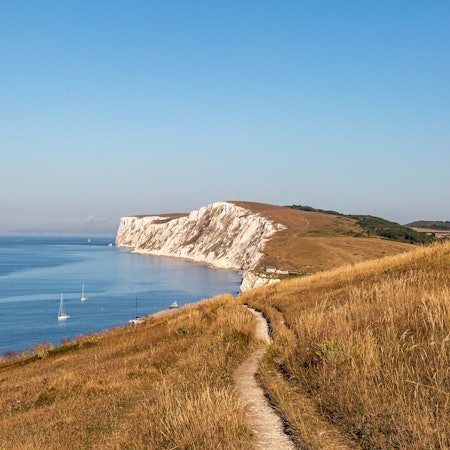
Crossing by ferry to the Isle of Wight instantly sets the holiday tempo. England's offshore escape was popularized by Queen Victoria (you can visit her lemon-yellow Italianate Osborne House) and bucket-and-spade-carrying visitors continue the tradition today, but with a 67-mile-long shore lined with beaches, sheer white cliffs and tranquil sand dunes, there's a rugged side to discover too, especially its westerly corner, where the jagged, shardlike Needles rocks rise from the sea.
Next stop: From Fishbourne on the Isle of Wight, take the Wightlink car ferry to Portsmouth (45 minutes), then drive for nearly 2 hours to reach Eastbourne in the South Downs National Park.
South Downs Way: picturesque walking route
1 day
Linking Eastbourne and Winchester, the South Downs Way winds for 100-miles across a petrified wave of chalk hills, with birds of prey hovering overhead and epic coastal views from atop the white cliffs. For maximum drama, concentrate on the section between Eastbourne and Alfriston, where lighthouses dot the trail and the landscape plummets dizzyingly down to a sparkling sea at Beachy Head.
Next stop: Drive around 2 hours to Canterbury.
Canterbury: ancient cathedral city
1 day
Vineyards ribbon the countryside along the route northeast – this sunny corner of England produces top-rated wines, so allow stops for tastings. Continue on to Canterbury and the awe-inspiring sight of one of the world's finest cathedrals, a UNESCO-listed wonder surrounded by narrow, cobbled alleyways, ancient city walls and England's largest surviving medieval gateway, as well as riverside gardens – and a vibrant student population, too.
Next stop: From Canterbury, drive for around 2 hours to the Dedham Vale National Landscape.
Dedham Vale National Landscape: rolling farmland and meadows
1 day
The rural beauty of the Dedham Vale National Landscape, with its gentle farmland, wooded coppices and everlasting skies inspired the master painters Thomas Gainsborough and John Constable – both were born in this picturesque part of Suffolk and the landscapes they painted are scarcely, if at all, changed today. Spend time exploring by foot, bicycle or paddling on the waterways, and stay the night in its charming inns.
Next stop: It’s a 2-hour drive to Cromer, part of the Norfolk Coast National Landscape.
Norfolk Coast National Landscape: beaches and wildlife
1 day
Curving north around East Anglia takes you to the Norfolk Coast National Landscape, where vast expanses of sandy beaches, backed by dunes, salt marshes, meadows and forest attract rich and rare concentrations of resident and migratory birds, including oystercatchers, plover, curlew and brent geese. In spring, listen out for the booming call of bitterns. Nature reserves abound here, with hides providing prime birdwatching opportunities and seals can be seen at Horsey Gap and Blakeney Point.

4. Journey through the east of England
7-day itinerary
450 miles (724 km)
In this week-long trip through England's east, you'll visit revered centers of learning, from hallowed Cambridge colleges to Lincoln's glorious cathedral and mighty castle, a UNESCO Geopark, a dazzling and remote Dark Sky Park (with a renowned observatory) and make your way out to ancient, spiritual Lindisfarne, aka Holy Island.
Cambridge: cultured student city
1 day
Beautiful university city Cambridge, with punts gliding beneath arched stone bridges along its meandering river, centuries-old colleges and gentle greens appears as if it exists in another era. But it's also a lively student town, filled with pubs, restaurants and culture including its famous Footlights comedy club. Before setting off, remember more engaging sights lie just outside in the idyllic surrounding Cambridgeshire countryside.
Next stop: From Cambridge, it’s a 2-hour drive to Lincoln.
Lincoln: cathedral and castle city
1 day
Wind your way through the East Midlands to Lincoln, another university city with plenty of student life around its waterfront. It's up the very aptly named Steep Hill – its cobblestones lined by sloping shops – that you'll find Lincoln's cathedral, with its three soaring Gothic towers and luminous stained glass, and castle, built by William the Conqueror and guarding an original copy of Magna Carta.
Next stop: Drive nearly 3 hours to Whitby.
Whitby: iconic abbey in a seaside town
1 day
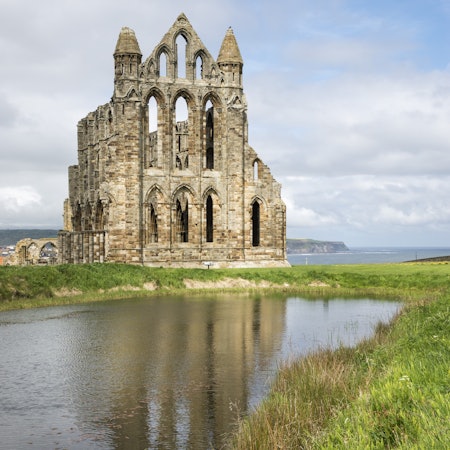
Whitby serves up a sampling platter of scenery, history and literary connections. Above the stone-built harbor and the town's long, sandy beach, the spectral remains of Whitby Abbey are a draw for Dracula fans, while inland, North York Moors National Park beckons to walkers and mountain bikers. Add in the country's best fish and chips and it makes one epic day at the seaside.
Next stop: From Whitby, the drive to Alston in the North Pennines takes around 2 hours and 30 minutes.
North Pennines: moorland and meadows
1 day
Peaks, plunging gorges and windblown moors make up the North Pennines National Landscape, a UNESCO Global Geopark. Sprinkled throughout this dramatic landscape are enchanting towns and villages like Alston, England's highest market town, and a welter of walks including through ancient woodland and substantially more challenging hiking trails. Most challenging of all is the 268-mile Pennine Way, running all the way to the Peak District.
Next stop: Drive 2 hours via Hadrian’s Wall to reach Kielder.
Kielder: center of stargazing
2 days
En route to remote Kielder, you'll travel along a stretch of Hadrian's Wall, the remains of the mighty engineering marvel that marked the boundary between Roman Britannia and unconquered Caledonia beyond; take time to stop at its fascinating forts. This unpopulated part of England became the country's first International Dark Sky Park; stay overnight to visit Kielder's observatory and witness the majesty of the stars.
Next stop: It’s around 2 hours by car to Lindisfarne.
Lindisfarne: island with a tidal causeway
1 day
End your eastern explorations along the serene Northumberland Coast with a pilgrimage out to Lindisfarne, also known as Holy Island – St Aidan established a priory here back in 634 CE. There are still remains of its 11th-century priory as well as 18th-century Lindisfarne Castle. Getting here is a pilgrimage in itself – the island is only reached by a tidal causeway, so check tide times before setting out.

5. Discover England's royals and rebels
7-day itinerary
495 miles (796 km)
History seeps from the stonework on this castle-filled trip. Starting from spirited Nottingham, famed for outlaw Robin Hood, it travels to Leicester, revealing the incredible rediscovery of King Richard III, then cuts down to the New Forest and across to Windsor. It then heads to the fortifications at Britain's oldest town, Colchester, wrapping up in the medieval streets of Norwich, England's "City of Stories".
Nottingham: city of legends
1 day
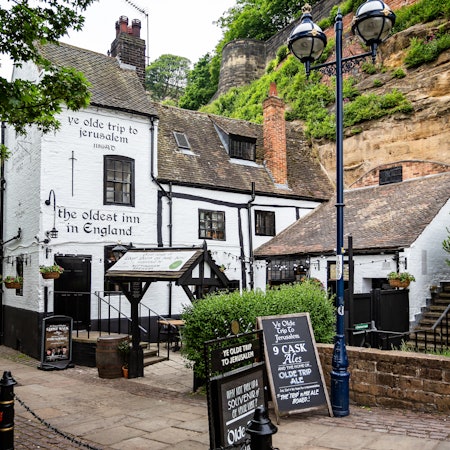
Begin your journey in the energetic city of Nottingham. Entertaining, history-filled Robin Hood tours by Ezekial Bone are the ideal way to get the lay of the land. Delve deeper into local legends at Nottingham Castle, and have a pint at the fabulously atmospheric 1189 pub Ye Olde Trip to Jerusalem – wormholed into the caves, it's where King Richard I's forces gathered before embarking on the Crusades.
Next stop: From Nottingham, it’s a 1-hour drive to Leicester.
Leicester: city with rich royal history
1 day
It's a short zip south to Leicester, with more history in store: Richard III was England's last king to die in battle, at nearby Bosworth, and his body was missing for centuries until, astoundingly, it was discovered under a Leicester car park in 2012. The KRIII centre shows where he was found, and at nearby Leicester Cathedral, you can see where the king is now buried.
Next stop: Drive around 3 hours to the New Forest.
New Forest: national park with a stunning castle
1 day
At the edge of the New Forest (proclaimed by William the Conqueror), high on the Dorset cliffs near Bournemouth's sweeping beach, Highcliffe Castle is a showpiece built for Lord Stuart de Rothesay, and the best-preserved example of the turn-of-the-19th-century Romantic and Picturesque style. At the other end of the architectural spectrum, the New Forest is also home to hulking artillery fortress Hurst Castle, built by Henry VIII.
Next stop: Drive 2 hours to Windsor.
Windsor: castle town and principal royal residence
1 day
Travel up to the Thames Valley, just west of London, where castles don't come more monumental than Windsor. The oldest and largest occupied castle in the world, it's been home to 40 monarchs since William the Conqueror founded it in the 11th century. After touring inside, you can visit St George's Chapel, where Queen Elizabeth II is buried, and ramble in the estate's vast grounds.
Next stop: From Windsor, drive 2.5 hours to Colchester.
Colchester: England's oldest town
1 day
Skirting London to the north, continuing east brings you to Colchester, dating from the 5th century BCE. In CE 43 the Romans came, saw and conquered, and constructed Camulodunum, which was razed by Boudica less than two decades later. The thriving market town that emerged from the rubble went on to see action in the Norman Conquest, Reformation and English Civil War.
Next stop: Driving less than 2 hours from Colchester brings you to Norwich.
Norwich: charming medieval city
1 day
Strike out for the destination of another rebel, anti-privatisation leader Robert Kett who stormed Norwich and took the city in 1549; he was ultimately hanged from the walls of Norwich Castle later the same year. Today, this charming city retains some of the country's most complete medieval architecture (including its landmark cathedral), with numerous other cultural and culinary diversions to make a fitting end to your trip.
Advertisement
Explore related stories


Nov 16, 20196 min read
"Why can’t we just be normal again?" A family's journey around Europe in a caravan