Advertisement

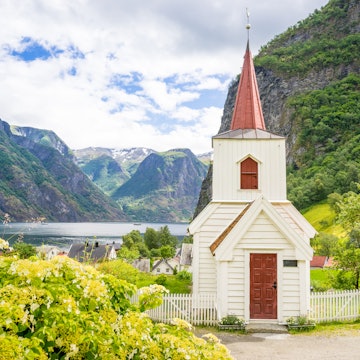
Snowcapped mountain peaks in Vestland, Norway. Sergio Formoso/Getty Images
Vacations in hot places? That’s old hat. How about chilling out – truly – on your next big trip? To travel somewhere super-cold is to fall in love with this planet’s wildest sides. With all their plummeting temperatures, snow, ice and sub-zero summits, the coldest places on Earth are invariably the remotest, most rugged and most challenging to access. Yet many of the globe’s most glacial spots can – and definitely should – be on serious travelers’ lists.
From wildlife watching in the Antarctic to skiing in Japan's coldest mountains, these destinations are sure to send more than a shiver of excitement down your spine.

1. Antarctica
Best place to see penguins and whales
Intoxicatingly otherworldly, Antarctica is covered by the world’s largest ice sheet, which reaches an extent of around 19 million sq km (7.3 million sq miles) in winter. It’s as freezing as this planet gets – and getting here is no picnic. A typical 10-day trip via expedition vessel from Ushuaia in Argentina takes a couple of tempestuous days via the squally Drake Passage. The reward? Five days of soaking up unforgettable nature, from whales and penguins to wackily shaped icebergs.
Planning tip: Visits to Antarctica take place in the summer months. November to December is wildlife mating season and also when you’ll see the largest icebergs, newly calved from glaciers.

2. Longyearbyen, Svalbard, Norway
Best place to see the northern lights
The northernmost permanently populated place of any size in the world, Longyearbyen is the capital of Svalbard, a glaciated archipelago constituting the last landfall between Europe toward the North Pole. It is so snowy here that you usually need a snowmobile to get around, and venturing anywhere out of town is permitted only if accompanied by an armed guide to protect against patrolling polar bears. Trips to spot Arctic wildlife and some of the planet’s finest aurora borealis displays are among the frigid thrills awaiting visitors.
Planning tip: The sun disappears entirely from the end of October to February, making this the best time to be in Svalbard for a chance of spotting the northern lights. Just be sure to pack for the conditions because winter temperatures can drop as low as −20°C (−4°F).

3. Ellesmere Island, Nunavut, Canada
Best place to see musk ox, polar bears and wolves
Of the many frozen places across northern Canada, Ellesmere Island in Nanavut province stakes a great claim to being the most hyperborean of the bunch. The planet’s most northerly landmass (other than Greenland) has secured the top spot in the year-end rankings of coldest-in-Canada spots year after year. And the Inuit community of Grise Fjord here is probably the frostiest permanently inhabited locale on Earth. The icefield-packed island’s gobsmacking topographical variety brings an unrivaled diversity of Arctic fauna: it’s one of the last places where musk oxen survive in the wild, and also hosts significant polar bear and Arctic wolf populations.
Planning tip: The easiest way to visit is as a stop-off on an Arctic cruise.

Meet your new travel partner
Get unlimited data while you travel with Holafly eSIM. Peace of mind and no hidden fees wherever you go.

4. Ittoqqortoormiit, Greenland
Most remote community
After landing on Greenland, you don’t need long to register the irony of the name. The most northerly land in the world is mostly white, 80% of it blanketed by the gigantic Greenland ice sheet. And what is not ice, is rock: no month of the year averages anywhere close to the 10°C (50°F) thought to be the minimum required to support tree life, which means green is not a color regularly seen on the spectrum here. In Ittoqqortoormiit on the east coast, one of the remotest permanently inhabited communities on Earth, hardcore travelers are lured by outstanding wildlife-watching – the local population of polar bear, musk ox, walrus and narwhal outnumbers the human one – and the presence of the world’s largest national park, Northeast Greenland.
Planning tip: If you’re keen to keep it freezing and are looking to climb or hike the ice, the November through March winter season is your best time. Night can last up to 24 hours, frigid temperatures keep ice solid, and snow is most likely to fall.

5. Denali National Park, Alaska, USA
Coldest mountain peak
The very name “Alaska” makes you want to crank up the central heating. So contemplate, if you will, how low temperatures get on the slopes of the state’s highest mountain, Denali. (Hint: very low.) The summit is the planet’s coldest and third-most prominent peak, where even the heights of summer can sink the mercury to a numbing -30°C (-22°F). And the expanse of billowing foothills, tundra and taiga forest around Denali can get pretty cold, too. Denali National Park is one of the few US national parks where off-trail trekking is permitted, attracting adventurers aplenty. Of the marked routes, short but steep Thorofare Ridge Trail delivers exquisite views of the mountain.
Planning tip: Facilities are much more restricted in the winter months with only one visitor center open. With the George Parks Highway and Alaska Railroad traversing the southeastern boundary and providing links to both Anchorage and Fairbanks, Denali is one of the most accessible national parks in Alaska.

6. Hornstrandir Nature Reserve, Iceland
Best place for wild hiking trails
This northwesterly appendage of Iceland is not a nature reserve as you might be imagining: you won’t find any neatly waymarked trails or placards indicating local wildlife here. There is not much of anything, in fact. Long cut off from the rest of Iceland by the Drangajökull glacier, Hornstrandir’s chilly zone of untamed peaks, tundra, titanic cliffs and storm-tossed shore will feel especially cold to visitors – because to really see it, you have to hike through it and camp out in it. Historically renowned as a place of exile for Icelanders (including the father of fabled Viking Erik the Red), this is now one of Europe’s wildest trekking destinations. The bogs and river crossings get hikers sodden fast, and best-case scenario temperatures rarely reach double digits, making drying off difficult. The light at the end of the tundra? Such cold delivers phenomenal natural beauty.
Planning tip: Ferries typically only run in the summer months, from early June until the end of August. Without the ferries, it's a multiday hike to reach Hornstrandir. Given the fickle weather, July is the best time to visit.

7. Hakkōda Mountains, Japan
Best place for skiing and snowboarding
No self-respecting list of freezing places would be complete without a mention of the Hakkōda Mountains, often considered the snowiest part of the planet. Just below the peaks, Aomori, the world’s snowiest city, is buried under many meters of white stuff for around 4 months of the year. The coolest thing to do here is to hit up Hakkōda ski area, offering some of Japan’s best backcountry snow sports.
Planning tip: An attraction in itself is the annual clearing of snow from the highway into Aomori after its wintertime closure: the month-long endeavor creates a corridor flanked by walls of snow around 8m high, making wonderful wintertime social-media pics.

8. Vestland County, Norway
Best place for fjords, glaciers and rain
This fjord-serrated swathe of western Norway holds all sorts of weather records thanks to its excessive wetness and snowiness. Start your shudder-inducing sojourn in Bergen, one of the wettest cities in Europe, where the prospect of precipitation looms more than half the time. Then forge northeast to Jostedalsbreen National Park, surrounding continental Europe’s mightiest glacier, or journey southeast via another gargantuan glacier, Folgefonna, for snow sports at Røldal, the ski center that gets this snowy nation’s deepest drifts of powder.
Planning tip: Vos, about 100km from Bergen, is the best place to visit in Norway for adventure sports, with skiing and snowshoeing in winter, and mountaineering, rock climbing and mountain biking at other times of year.

9. Ulaanbaatar, Mongolia
Coldest capital city
A fairly high elevation, a location far from any coastline that might usher in milder fronts and a position on the receiving end of the Siberian anticyclone’s bitter embrace all ensure that Ulaanbaatar is the world’s coldest capital city. Come in winter, and temperatures in the range of -30°C to -40°C (-22° to -40°F) are commonplace. Mongolia is most celebrated for its captivatingly wild landscapes of mountains, steppe and desert – but if you can brave the biting chills, the capital has lots to waylay you as well.
Planning tip: Start in Ulaanbaatar's striking main square, flanked by statues to national heroes Chinggis Khan and revolutionary Damdin Sükhbaatar, and visit the ornate center of Mongolian Buddhism, Gandan Khiid Monastery. The 40m-high Chinggis Khan Statue is around 50km from the city center and particulary impressive in the winter sun.

10. Punta Arenas, Chile
Best place for windy conditions
It’s the wind that chills you to the bone in Punta Arenas, one of Chile’s (and the planet’s) southernmost settlements. Overlooking the solemn waters of the Strait of Magellan in Chilean Patagonia, this city gets gusts buffeting at an average of over 22km/h – that’s the equivalent of a constant year-round moderate breeze on the Beaufort Scale. Why would you come all the way down here, to almost the end of the world as we know it? The city is the jumping-off point for trips of a lifetime to the otherworldly trekking hub of Torres del Paine, or onward to Antarctica.
Planning tip: Visit Torres del Paine in winter (from June to August in the southern hemisphere) to search for pumas and enjoy a respite from both the crowds and the reserve’s driving summer winds.
Advertisement