Advertisement

Lousã Castle, Serra da Lousã, Portugal. Luis Pedro Fonseca/Shutterstock
Portugal is a perennial favorite of travelers from around the globe thanks to its fabulous beaches, exciting cities, rich history and mild climate. Yet such popularity does tend to draw throngs to some of this small, beautiful and historic country’s better-known spots.
This is why we’ve asked five of our Portugal-based writers to recommend places they love to go for a break – places you might never have heard of before.
Count on escaping the crowds at these off-the-radar destinations in Portugal, recommended by our local experts.
Advertisement

1. Trás-os-Montes
Austin Bush is a writer and photographer based in Lisbon.
Why Trás-os-Montes?
I’ll almost always opt for mountains over the beach – and in Portugal, my favorite mountain destination is Trás-os-Montes. Tucked away in Portugal’s northernmost region, “Behind the Mountains” is a relative description. Don’t come expecting towering summits or ski resorts (although the area can get snow in the winter), but rather a remote-feeling, rocky area of charming villages and protected natural areas.
Must-do activity
The ideal way to approach the region is to rent a car from Porto, only a 2-hour drive away. With your own ride, you’ll be able to discover Trás-os-Montes’ granite villages, where you’ll feel that you are not only traversing geography but also time. Vilarinho Seco in Boticas, for example, is one of Portugal’s best-preserved granite villages, a place where it feels like the clock stopped somewhere around the year 1500. Locals here still raise long-horned Barrosã cattle, which sleep in ground-floor pens beneath the two-story stone homes.
Where to stay
Hotel Parque Serra da Lousã is a four-star hotel in Serra da Lousã Biological Park that has an on-site spa.
Where to eat
Trás-os-Montes is a fascinating region for food. When I’m there, I look to the Tabernas do Alto Tâmega, a network of 15 eateries across the region. Expect massive, hearty dishes cooked over wood-burning fires; smoked meats; and home-style hospitality.
My favorite of the lot might be Casa de Souto Velho, a fantastic restaurant in the eastern part of the region where just about every ingredient is grown, raised or produced in-house.

2. Serra da Lousã
Daniel James Clarke used to vacation frequently in the Algarve – until the day he decided to stay and call the southern coast home.
Why Serra da Lousã?
When summer brings crowds to the coast, I’m forever drawn to Portugal’s lesser-visited interior. In the hinterlands of the historic Beiras region, the Serra da Lousã is a blend of near-forgotten aldeias do xisto (schist villages), tranquil hiking trails and dreamy rural hideaways. By night, the Milky Way dazzles – especially in Pampilhosa da Serra, slightly further inland.
Must-do activity
The assiduously restored hamlet of Cerdeira, reborn as Cerdeira Home for Creativity, is now an artist’s retreat, offering workshops and idea-generating spaces for those eager to channel inspiration from nature. And what a place to disconnect! A soundtrack of birdsong and the much-welcome river beaches at Cabril do Ceira gorge or Praia Fluvial Senhora da Piedade – crowned by Lousã Castle, an 11th-century pile – provide daytime escapes.
Advertisement
Where to stay
Around 30 minutes from Coimbra, the town of Lousã is the mountain range’s hub, and HI Hostel Lousã’s modern, private rooms are my affordable go-to. For a genuine retreat, I’d recommend staying in a renovated rock home at one of the once-abandoned villages, such as 17th-century Talasnal or Candal.
Where to eat
Make a reservation at O Burgo or Villa Lausana to enjoy typically hearty dishes such as chanfana (a clay-pot lamb stew), best paired with a local mineral-rich red wine produced from the regional grape, baga.
3. Corvo
Sandra Henriques was born in Portugal’s Azores islands and has called Lisbon home for 20+ years.
Why Corvo?
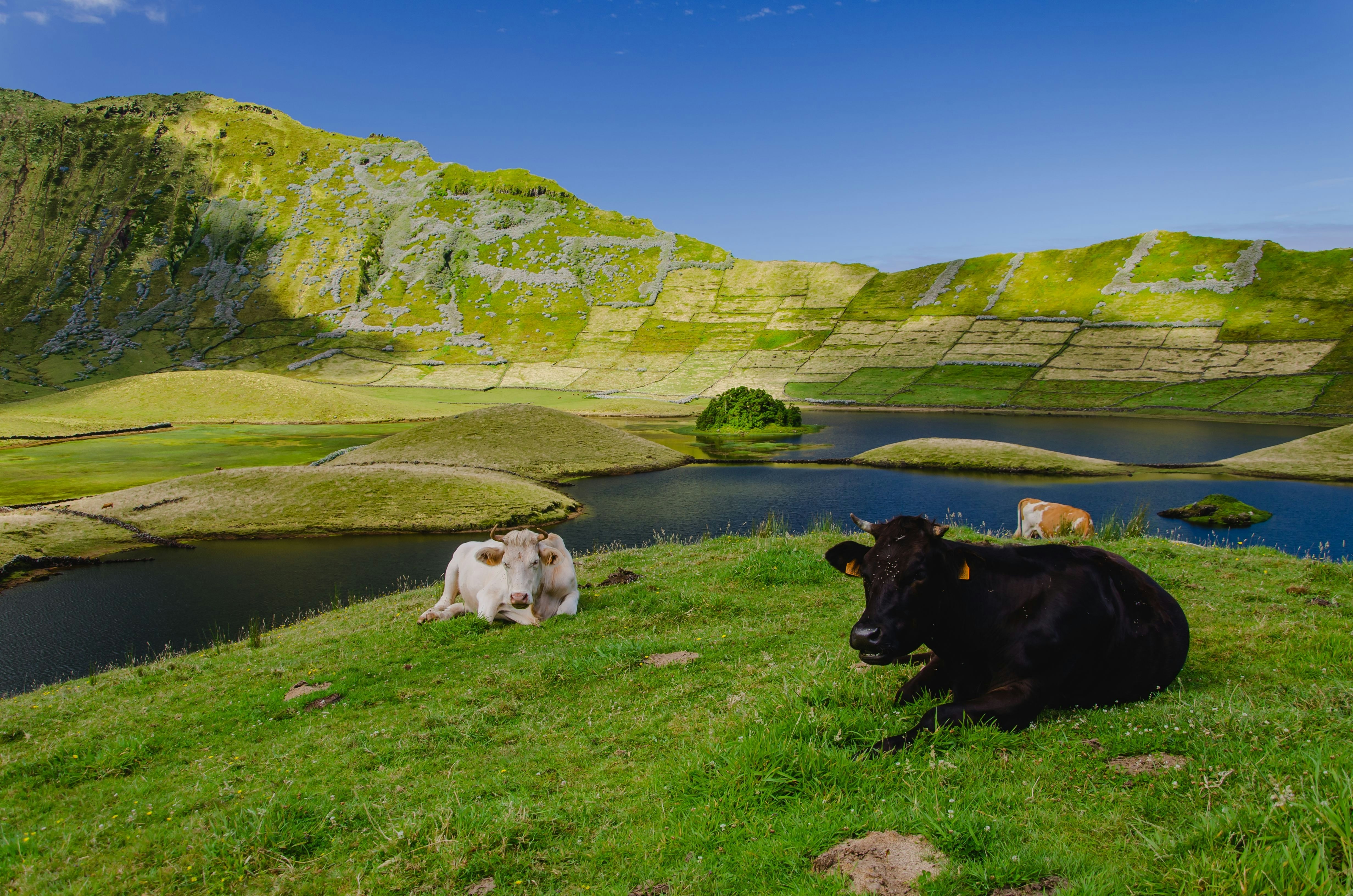
One of the nine islands of the Azores, an archipelago some 1100 1770km away from Portugal, in the Atlantic Ocean, this 18-sq-km lump of land with under 400 inhabitants remains well off the beaten track. It’s true that the Azores islands have grown in popularity over the last decade. Yet the minute you get off the plane on Corvo, the peacefulness of this village-like island washes over you. You’ll barely feel the jet lag.
The only municipality on the island, Vila do Corvo is a minute cluster of houses and narrow streets on cliffs overlooking the ocean, with everything within walking distance. Its main natural attraction – Caldeirão, the lagoon on the the crater of the volcano that formed the island – is a 2-hour, 6km hike uphill.
Must-do activity
Corvo is where I go to release, recharge, enjoy the outdoors and savor small-town living. Forget planning or a packed calendar of activities. Instead, prepare for days of lazing around, mingling with the locals and dividing your time between morning hikes and afternoons at the beach. Whatever you plan, rolling with the punches when the weather doesn’t agree with what you had in mind is essential.
To learn about local history and heritage, visit the Casa do Tempo museum, and the old animal-powered grain mill Atafona do Lourenço.
Where to stay
Short-term rentals are available on the island, though I recommend staying at the family-owned Hotel Comodoro. This two-star guesthouse offers the comfort of staying with relatives, including a complimentary homemade breakfast.
Where to eat
The only restaurant on the island, Restaurante Caldeirão is right next to the airport and your go-to spot for lunch or dinner with a view. For drinks, casual meals, and laidback chit-chat with the locals, head to BBC – Caffé & Lounge.

4. Figueira da Foz
Marlene Marques is a Lonely Planet guidebook author and avid surfer with a deep love for Portugal’s coastal destinations, such as Figueira da Foz.
Why Figueira da Foz?
Since I began surfing in the 1990s, Figueira da Foz has captured my attention, as some of Portugal’s pioneers of competitive surfing came from this spot. In this relaxed town some 200km from Lisbon, I found a relaxed scene, some of the country’s most extensive beaches and restaurants that use local ingredients to perfection.
And let’s not forget those incredible waves.
Must-do activities
Surfing tops my must-do list in Figueira da Foz – for that, there’s Praia do Cabedelo and the Buarcos area. If this sport isn’t your thing, enjoy a beach day at Praia da Claridade: stretching for kilometers, it’s one of Portugal’s largest and widest beaches. You can also visit the opulent Palácio Sotto Maior, go for a hike in Serra da Boa Viagem or catch a show at the 19th-century Casino Figueira.
Go at the end of June to catch the São João festivities, which include music, fireworks and traditional sardine feasts by the sea.
Where to stay
My top pick is the Universal Boutique Hotel, in the so-called Bairro Novo, just steps from Praia da Claridade and the casino; its beautiful decor transports you to the city’s glamorous past. Another great option is Bacharéis Charming House, which occupies a beautifully restored 1878 building.
Where to eat
Tasca Maria serves the best canja de garoupa e ameijoas (grouper-and-clams soup) you’ll ever taste. And Olaias works the arroz carolino do Mondego (rice grown in the Mondego Valley) like no other; my favorite is the octopus rice. And I always leave room for their sponge cake.

5. Vila Nova de Milfontes
Joana Taborda grew up in Lisbon and now splits her time between the capital and Madeira.
Why Vila Nova de Milfontes?
The southern coast has always been a favorite holiday spot for Portuguese families. Most end up in the Algarve – but lately, many are switching it up for the quieter sands of the Alentejo, just to the north. There’s no bad time to visit this region. Late spring and early September are beautiful and calm, yet even at the height of summer, Vila Nova de Milfontes offers a peaceful seaside vacation away from the crowds.
Must-do activity
When I was younger, I spent my summers camping near the beaches of Vila Nova de Milfontes, and I often return there. It’s one of the many coastal towns in the Alentejo, a region of sprawling, wild beaches and scenic hikes like the Fishermen’s Trail. This famous walking route crosses a natural park (no high-rise hotels here) and takes you along steep cliffs with ocean views all the way through.
Where to stay
I used to stay at a camping site just above Praia do Malhão, walking down every morning to the beach for a full day of swimming and the occasional surf lesson. These days, I’ve been sticking closer to town and its 16th-century castle (Forte de São Clemente). Try Guarda Rios, a whitewashed B&B.
Where to eat
I enjoy grabbing my breakfast croissant from Mabi and catching the sunset from the dunes behind Praia do Farol, before ending the night with a cocktail.
Advertisement