Advertisement
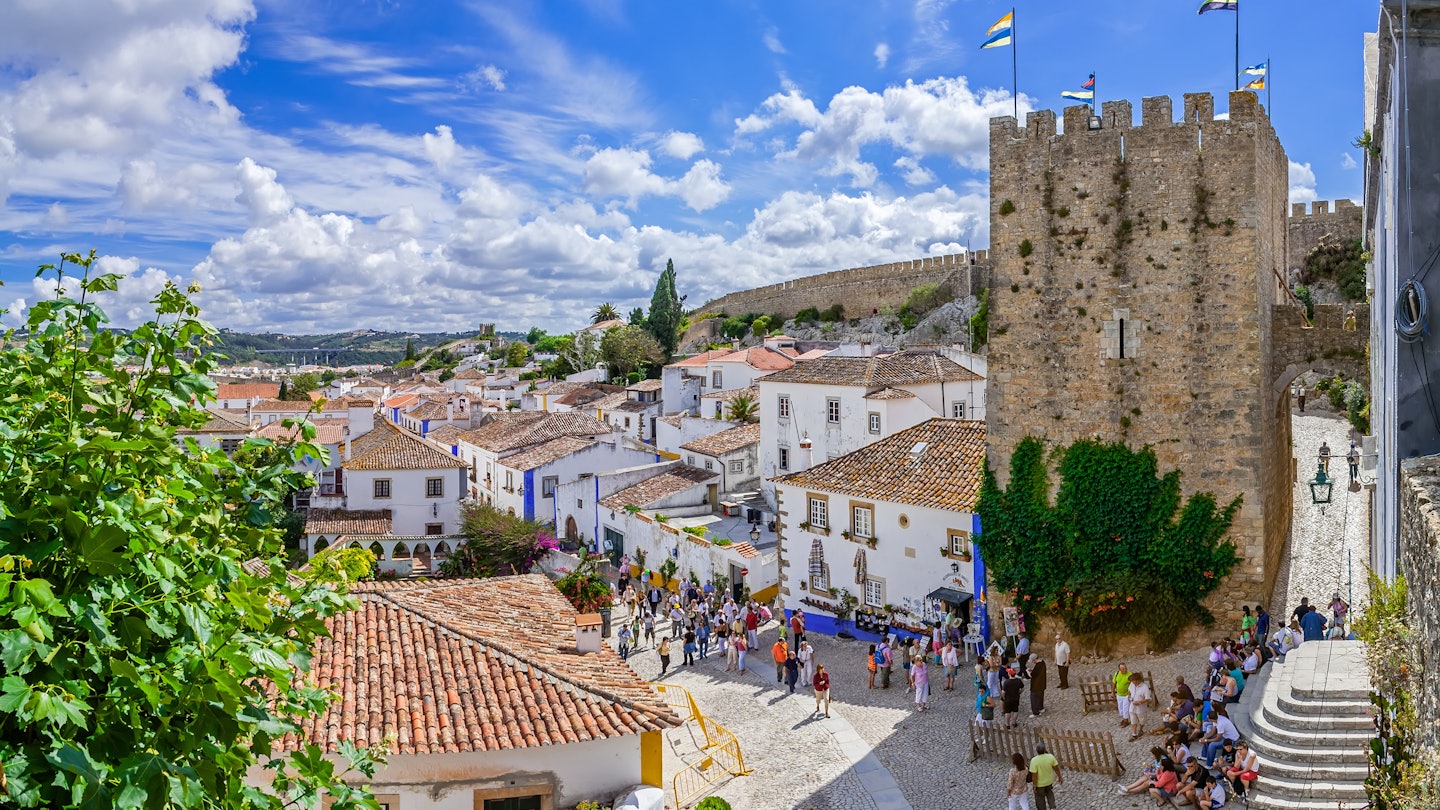
Óbidos, Portugal. StockPhotosArt/Shutterstock
Óbidos is like its signature ginjinha (cherry liqueur): a sweet treat with a cherry on top. Wrapped in crenelated medieval walls, the well-preserved hilltop hamlet in Portugal is a tangle of azure- and canary-hemmed whitewashed homes, churches and monuments.
Bibliophiles can lose themselves in this storybook UNESCO City of Literature. All guests will feel regal when slumbering in the castle that crowns the Vila das Rainhas (Town of the Queens). And travelers who venture beyond the walls will wash up to a lagoon rich in both wildlife and water activities.
Óbidos is among Portugal's most beautiful villages and one of the most popular places to visit in the country. While many visitors take the brisk 1-hour bus ride from Lisbon for a day trip to Óbidos, the town's top attractions are arguably better savored slowly. Use our advice to decide where you'll linger among the best things to do in Óbidos.
Advertisement

1. Be inspired by azulejos before painting your own
Óbidos doesn’t waste any time in dazzling. Between the double-doorway Porta da Vila, the town’s towerlike entrance gate, a rich welcome of baroque blue and white azulejos (hand-painted ceramic tiles) flank the balcony’s oratory dedicated to Óbidos’ patron saint, Nossa Senhora da Piedade. More magical ceramics await at the town's show-stealing sacred centerpiece, Igreja de Santa Maria, its walls clad with 17th-century tiles, which the local embroidery style emulates.
Suitably inspired, head down a side street to Casa dos Azulejos, where Maria Daniela creates impeccable azulejos using the tin-glazed majolica method. Find a gift or, better still, book a workshop to learn one of Portugal’s most influential art forms from a master, crafting a far more memorable souvenir of your own design.
Detour: Find abundant (and often amusing) ceramics in Caldas da Rainha, a spa town once revered by royalty, a brief train ride north. At the Bordallo Pinheiro factory store, prices are usually a bargain compared to what you'll find in boutiques.
2. Meander down medieval alleyways
Getting lost within the walls of compact Óbidos is challenging, but it’s a delight to try. And while an amble along the well-trodden Rue Direta, the main thoroughfare linking Porta da Vila to the castle, will give your camera and carteria (purse) a workout, it’s admittedly become rather touristy.
Instead, snake your way across the town, unfurling Óbidos’ queenly history across every bougainvillea-veiled corner. First bestowed to the Queen Consort by King Afonso II in 1210, Óbidos continued to be a (rather excessive) traditional royal wedding gift until the 19th century. Igreja da Misericórdia, Queen Leonor's church in the former Jewish Quarter, is especially worth a glance to admire the azulejos and adjacent tower before crossing under the Arco da Cadeia, a prison in the Middle Ages, now an appointment-only house museum.
Detour: Beyond the walls, Igreja de São João Baptista, housing an undersized sacred art collection, and baroque Santuário do Senhor da Pedra are worth a brief detour.

3. Satisfy your sweet tooth with sour cherries and chocolate
Given that nearly every other doorway along Rua Direita is garnished with a sign for ginjinha de Óbidos, the town’s signature dark red, cherry-infused aguardiente (firewater), it would be almost criminal not to satisfy your sweet tooth, especially as the small, sippable shot is often served in a chocolate cup.
Dip into any bar or shop – long-standing Bar Ibn Errik Rex is a characterful pick – and order it simple, in chocolate or com ginja if you'd like an alcohol-infused sour morello cherry floating inside. While the history of ginjinha is a little hazy – it’s generally accepted that a 17th-century monk brewed the first batch – you can see the process on a factory tour (ending with a tasting) at Ginja Mariquinhas in Gaeiras.
Advertisement
Planning tip: Come for the chocolate festival in early March for an even sweeter visit. Or walk the 2-hour Rota dos Ginjais trail to see nearby Sobral da Lagoa’s morello trees in bloom, usually from mid-April until mid-May.
4. Appreciate local artistry, from canvas to embroidery
Look no further than the Figueira family to understand how inspiring this town is. Baltazar Gomes Figueira, born in Óbidos at the turn of the 17th century, and his daughter, Josefa, who adopted the town’s name as her artistic surname, were two of Portugal’s most prolific baroque artists. Much of Josefa's work is on display in the Museu Municipal, with a few notable paintings by father and daughter inside Igreja de Santa Maria – the church whose tiles have inspired the motifs in local embroidery since the 1950s.
Planning tip: Enquire at the Espaço Ó cultural hub about lessons to learn a craft from working artisans, or visit the tourism office to learn about verguinha, an ancestral Italian clay-weaving technique imported to the town.

5. Spend a night in a castle
Constructed by the Moors and later converted into a royal palace – a wedding gift from King Dinis to Queen Santa Isabel – the hulking, multiturreted Castelo de Óbidos is as storied as they come. Its latest incarnation is as a pousada, the countrywide group of heritage hotels, limiting access to guests only.
For those keen to poke around inside, consider booking in for a night in the historic quarters – see if you can snag the castle's split-level suite with exposed stone and a four-poster bed. Rooms aside, the armored statues, azulejos and regal canvases all embellish the Óbidos experience. Romantics can even get married here, following in the footsteps of Portuguese royalty.
Planning tip: If you’re tight on time but want for a glimpse inside, make a reservation for lunch in the castle’s wooden-beamed, azulejo-lined dining room. Request a table at the cubbyhole windows for a panoramic view framed by twisted, ropelike Manueline columns.
6. Chow down on fish stew paired with provincial wines
Portugal’s largest coastal lagoon, the Lagoa de Óbidos, laps up to the town's doorstep, so unsurprisingly, caldeirada de peixe, a bubbling fish stew of peppers, tomatoes and the seasonal local catch – perhaps bass, eel, bream, clams or mussels – is the local dish to try. Fishers in communities dotting the crustacean-heavy lagoon collect their catch using traditional bateira (flat-bottomed wooden boats).
To savor it lagoon-side, book a table at Covão dos Musaranhos and request the caldeirada a day ahead. Try to pair it with an Óbidos wine, or to guarantee a local sip, arrange a tasting at Quinta do Sanguinhal, a family-run, century-old winery.
Detour: Blend wine and art at the wholly unexpected Bacalhôa Buddha Eden, a 10-minute drive south. Set on Quinta dos Loridos' wine estate, this vast garden pays homage to Afghanistan's destroyed Buddhas of Banyan, complete with a sometimes perplexing array of imitation terra-cotta warriors, pagodas and sculptures. Reserve wine tastings in advance; purchase garden tickets on arrival.

7. Find your next good book in this City of Literature
With abundant books in beautiful spaces, Óbidos has long drawn bibliophiles. If you’re searching for a new novel, peruse the dozen-odd livrarias (bookstores) or al fresco book exchange spots around town. Livraria de Santiago, housed inside a former church, and the barnlike Livraria de Mercado are two of the largest within the walls. Livraria Artes e Letras, just outside the walls, hawks antique titles in an old wine cellar.
New (to you) book in hand, settle in at The Literary Man, a converted convent hotel where the common spaces, Japanese restaurant and gin bar are lined with book-stacked shelves.
Planning tip: Join fellow bookworms at April’s Latitudes literature festival or the Festival Literário Internacional de Óbidos hosted in September or October.
8. Relish golden hour from atop the mighty Moorish walls
If you think Óbidos is postcard pretty from Rue Direta, wait until you see it from above. Hike up the stone stairs near the castle or Porta da Vila onto the 8th-century, Moorish-built fortified walls to circle much of the village, peering down on the labyrinth of whitewashed streets and courtyard gardens and out to the verdant panorama spilling down the slopes. It’s particularly magical around sunset, when golden light bathes the vineyard-dressed landscape. From above, you can also better appreciate the mighty 16th-century Aqueduto da Usseira, constructed under Queen Catherine of Austria’s watchful eye.
Planning tip: While heavily restored in the 20th century, the ramparts have no guardrails, which can be daunting on the often 20m-high walls. If you’re traveling in Portugal with kids or uncomfortable with heights, take extra care. Either way, it’s advisable to descend before dark.

9. Retreat to a bird-sheltering, lagoon-backed beach
Most visitors rarely make it beyond the walled village, but the municipality of Óbidos is more than its medieval marvel. The district stretches west, encompassing the bird-haven lagoon – boat trips depart from near Covão dos Musaranhos – and a sweep of sand along the Costa de Prata (Silver Coast). Linger for a while and you’ll uncover a laid-back, locally-loved destination perfect for a beach getaway.
Find kitesurfing and stand-up paddleboarding schools on the lagoon’s southern edge, separated from the Atlantic Ocean by the sensational swirling sands and cyan waters of Praia do Bom Sucesso. Birders will relish the Ecovia da Lagoa, a lagoon-circling trail now visited by flamingos during winter’s migration.
Detour: Óbidos is close to many of central Portugal's coastal highlights. Peniche, the gateway to the protected Berlengas Islands, and Nazaré, home of the world's biggest rideable waves, are within a 30-minute drive.
10. Celebrate with a medieval festival or a castle-backed Christmas
Come in July and there’s no need to imagine medieval Óbidos. Much of the month is dedicated to the Mercado Medieval, a mammoth event that transports the town back to the Middle Ages. Costumed reenactments, jousting, flame-hurling dancers and all-encompassing medieval merriment, including mead and roasted meats, engulf the whole walled village, making it one of the best times to visit.
Prefer a (hopefully) sunny, castle-backed Christmas market? December’s ticketed Vila Natal is a fine spot of festive cheer. Twinkling lights and projections illuminate the towers and market stalls, and crafts and kid-friendly performances annex the area fronting the castle.
Planning tip: If you’re in Portugal over Easter, visit Óbidos during Semana Santa (Holy Week) for a taste of the medieval experience during the torchlit procession.
Advertisement