Advertisement

Passengers gather in Paris' Gare de Lyon station. EQRoy/Shutterstock
At one point in the not-too-distant past, it looked like the end was nigh for sleeper trains. Low-cost airlines and high-speed railways were pushing slow travel by train onto the back burner. Nobody disputed the romance of the best sleeper-train journeys in Europe, but for travelers balancing cost and time, the economics no longer added up.
The good news for eisenbahnfreunde – as the Germans like to call railway enthusiasts – is that overnight train travel is back on the menu. Growing interest in slow travel and rising concern about the environmental impact of flying (driven partly by the Swedish flygskam, or “flight shame,” movement) has boosted demand for sleeper trains across the continent.
Train operators across Europe are reviving and expanding their overnight routes, with growing numbers of cross-border train services offering the chance to cross the continent without the inconvenience of queuing for hours to be squeezed into a cramped cylinder at 35,000 feet.
It's a trend that is continuing in 2026, with new European sleeper-train routes on the way, such as the upcoming service from Basel, Switzerland, to Malmö, Sweden, and the new Brussels and Amsterdam to Milan service on the European Sleeper.
These new routes will join established trans-European services such as the Paris–Berlin and Brussels–Prague trains run by European Sleeper, creating a vibrant network linking destinations across the continent for aviation-avoiders and rail enthusiasts. To get you in the railway mood, here are the best sleeper-train journeys in Europe.
Advertisement

Why take the sleeper train across Europe?
Overnight trains do more than just save the cost of a night’s accommodation: they’re an adventure in themselves, recreating the romance of a bygone era as they whoosh travelers, families and business people across the continent under cover of darkness. Even if you travel in the most simple couchette berths, there's a whiff of James Bond and a hint of the Orient Express about traveling overnight by train.
Most European sleeper services offer a mixture of cars with standard seating, and sleeper compartments with room for two or four passengers, alongside six-person, dormitory-style couchettes. On some trains, however, private compartments equipped with showers and innovative capsule-style berths are becoming available; there's a sense that a new era of night trains may be beginning.
On-train dining is another pleasure. Most sleeper trains have a dining car where you can enjoy a sit-down meal and order off a menu, rather than taking whatever is on offer and eating it in the confined space of an economy plane seat. Many railway stations also have pubs, restaurants, cafes and fast-food chains, if you just want to grab a quick bite before you board.
What about the cost of sleeper trains?
Okay, you probably won't be taking the sleeper train to save money. Train operators charge more for a berth than for a standard seat, and traveling by sleeper train is rarely as cheap as flying, particularly on low-cost airlines. But once you factor in the carbon savings and the money you save on overnight accommodation, this can still be a cost-effective way to travel.
There are other perks, too. European train stations tend to be located in the town center, so there are no costly airport-to-town journeys to worry about, and no extra charges for your luggage boosting the cost of a budget airfare. And you can easily connect from long-distance overnight trains to daytime local trains to reach every corner of Europe, far beyond the flight network.
You may be able to make further savings using European rail passes such as the Interrail Pass and Eurail Global Pass, which cover sleeper trains across Europe, except for on the final day (passes expire at 11:59pm on the last night the pass is valid).

1. Basel, Switzerland, to Malmö, Sweden
Frequency: Three times weekly
Approximate duration: 16 hours
From April 2026, Switzerland's SSB is launching a new EuroNight service transporting guests from the heart of Europe to the continent's northern fringes. Rolling out of the floodplain of the Rhine in the early evening, you'll trundle overnight to Copenhagen, stopping at the airport rather than the town center for scheduling reasons, before crossing the Öresund Bridge – of TV's The Bridge fame – to reach Malmö. You'll arrive in Sweden in time for lunch – perhaps at old-worldy Bullen or industrial-chic Mutantur.
2. Amsterdam, Netherlands, and Brussels, Belgium, to Milan, Italy
Frequency: Three times weekly
Approximate duration: 14–15 hours
European Sleeper's shiny new sleeper route to Milan at the foot of the Italian Alps will let travelers board in Amsterdam in the Netherlands or Brussels in Belgium for an invigorating trip across the middle of Europe, with services due to commence in June 2026. Leaving Europe's western rim in the evening, you'll arrive into Milan mid-morning the next day, with plenty of time to hit the uber-chic fashion emporiums of the Quadrilatero d'Oro, or catch a train onward to the shores of Lago di Como.
3. Zurich to Zagreb
Frequency: daily
Approximate duration: 15 hours
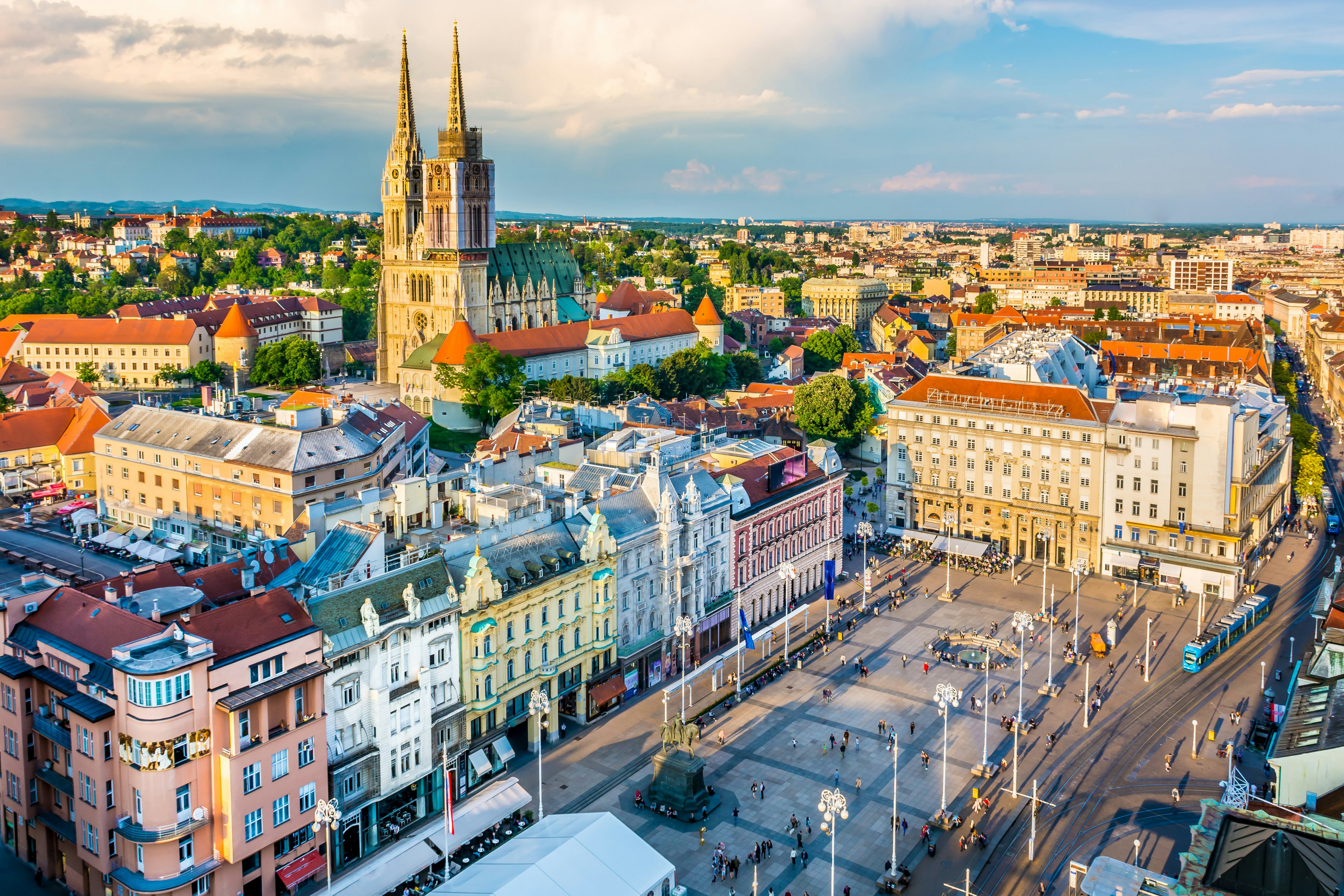
A convenient route between Switzerland’s largest city and the compact, beautiful capital of Croatia, this EuroNight service run by SBB crosses five countries over approximately 15 hours. It’s worth taking this journey in the summer, as it’s one of Europe’s most scenic routes, passing through mountainous Austria and Slovenia – two countries where you’d be hard-pressed to find an unattractive railway line.
The route also passes (without stopping) through the tiny Alpine principality of Liechtenstein, adding another country to the tally. You can also enjoy this scenic line by riding as far as Ljubljana in Slovenia, though this misses a lovely stretch of track running alongside the Sava River between the Slovenian capital and the border.
Advertisement
4. Berlin, Germany, to Gothenburg or Stockholm, Sweden
Frequency: set dates
Approximate duration: 14 hours
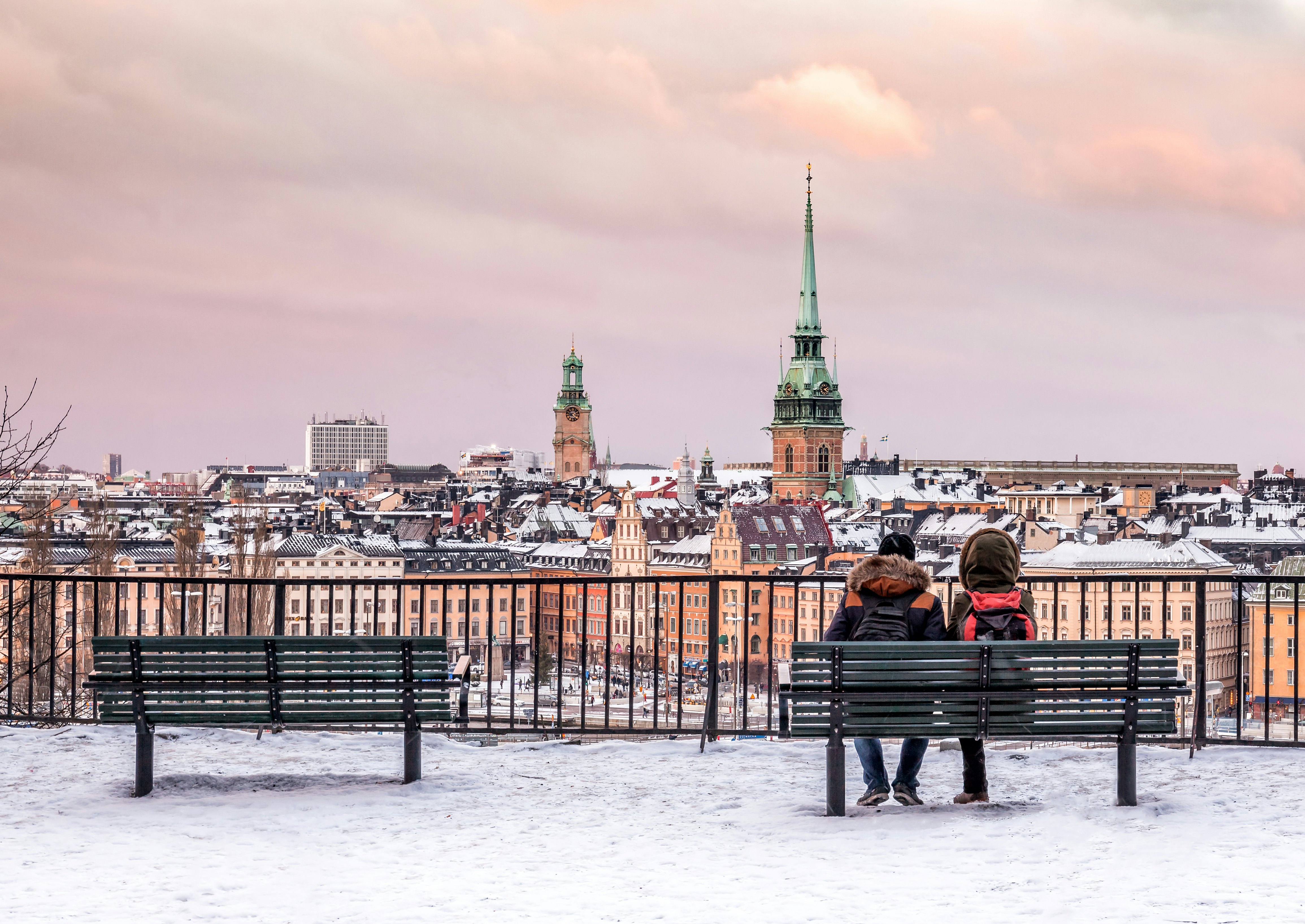
Swedish Railways has tweaked its EuroNight route from Germany to Sweden. From spring 2026, trains will start in Berlin and run via Hamburg before rolling into Gothenburg, Sweden's often overlooked second city. After leaving Berlin's lively nightlife and urban cool and Hamburg's harborside history, you'll roll into a city abuzz with ways to enjoy life by the water, alongside automotive history and Viking heritage.
If your heart is set on Stockholm, private operator Snälltåget operates seasonal night services on fixed dates between Berlin, Hamburg and Sweden's ever-popular, island-hopping capital city. You'll leave Berlin at dinnertime, crossing the Öresund Bridge in the early morning light (from late spring to early fall) and enjoying views of idyllic Swedish countryside as you roll onward to Stockholm, arriving in time for a meatball and lingonberry lunch (the train also has a highly regarded restaurant coach).
The route includes a stop in Copenhagen, putting Denmark on the menu, too. If you need a little extra hygge (cosiness) in your life, consider pausing for a day to enjoy the city's dramatic architecture, cool shopping and coffee-shop culture.

5. Brussels to Berlin or Prague
Frequency: three times weekly
Approximate duration: 11.5 hours
The much-heralded service from Brussels to Berlin on the European Sleeper has proved an invaluable addition to the night-train scene, and the company behind it has extended the route to Prague. With stops in Antwerp, Rotterdam and Amsterdam, this thrice-weekly train is a successful revival of a classic route phased out in 2008, linking some of Europe's top places to visit.
With Eurostar connections from London to Brussels, this route also opens up a rail odyssey right across Europe from the UK to Czechia. Conveniently, there's no need to change stations in Brussels, as passengers need to when changing from the Eurostar to other long-distance trains in Paris.

6. London to Fort William, Scotland
Frequency: daily except Saturday
Approximate duration: 13.5 hours
Great Britain has only two sleeper trains – Great Western Railway's Night Riviera Sleeper and the Caledonian Sleeper. Both have recently benefited from major upgrades in what many see as a vote of confidence in the country’s overnight services.
The Night Riviera runs southwest from London’s Paddington Station and keeps going until it runs out of rails at Penzance in Cornwall, but it’s the Caledonian Sleeper that gets Britons most excited. This legendary train leaves Euston Station every night, and via a series of carriage shuffles unnoticed by snoozing passengers, reaches Edinburgh, Inverness, Aberdeen and finally Fort William, passing through some of Britain's most memorable trackside scenery.
The final stages of the route are the most spectacular, offering a night on the rails and a morning rattling through the wonderful scenery of the Scottish Highlands before depositing exhilarated passengers at the foot of the path up Ben Nevis, the UK's highest peak and one of Scotland's best-loved hikes.

7. Budapest to Bucharest
Frequency: daily
Approximate duration: 17 hours
One of Europe’s most beautiful stations, Budapest’s Keleti terminal is the starting point for a fantastic overnight adventure to Bucharest in Romania. In fact, there are three sleeper trains that ply this route, but the timing of the Ister service is arguably the most convenient. It departs shortly after 7pm and arrives at Bucharest’s Gara de Nord mid-morning, meaning passport control takes place around midnight.
The big benefit of the lazy morning on the train is the chance to enjoy the superb scenery as you pass through the Carpathian Mountains before crossing the plains on toward the capital. From Bucharest, there’s a direct summer sleeper connection onward to Istanbul in Türkiye – another of Europe's most epic railway odysseys.

8. Trondheim to Bodø
Frequency: daily
Approximate duration: 10 hours
Under normal circumstances, the jaw-dropping views offered by any rail journey in Norway would make a night train a waste of stunning scenery, but there are two very good reasons for taking the 10-hour trip from Trondheim to Bodø – a remote city tucked inside the Arctic Circle in northern Norway.
Firstly, if you do this journey during the summer, you needn’t miss anything – the midnight sun shines over the gorgeous Norwegian landscape for much of the night. Secondly, Norwegian trains are very pleasant places to hang out for a while, with excellent facilities (including in-compartment showers in first class), and a berth on a night train is excellent value for money in a country where bargains are few and far between.

9. Rome to Venice
Frequency: daily
Approximate duration: 7 hours
A quiet star of Europe’s night train scene, the Intercity-Notte (ICN) services run by Trenitalia crisscross the country, offering several unmissable routes. While trains heading from Rome to Sicily turn tourist heads thanks to the novelty of the ferry that carries carriages across the Strait of Messina, there are reasons to head from the capital in the opposite direction.
A Trieste-bound sleeper hauls out of Roma Termini each evening and ambles through the romantic regions of Lazio, Umbria and Tuscany. Snoozing travelers may be awakened by some shunting as northbound carriages are moved off at Mestre, before an unforgettable crossing of the causeway across the Venetian lagoon as half of the train continues to Venice.
Any bleary eyes should be swiftly jolted into life by the sunshine of a Venetian dawn, the first sight of La Serenissima with pretty much no one else around, and a strong espresso or two on arrival. Consider it a cheaper alternative to sweeping into Venice on the Venice Simplon-Orient-Express.

10. Paris to Latour-de-Carol
Frequency: nightly (departure times vary)
Approximate duration: 12 hours
Despite axing all but a handful of Intercités trains de nuit in 2016, the French national rail company SNCF has spent the past few years reviving some of the canceled services. Alongside the popular routes from Paris to Nice, Toulouse and Briançon, consider the night train that runs to the foot of the Pyrenees.
The twice-weekly service from Paris to Latour-de-Carol offers six-berth couchettes and a seated carriage for the journey south, passing through Limoges, Toulouse and the foothills of the Pyrenees to arrive at Latour-de-Carol on the border with Spain. It's a handy route to a quieter side of the Pyrenees, beyond the tourist bustle of Tarbes, Pau, Lourdes and Perpignan.
From here, it’s possible to continue by suburban train to Barcelona in around 3 hours, offering an interesting alternative to the TGV service from Paris to Barcelona via Montpellier and the French Mediterranean coast.
If you prefer to see more of France's far south, the scenic, narrow-gauge Petit Train Jaune trundles uphill from Latour-de-Carol, offering a dramatic mountain train ride with connections on to Perpignan.
Tips for booking night trains in Europe
The resurgence in the popularity of night trains means that booking ahead is essential. Depending on where you’re traveling, berths go on sale between 30 and 180 days in advance; it’s best to book as far ahead as possible. The ever-helpful Man in Seat 61 has detailed online guides to train services, on-board facilities and booking trains in countries across Europe.
If you travel with an Interrail Pass or Eurail Global Pass, you'll still need to make reservations in advance for night services. Online booking services such as the Trainline allow you to book trains across Europe, or you can book directly with the train operating companies.
Advertisement